Three key take aways from the 79th World Health Assembly: from talk to action
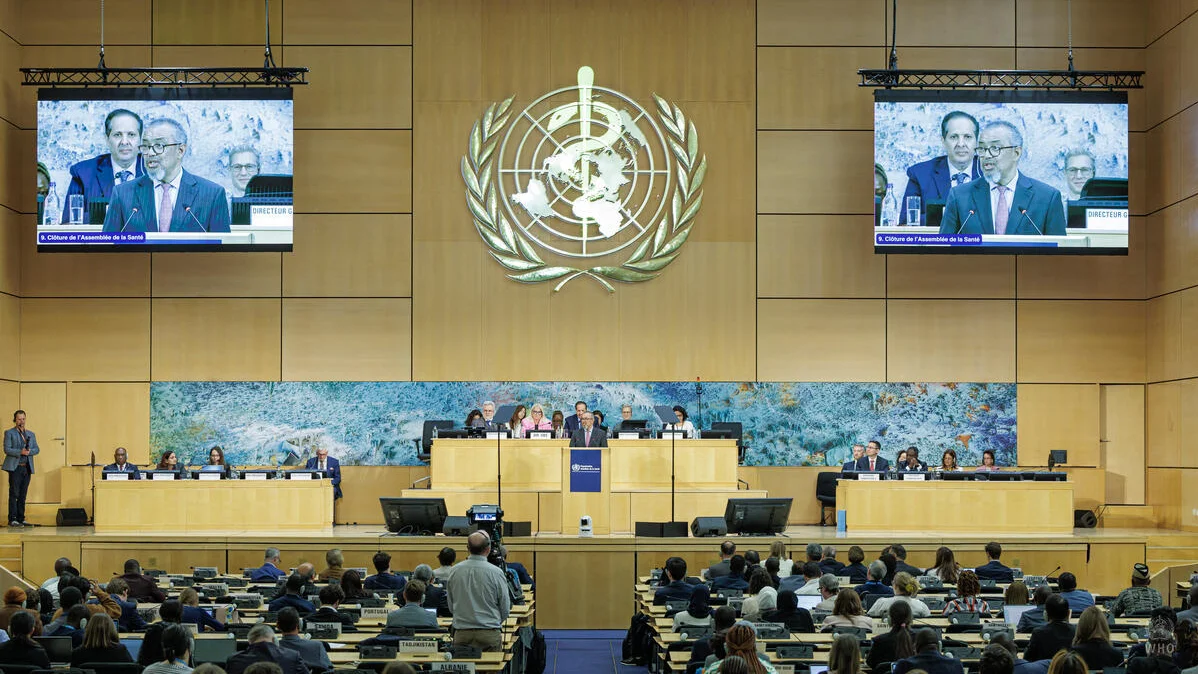
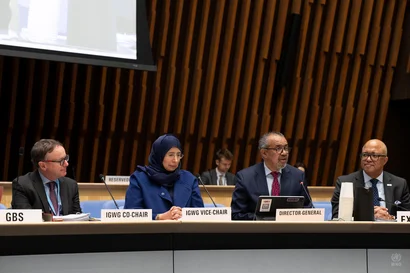
The 79th World Health Assembly, 18-23 May, took place in a background of increased global conflict, two international outbreaks and the impact of the unprecedented cuts in global aid.
The latter has been estimated to lead to a potential additional 5.4 million deaths of children under five by 2030. With the lengthy agenda of the WHA and long discussions in Geneva, the impact of the sessions might be hard to see on the ground. Nevertheless, it is worthwhile to look at several outcomes which provide opportunities to improve children’s health.
A paused Pandemic Agreement amidst a severe Ebola outbreak
Unfortunately, Member States failed to finalize the Pathogen Access and Benefit Sharing (PABS) annex, a prerequisite to move the Pandemic Agreement forward, and decided to continue the negotiations after the WHA. Potentially only in 2027. This is in sharp contrast with the reality of the Ebola outbreak which shows the perfect storm between cuts in foreign aid, conflict, humanitarian crises, and disease outbreaks seen in the DRC, with one in four deaths a child.
It is critical that Member States rapidly do come to an agreement and find equitable solutions to pathogen access and benefit sharing, to move the Pandemic Agreement forward with a special session of the WHA later this year. In addition, Pandemic Prevention, Preparedness, and Response (PPPR) must gain further momentum and be moved forward at the UN HLM on PPPR in September. Because only when 60 countries have ratified the agreement in New York, the agreement will turn into account.
Until that time, the international community should find a way to support pandemic preparedness in all settings, the absence of well-trusted functioning primary health care now results in preventable deaths and illness and the urgent need for rapid resource mobilization.
Reshaping the Global Health Architecture
On the positive side, Member States also adopted a process to rethink the Global Health Architecture, the collective of organizations which provide support to low- and middle-income countries (LMICs) to improve health supported by donor funding. While WHO is the one legitimate body who can bring different initiatives and stakeholders together, the high number of actors and diverse view of Member States involved will make it a complex process.
Yet, what is needed is straight forward: alignment with countries ambitions to build the basics, a strong national resilient health system, build on Primary Health Care while protecting citizens from out-of-pocket payments through Universal Health Coverage.
What is concerning is, that despite a request of many Member States to include civil society, in the final version, civil society actors have been omitted from the Joint Taskforce which will decide the recommendations. Civil society will still be consulted in the sidelines. This leaves out representatives from affected communities and humanitarian and development actors who reach those.
With increase politization of topics within the WHO, it is likely that there will be pushback against work on Sexual and Reproductive Health and Rights as well as Climate Change. Civil society and other partners should keep a close eye on the process and ensure it delivers meaningful change.
A new strategy to put health at the centre of the economy
Only on the last day, and with little attention given everything which is going on in the world, the new Strategy on the Economics of Health for All was adopted. While not equally ambitious following a year of negotiations as the original recommendations and reports from the World Health Organization Commission on the Economics of Health for All, it is a positive development to see a shift in economic thinking putting health at the heart of the economy rather than as a cost.
That said, systemic barriers to support low- and middle-income countries to invest in health such as debt and illicit financial flows have not been addressed in the strategy. As there is little funding behind the strategy at this point, it will be up to countries to turn it into a reality.
To support the discussion on health financing, Save the Children organized a side event and developed fours asks on health financing in collaboration with the WHO Civil Society Commission, which had already over 100 organizations sign on which was presented at a side event.
Seizing the opportunity for change
The World Health Assembly will always be a place where health is improved through “words”. So despite global tensions, it is now up to Member States to implement decisions, speak up to protect health and turn global discussions into improvements for children’s lives in reality.
We invited Renée de Jong (Senior Advocacy Advisor, Save the Children, Geneva Advocacy Office) and Patricia Kramarz (Senior Advocacy Manager, Save the Children Germany), to share their perspective on the most important outcomes of the 79th World Health Assembly. The views expressed are their own and do not necessarily reflect those of the Global Health Hub Germany.
Related Articles