Global Health at a Crossroads: PABS Negotiations and the Future of Multilateralism Part 2
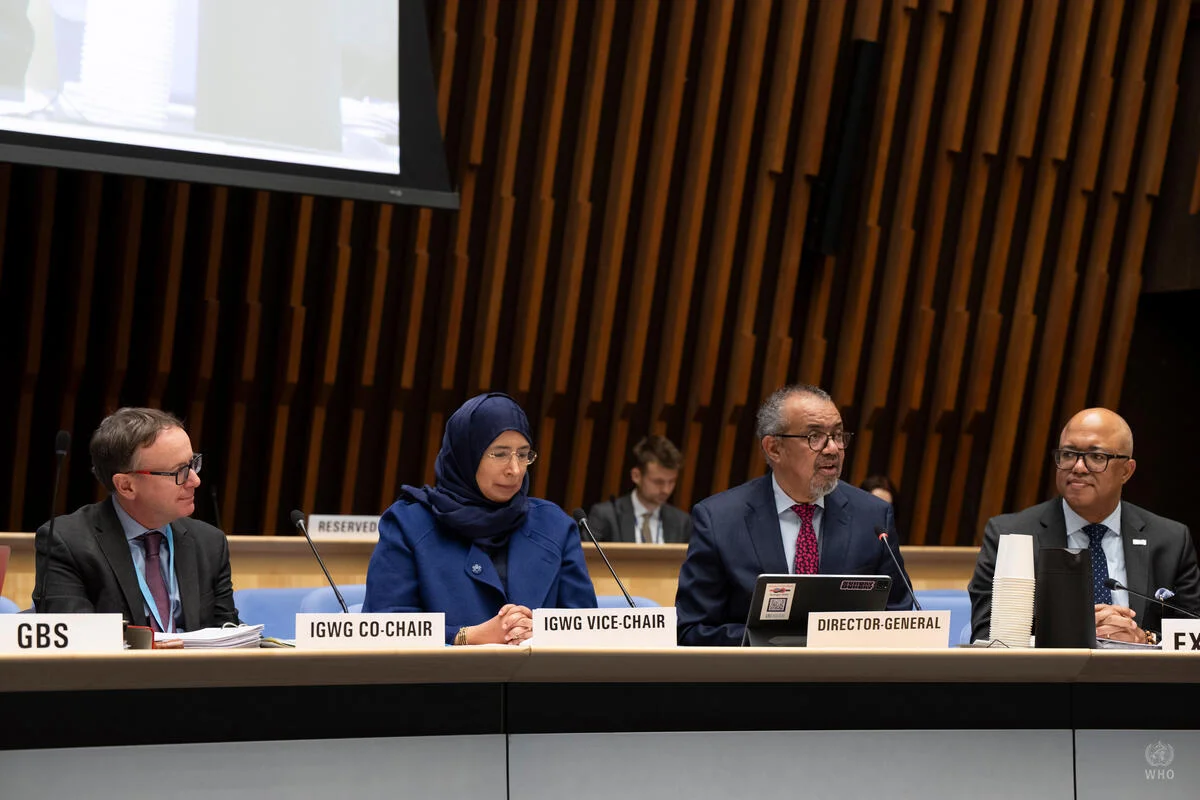
In Part 2 of this series on the PABS negotiations, we dive deeper into the reasons for the lack of consensus and explore the implications of a delayed or diluted agreement for pathogen access, benefit sharing and the future of pandemic multilateralism. As part of our series ‘Global Health at a Crossroads’, we also explore why the negotiations come at a decisive moment for the future of multilateralism.
On 20 May 2025, the World Health Assembly adopted the WHO Pandemic Agreement, widely framed as a reaffirmation of multilateralism after the fractures exposed by COVID-19. However, the agreement cannot move toward ratification or entry into force until member states complete a supplementary annex on Pathogen Access and Benefit Sharing (PABS). With only a handful of negotiating days remaining before the May 2026 target, the talks have become a critical test for both the Pandemic Agreement and the resilience of multilateral cooperation.
In the second part of this two-part article series on the PABS negotiations, we speak with Aggrey Aluso, Director for the Africa Region at Resilience Action Network International (rani) and Executive Director of Resilience Action Network Africa (RANA), and Thorsten Behrendt, Deputy Head of the International Health Security Division of the German Federal Ministry of Health (BMG), focusing on bilateral pressures and the future of pandemic multilateralism.
Bilateral deals and the pressure on multilateralism
The negotiations are further complicated by a growing number of bilateral agreements on pathogen sharing. In recent months, the United States has reportedly pursued arrangements with several African countries that include commitments to share pathogen samples and outbreak data. For some observers, these deals risk undermining the multilateral PABS process.
For Aluso, the timing is particularly concerning. “Coming at a time when we are in the middle of PABS negotiations… we found that a little troubling,” he says, describing the trend as “a very unnecessary disruption.” His concern is that bilateral arrangements create an alternative pathway that could weaken collective bargaining and shift attention away from shared rules toward “a very one-sided approach” deals. From this perspective, bilateralism risks undercutting the core premise of PABS as a solidarity-based multilateral framework. At the same time, Aluso notes a paradox. The bilateral pressure has also heightened awareness within African capitals about the strategic value of pathogen data and surveillance systems. In that sense, the developments have highlighted that these negotiations are not abstract diplomacy but high-stakes questions of sovereignty, data governance, industrial policy, and preparedness.
From Germany’s perspective, these deals may complicate the negotiations, but their effect is “rather indirect.” Behrendt notes that the countries involved still appear interested in building a multilateral system and that the MOUs, as currently understood, do not formally prevent sharing beyond the United States. Nevertheless, the bilateral arrangements may make it harder than already the case to attract major United States pharmaceutical companies into the PABS system and could increase political pressure on the final design of the mechanism. This raises a key question for the negotiations: can a voluntary global system work if major market actors remain outside it or face incentives to stay out?
The question of health sovereignty
For many African actors, the debate over PABS is not only about emergency response but also about sovereignty. The pandemic exposed the risks of dependence on external supply chains for vaccines, therapeutics, and diagnostics, fuelling calls across the continent for stronger regional manufacturing and research capacity. Aluso argues that a strong PABS framework could support these ambitions by creating predictable rules and strengthening Africa’s leverage in global health governance. Without such mechanisms, countries may increasingly rely on ad hoc bilateral arrangements shaped by external interests. If the final outcome is weak, he warns, “the status quo remains”: pathogens and data continue to flow quickly from the Global South to research centres in the Global North, while access to the resulting innovations remains uncertain, delayed, or dependent on discretionary decisions.
But Aluso also directs criticism inward. He worries that African governments have not yet provided negotiators with sufficient political backing or technical support. Compared with earlier phases of the pandemic agreement negotiations, he sees less coherence, less energy, and less sustained support around the African group position. He worries about divide-and-conquer dynamics in back-channel outreach and argues that African negotiators are too often under-supported on a demanding case that requires expertise across law, science, governance, and finance. “We don’t see commitments from the African side compared to the high-income countries,” he says. “That lack of strong political commitment is something that is creating a lot of gap.”
Germany’s bridge-building role
Within the negotiations, Germany sees itself as a bridge-builder. Behrendt explains that while the European Union negotiates formally, Germany plays an important role in shaping positions within the EU, aligning with key partners, and reaching out to potential bridge-builders across the room. “Germany tries to be a bridge builder between different sides in the negotiations,” he says. That role reflects Germany’s dual positioning in global health. On one hand, Germany has invested heavily in international cooperation, including support for pandemic preparedness and vaccine production in Africa. On the other, it is home to a major pharmaceutical industry and has a clear interest in preserving the incentive environment in which those companies operate.
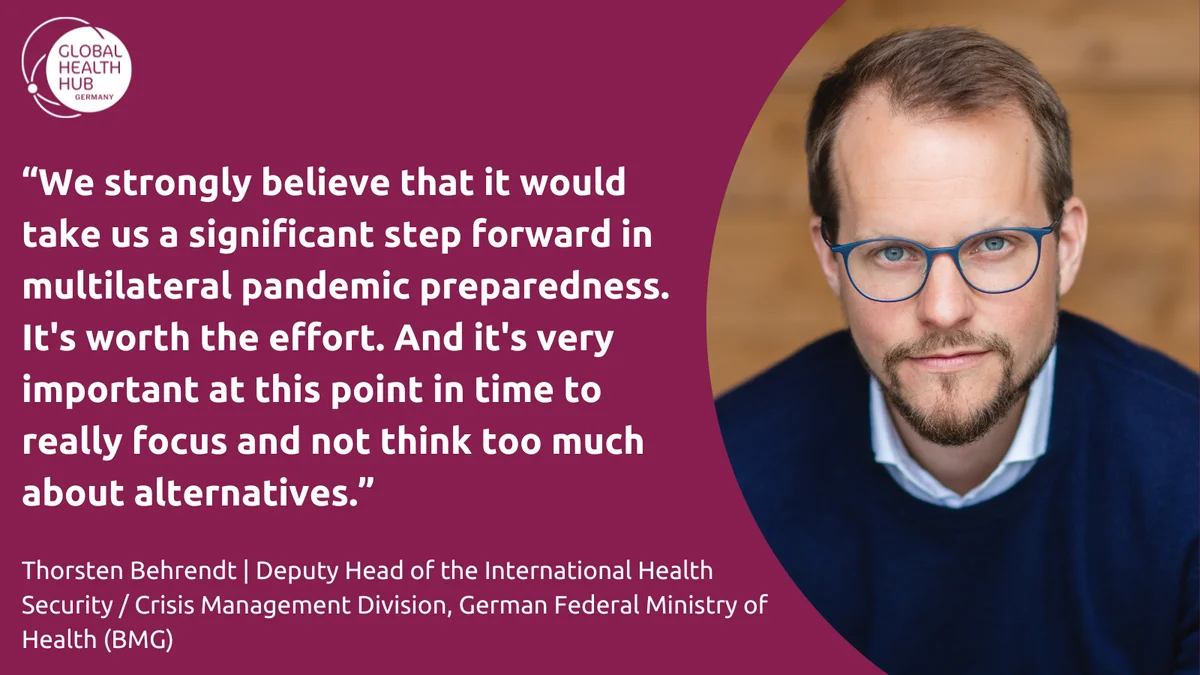
That duality also shapes Germany’s substantive priorities. Behrendt emphasises Germany’s strong interest in rapid sharing and receipt of pathogens of pandemic potential, including genetic sequence data, because this is essential for research, development, and the production of countermeasures. He also highlights legal certainty as a core concern, especially in relation to the Convention on Biological Diversity and the Nagoya Protocol. Germany supports carving pathogens out of the broader Nagoya access and benefit-sharing framework in order to reduce transaction costs and avoid a system in which separate agreements have to be negotiated for each pathogen sample. The appeal of the PABS system, from this angle, is that it could replace that patchwork of national Access and Benefit Sharing laws with a single, multilateral contractual framework.
Is a deal still possible?
With the negotiating window rapidly closing, the central question now is if a meaningful agreement can still be reached before the May 2026 deadline. Germany remains cautiously optimistic that a deal can still be reached. Behrendt stresses that concluding the annex would represent an important step for multilateral pandemic preparedness. At the same time, he acknowledges that pragmatism will be essential. Negotiators may need to agree on core elements now and leave some more detailed implementation questions, such as the exact wording of contracts with companies, to later processes under the Conference of the Parties. At the same time, he warns against losing momentum: “We shouldn’t think too much of alternatives, because this also takes pressure away to reach consensus.”
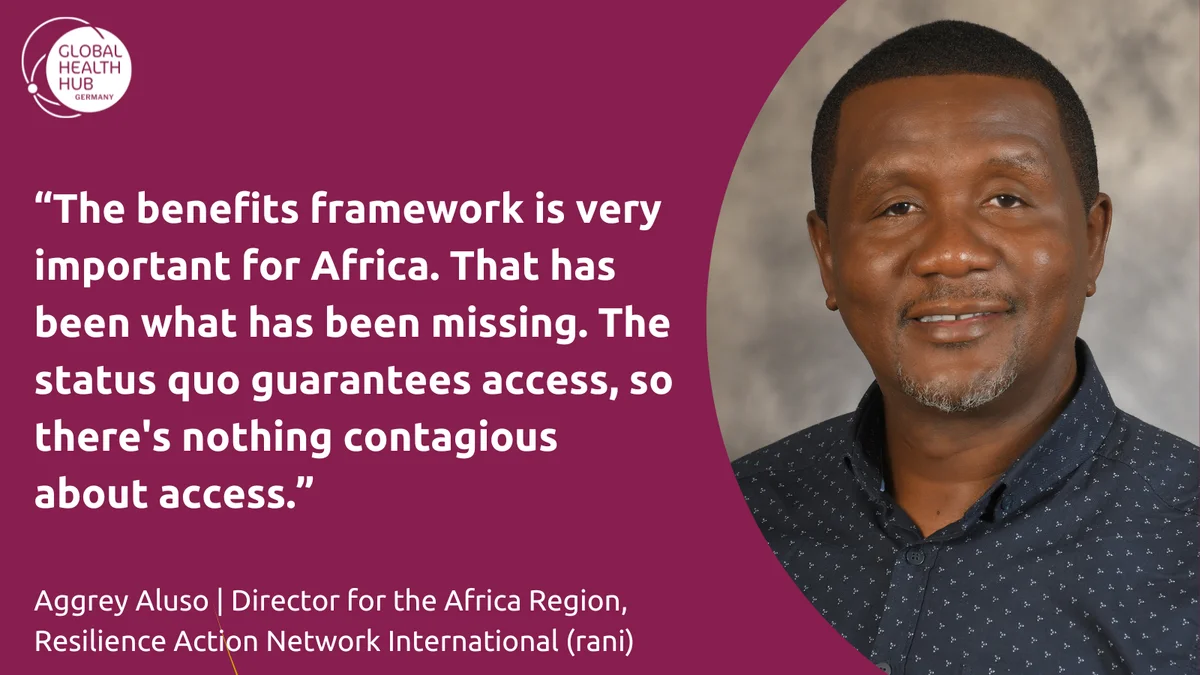
Aluso, by contrast, is much more sceptical that a credible and equitable outcome can be achieved within the current time frame. In his assessment, the negotiations may well produce a text by the deadline, but the pressure to deliver could lead to a diluted outcome in which enforceable benefit-sharing is weakened precisely where it matters most. The decisive issue, he argues, remains the benefits framework itself. Access to pathogens and sequence data is already largely ensured by existing scientific networks, while equitable access to the resulting benefits remains the unresolved political question.
This divergence exposes a difficult political question now facing member states on what counts as success. Is it enough to adopt an annex that operationalises parts of Article 12 and allows the Pandemic Agreement to move forward? Or must the agreement fundamentally rebalance how benefits, obligations, and responsibilities are shared?
The answer matters because the consequences extend beyond Geneva. Later this year, the United Nations plans a High-Level Meeting on Pandemic Prevention, Preparedness and Response. Germany sees this meeting as an opportunity to sustain political momentum around pandemic preparedness, even as global attention shifts to other crises. Yet the symbolism is difficult to ignore. A credible PABS agreement would strengthen the argument that multilateral cooperation can still produce concrete institutional lessons from past crises. A weak or incomplete outcome could cast a shadow over that message and risk turning the High-Level Meeting into a forum for reaffirmation without resolution.
Multilateralism at a decisive moment
Ultimately, the significance of the PABS negotiations goes far beyond the technical details of pathogen sharing. They have become a test of what multilateralism should mean in an increasingly fragmented world: whether it merely secures a workable minimum that enough actors can accept, or whether it must also address structural inequities to remain credible.
The outcome will shape that answer in practice. A credible and balanced mechanism would demonstrate that multilateralism can still reconcile competing interests while strengthening both equity and global health security. A weak or incomplete outcome, by contrast, could deepen distrust, encourage bilateral alternatives, and reinforce the perception that global health solidarity fumbles when confronted with commercial and geopolitical interests.
Multilateral negotiations rarely produce perfect outcomes, but they can produce durable ones. The likely landing zone lies in a carefully negotiated middle ground. In the end, PABS is as much about trust as it is about text: trust that pathogens will be shared rapidly, that benefits will materialise when needed, and that the World Health Organization can coordinate the system credibly. That is why this annex matters so much. If the Pandemic Agreement was the diplomatic breakthrough of 2025, PABS will determine whether that breakthrough becomes operational or remains incomplete. The window is narrowing. The choices made in the IGWG will shape not only the future of Article 12, but the credibility of multilateral pandemic governance itself.
Related Articles