Global Health at a Crossroads: PABS Negotiations and the Future of Multilateralism Part 1

In part 1 of this series on the PABS negotiations, we explore where the Pathogen Access and Benefit Sharing negotiations stand and what is driving the divide. As part of our series ‘Global Health at a Crossroads’, we also explore why the negotiations come at a decisive moment for the future of multilateralism.
In the aftermath of COVID-19, few issues have become as central to global health diplomacy as how the world shares pathogens and the benefits derived from them. At the centre of this debate is the Pathogen Access and Benefit Sharing system (PABS), currently being negotiated as an annex to the Pandemic Agreement by the Intergovernmental Working Group (IGWG) established by WHO Member States. Without agreement on PABS, the Pandemic Agreement adopted at the World Health Assembly in May 2025 cannot enter into force. Yet with only a few negotiating days left before the May 2026 target, member states remain divided.
For this two-part article series, we spoke with Aggrey Aluso, Director, Africa Region at Resilience Action Network International (rani) and Executive Director of Resilience Action Network Africa (RANA), and Thorsten Behrendt, Deputy Head of the International Health Security Division in the German Federal Ministry of Health (BMG). Their reflections offer important insights and perspectives on where negotiations stand, why consensus remains difficult, and what is ultimately at stake for multilateralism.
The unfinished pillar of the Pandemic Agreement
The PABS system aims to resolve one of the most contentious questions exposed during COVID-19: how to ensure rapid sharing of pathogens and genetic sequence data while guaranteeing equitable access to vaccines, therapeutics, and diagnostics developed from them. The issue predates COVID-19, but the pandemic brought it into sharper political focus. Similar tensions have long existed between the need for open scientific collaboration and calls for fairness from countries that provide biological samples but often remain last in line for the benefits derived from them.
Article 12 of the Pandemic Agreement seeks to correct that imbalance. One key element is the so-called “10 plus 10” rule, under which participating manufacturers would make available at least 10% of their real-time production of vaccines, therapeutics, and diagnostics as donations to WHO during a pandemic, and reserve a further 10% at affordable prices.
From Germany’s perspective, this is already a significant equity gain. As Thorsten Behrendt put it, “What have already been enshrined in Article 12… is quite a bit. You have this 10 plus 10 rule, 10% of production donated to WHO in a pandemic and another 10% reserved at affordable prices.” In his view, such could substantially expand access to medical countermeasures during global health emergencies. As an illustration, he noted that for a single manufacturer like Pfizer, this could amount to several hundred million vaccine doses worth billions of US dollars.
But what looks like a meaningful breakthrough from one perspective looks incomplete from another. For many low- and middle-income countries, the central lesson of COVID-19 is that voluntary goodwill does not reliably produce equitable outcomes. Aluso captures that frustration directly: “Discretionary contributions are not something we can bank global health security on.”
The core divide: guaranteed access, optional benefits
Publicly, there is little disagreement about the broad goals. Most delegations affirm that equity matters, that rapid pathogen sharing is essential, and that pandemic preparedness is a global public good. The real divide begins when those principles have to be translated into obligations.
For Aluso, that is where the contradiction becomes clear. He argues that while the rhetoric of solidarity remains strong, the substance of negotiating positions still maps onto the familiar divide between high-income countries with major pharmaceutical interests and low- and middle-income countries, particularly in Africa, that are pushing for stronger and more enforceable benefit-sharing. As he notes, “The substance of the negotiation has not reflected the tone… parties still maintain very strong positions depending on which part of the global divide they come from.” In practice, many African states and other equity-oriented coalitions are pushing for guaranteed access to vaccines, therapeutics, and diagnostics, alongside stronger commitments on technology transfer, licensing, and regional production capacity. High-income countries, by contrast, tend to favour more flexible arrangements built around voluntary commitments from manufacturers and research institutions.
This is not simply a disagreement over drafting language. It reflects two different theories of how a global system should work. One side argues that equitable outcomes require enforceable commitments. The other argues that if the system becomes too demanding, the actors it depends on, especially private manufacturers, may simply not join.
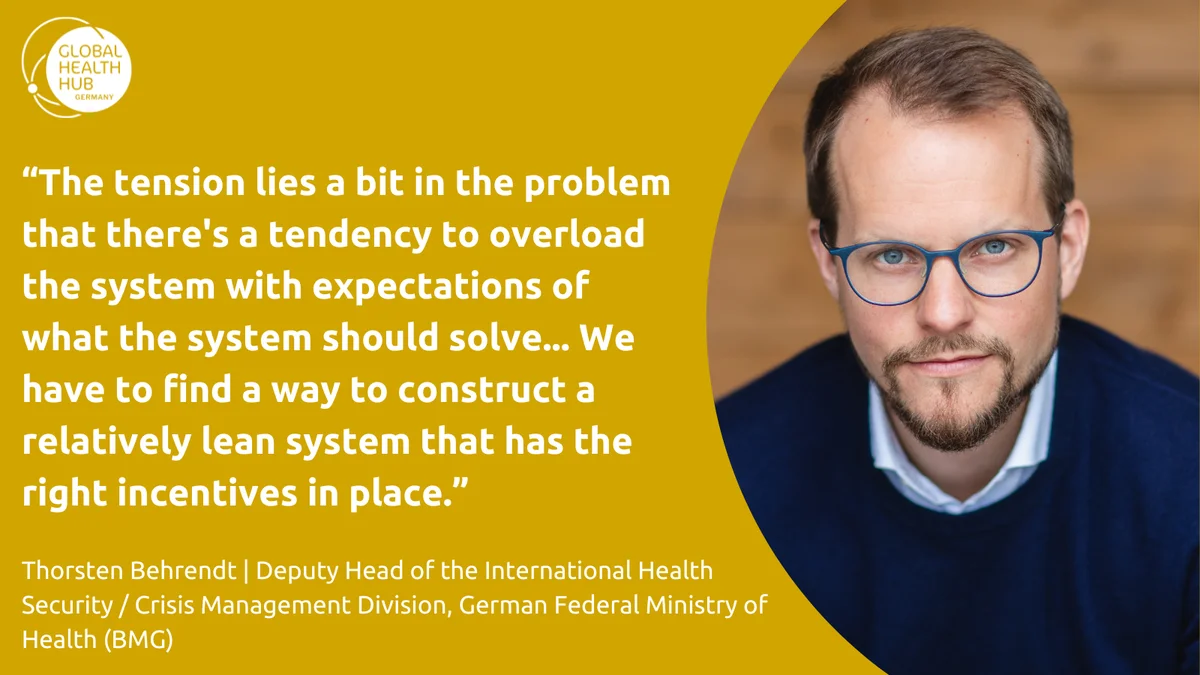
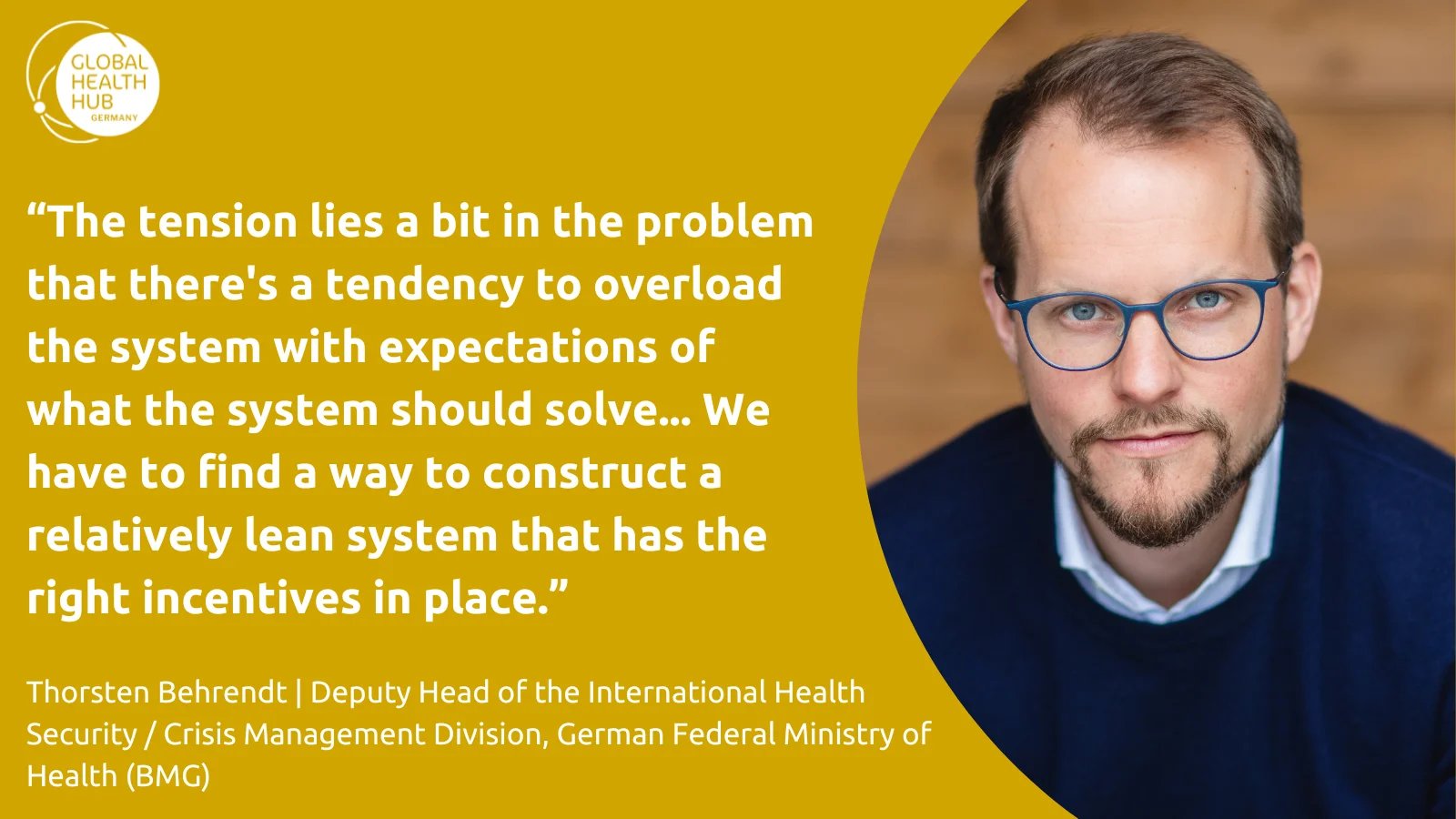
Behrendt makes that concern explicit. “Whether we like it or not, we will have a voluntary system,” he says, “so the incentives need to be strong enough to make it attractive for private companies.” From Germany’s standpoint, the risk is that countries will overload the PABS system with expectations that are understandable from the perspective of certain countries but operationally impossible to implement. That is a crucial point in the current negotiations. The concern from Germany and many other high-income countries should not be seen as opposition to equity per se. Rather, it is a concern about feasibility, participation, and legal certainty in a system that relies on private-sector engagement.
Innovation, intellectual property, and the limits of compromise
Few issues have proven more contentious in the negotiations than the relationship between innovation incentives and equitable access. High-income countries argue that strong intellectual property protections remain important to sustain investment in research and development, particularly for pathogens that may not generate predictable or recurring commercial markets. From Germany’s perspective, “intellectual property rights and patents should be respected” and the negotiations should not create barriers to research and development. Behrendt situates this within a broader market reality: unlike seasonal influenza, pandemic-potential pathogens rarely offer stable or annually recurring incentives for private investment. That makes participation harder to secure and increases the importance of maintaining a viable incentive structure.
Aluso does not dispute the importance of innovation but challenges how the argument is framed. Treating pathogen access as essential while leaving benefit-sharing optional, he argues, creates a structural imbalance. Claims that stronger benefit-sharing or technology transfer would undermine innovation are, in his view, often market arguments presented as public health necessity. He calls this a “fundamental flaw.” If rapid access to pathogens and sequence data is indispensable for innovation, then equitable access to the resulting benefits should be treated as equally indispensable to sustaining the system as a whole. “If you want to incentivize the whole chain,” he argues, “it needs to be end-to-end.”
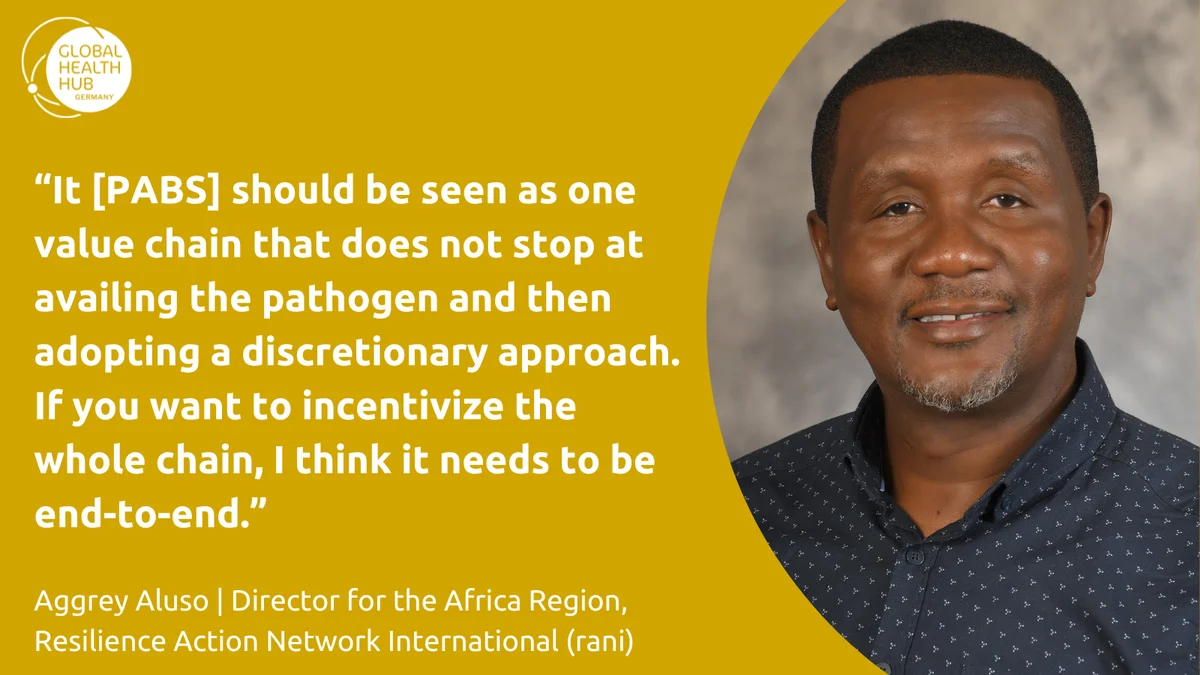
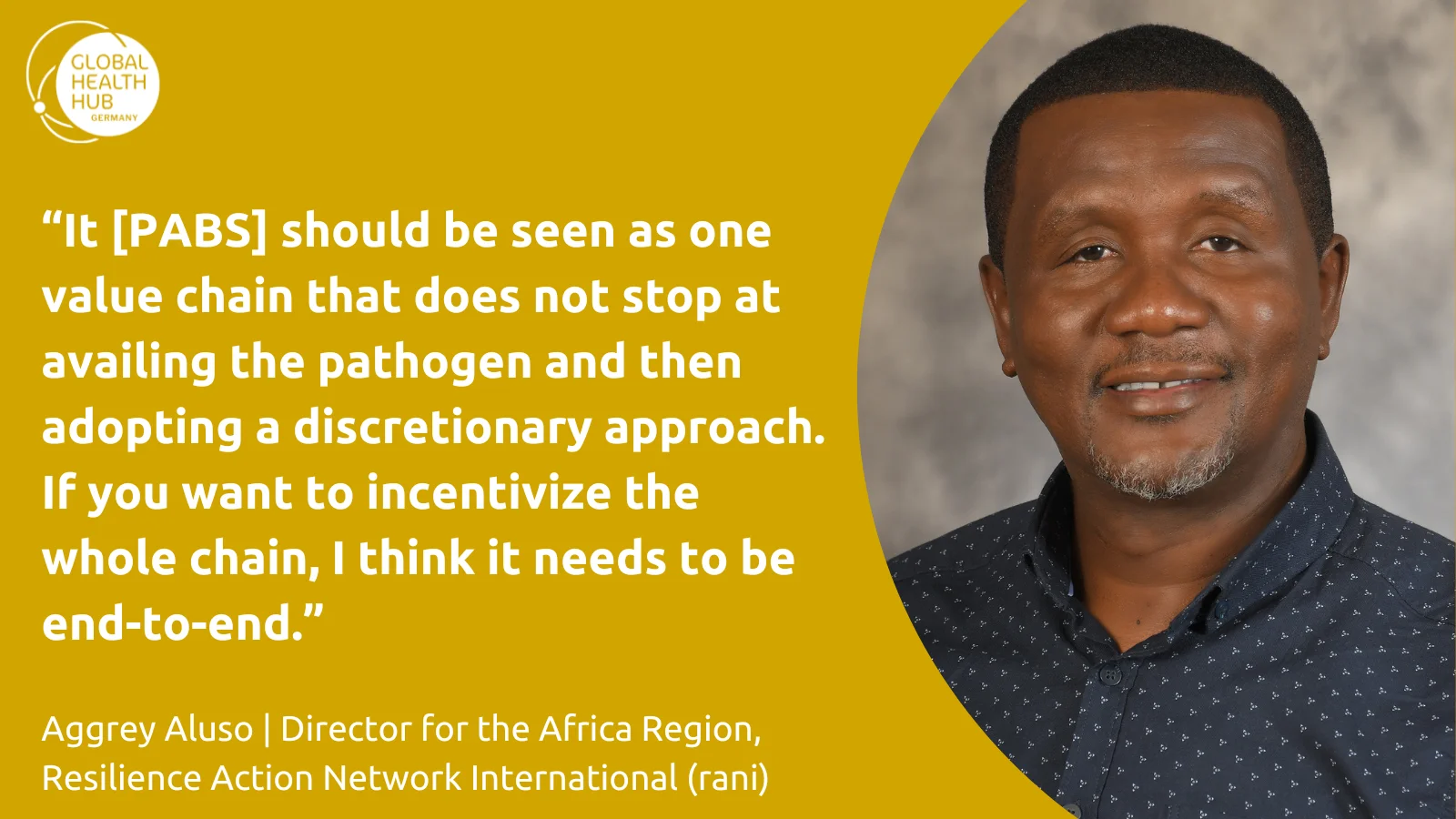
Aluso emphasises that African states are not seeking to dismantle innovation frameworks but to ensure predictable, bankable benefits through modest commitments for a defined category of pandemic-potential pathogens. Given the substantial public funding behind biomedical research, he argues the real question is whether benefits will be governed by enforceable rules or left to discretionary gestures. For many African negotiators and civil society actors, the issue therefore extends beyond short-term crisis access to long-term resilience: whether pandemic governance will help expand production capacity beyond the countries that currently dominate the pharmaceutical landscape.
A narrowing political window
As the May 2026 deadline approaches, pressure is rising to conclude the annex. Despite slow progress, Germany remains cautiously optimistic about the prospects for agreement and remains committed to doing so. “We will do our utmost… to finalise this agreement in May 2026,” Behrendt says, stressing that a successful outcome would mark a significant step forward in multilateral pandemic preparedness. “The political window is shrinking… and we really would like to conclude the negotiations”, he emphasizes.
Behrendt also points to some progress. Recent rounds have seen movement on the participation of data banks in the system and their interoperability as well as on access to both physical pathogen samples and related genetic sequence data. Germany would also like to see WHO play a stronger role in the governance of this wider data ecosystem.
Yet progress on technical issues has not bridged the deeper political divide. That divide is now shaping how different actors define success. For Germany, success means operationalising Article 12, preserving the equity gains already embedded in the agreement, and designing a lean system that companies and research institutions are willing to join. Some operational details, including the precise wording of contracts with manufacturers, could potentially be addressed later through the Conference of the Parties once core elements are secured. For Aluso and many LMICs, the concern is almost the reverse. He doubts that a genuinely equitable and robust system can be concluded before May unless the final outcome is significantly watered down. In that scenario, the risk is that the most enforceable benefit-sharing provisions are sacrificed to meet the deadline. The central question for many African actors is therefore whether the final arrangement establishes a concrete and dependable benefits framework. Without it, the system risks reproducing the asymmetries it was meant to correct.
As the negotiations enter their final phase, PABS has become more than a technical annex. The issue is no longer just whether member states can agree on operational details. It is whether they can agree on the terms of solidarity in a future pandemic.
In Part 2, we turn to the geopolitical pressures shaping the negotiations, from bilateral agreements and African health sovereignty to Germany’s bridge-building role and the implications of a delayed or diluted deal for the future of pandemic multilateralism.
Related Articles