Global Health in Focus: An Interview with Konrad Arz von Straussenburg
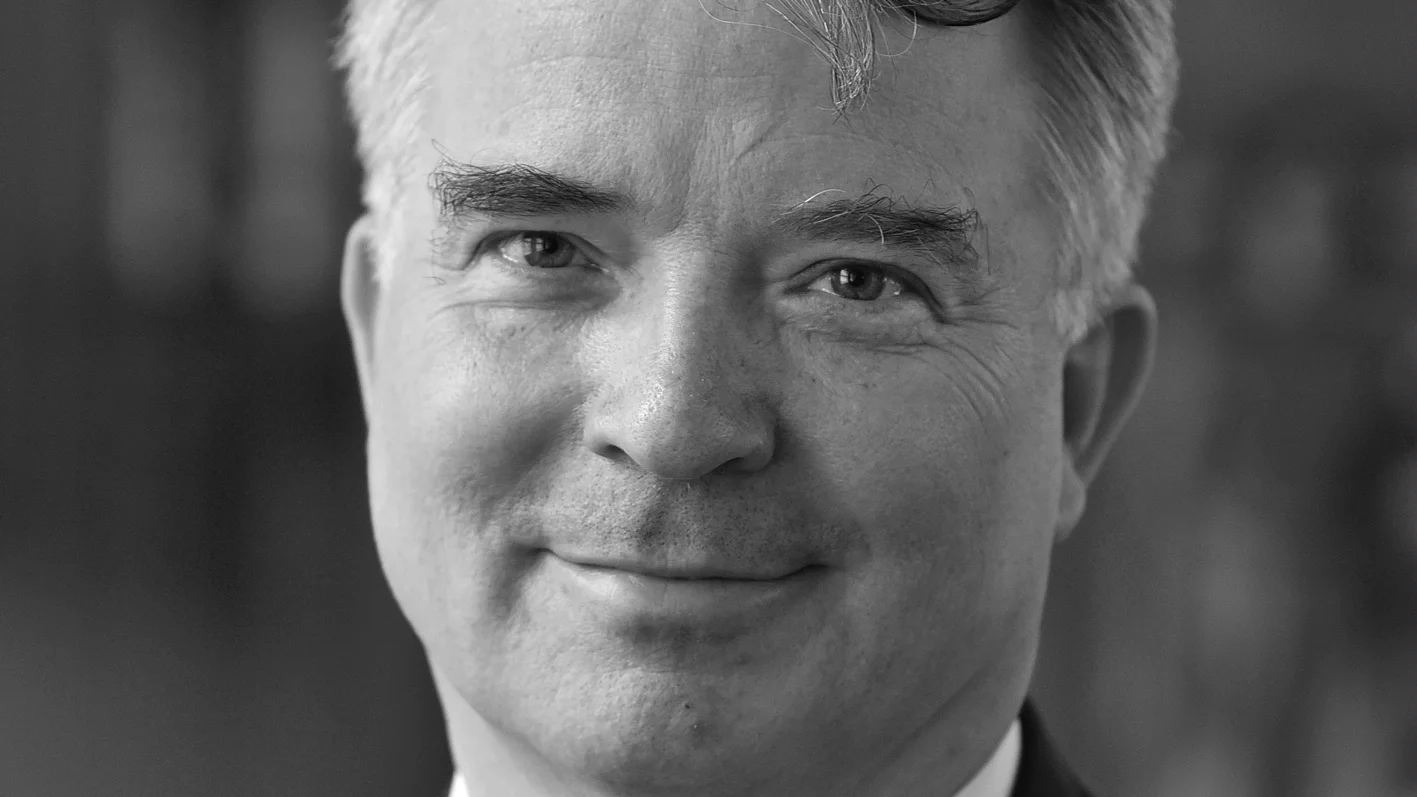
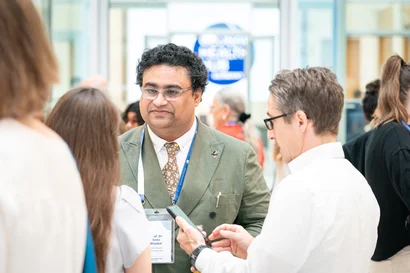
In this interview series, we speak with political decision-makers about how global health can be permanently anchored in Germany even without a dedicated subcommittee, and what role Germany should play in the future. Our guest today is Konrad Arz von Straussenburg, Director for Human Rights and Global Health at the Federal Foreign Office (AA).
What role will global health play under the new leadership of your Ministry?
Global health remains of pivotal importance and is an important cross-cutting issue for the Federal Foreign Office. Its relevance to international relations and global governance as a whole is fully appreciated. In today’s complex geopolitical landscape, we view health as inextricably linked to international security, economic stability and human rights. Hence, the need for international cooperation is growing accordingly. We are strongly committed to strengthening effective multilateralism and the World Health Organization as the global health focal point. As a major national donor, we are also faced with mounting expectations for strong political leadership beyond financial support. We therefore seek to shape global health policies actively, all the while advocating for equitable access to healthcare and for strengthening health systems in partner countries. This is not the time to throttle back on proposed action. Global health is a matter of shared responsibility, and we will continue to work closely with our partners both within the EU and globally to address existing and possible future health challenges in a timely manner. We are sharply aware that our approach needs to be agile and proactive, particularly in light of potential future pandemics and the long-term impacts of climate change on health security.
Mr. Straussenburg, as the new Director for Human Rights and Global Health in the Federal Foreign Office, where do you see international priorities in the field of global health?
In my view, several priorities merit particular attention in the coming years: firstly, ensuring long-term and predictable financing for global health initiatives is and will remain critical. While crisis-driven funding will be an ongoing necessity to address particular emergencies, we need to move beyond cyclical peaks of activity to establish sustainable long-term mechanisms to support national health systems and global research. Secondly, strengthening and stabilising the multilateral system is essential. The WHO must be empowered to continue playing its central role in a sharply different global arena compared with, say, ten years ago. Furthermore, we need a serious reform of the global health architecture. This is a strategic choice – and an opportunity at the same time. It entails improved coordination between different actors – from international organisations, NGOs and the private sector to national governments. It also means avoiding duplication while maximising the impact of efforts made. We must also address issues of equity and access, ensuring that vulnerable populations and smaller countries are not left behind. Germany is committed to playing a leading role in these efforts, and we will work closely with our partners to achieve these goals.
The COVID-19 pandemic has shown that health security and multilateral diplomatic cooperation are deeply intertwined. What lessons should guide future diplomatic efforts in the field of pandemic prevention, preparedness and response and how could Germany contribute?
COVID 19 serves as a grim reminder: pandemics do not stop at borders – and more of the same isn’t going to cut it if we want to overcome future pandemics. Effective prevention, preparedness and response in all parts of the world benefit everyone.
Mindful of these lessons, we continue to engage with determination in ongoing multilateral processes to strengthen the foundations of global health action. The ongoing negotiations on an Annex dealing with Pathogen Access and Benefit Sharing (PABS), to complement the Pandemic Agreement agreed at the WHO in May 2025, are a case in point. A strong and effective PABS system will be crucial for pandemic prevention, preparedness and response in the future. Moreover, Germany is proud to be hosting the WHO Hub for Pandemic and Epidemic Intelligence in Berlin, which was set up to provide decision-makers with global real-time data and insights to prevent or predict suspicious outbreaks of diseases before they can spread or escalate into pandemics. The Hub’s mission contributes to collaborative global surveillance and to a more efficient data ecosystem intended to minimise the potential impact of future epidemic threats.
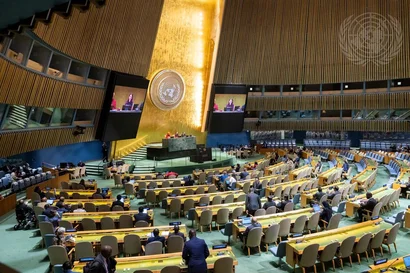
In the upcoming year, Pandemic Prevention, Preparedness and Response (PPPR) will receive increased political attention, including through the UN High-Level Meeting in September. The Global Health Hub Germany will also closely accompany this topic throughout year. Which thematic priorities will be most important for Germany and the Federal Foreign Office in the field of PPPR?
The binding International Pandemic Agreement is key here, since it adds a new quality also to Pandemic Prevention, Preparedness and Response. Once it has entered into force, the world will have an instrument at its disposal to significantly enhance pandemic prevention and preparedness for future pandemics and to allow for a more equitable and effective response. It ties in with existing obligations and measures under the recently revised International Health Regulations, which we are in the process of passing into national law.
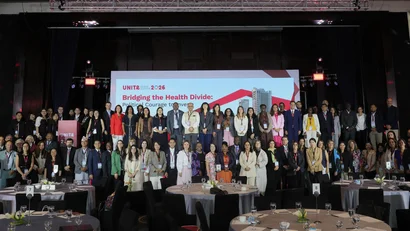
The Global Health Hub Germany is a convener, bringing together over 2,000 actors from different stakeholder groups. The Foreign Office has been part of the Hub’s Steering Committee from the very beginning. Which aspects of the Hub’s work are particularly relevant for your Ministry?
The Global Health Hub Germany is an invaluable networking platform – and had it not existed, it would have to be set up quickly. By bringing together science, industry, politics, academia and civil society in an action-oriented manner, the Hub has become a powerful convening platform for all stakeholders. For the Foreign Office, this cross-sectoral dialogue is a welcome addition to complement policy deliberations, particularly regarding the development of longer-term strategies, such as on global health security. The dialogues and debates that we are having here help us ensure that our broader policies are in sync with the practical requirements of research and industry, academics and civil society. The Hub also serves as a global window to showcase German health commitment and innovation on the international stage.
What do you hope can be achieved in the field of global health by the end of the current legislative period?
Progress in global health matters requires staying power – and in my view we must look way beyond legislative periods. The current funding crunch poses tremendous challenges to the achievements made over decades. It will take time and determination to buck this trend. I hope that we will be able to strengthen the bedrock of multilateral action again in the field of global health, despite current geopolitical headwinds and budget constraints. A key achievement of multilateral cooperation would be the timely and successful conclusion and implementation of the Pandemic Agreement.
Because one thing is certain: it is only a question of time until the next global pandemic hits – so an early adoption of the Pandemic Agreement, including its PABS Annex, could be of crucial importance to us all. Ultimately, this must go hand in hand with the effective and targeted implementation of the Pandemic Agreement in as many countries as possible, as part of a broader, truly global strategy to better prepare our planet and all societies for future health emergencies of international concern.
And finally, a more personal question: Throughout your diplomatic career, you have worked at the intersection of politics, human rights, and global cooperation. What motivates you personally to continue advocating for global health?
In my view, global health is one of the noblest objectives mankind can strive for – and as such it is an endless source of motivation. Health is a basic prerequisite for our long-term well-being and indeed our survival. At the same time, this cross-cutting issue lives in symbiosis with many other policy areas – from bio-security to social economics. However, a much more fine-grain understanding of the political interdependencies is needed to tackle the current challenges to global health. We have seen in the past that countries cannot do this alone – global solidarity plays a key role if we want to achieve lasting and worldwide progress. But every country must step up to the plate, and multiple rewards await if we succeed: prosperous and resilient societies are often based on solid foundations, like good health for all. And resilient societies stand a much better chance of coping with sudden impactful challenges. We need a new international compact of health solidarity to respond jointly and swiftly to global threats, such as pandemics, while ensuring equity in access for all. At the same time, more global commitment is needed to invest in economically viable, multilateral and mutually beneficial health policies. The new Pandemic Treaty could ring in a new era of cooperation. If consistently implemented, it could provide a promising new tool to better prepare the world for future global health shocks. It could be a new beginning for global health cooperation and for us all.
Verwandte Artikel