New Ebola vaccine trial provides ‘hope’ as outbreak escalates in the DRC
A major new research study could support the potential approval and rollout of an Ebola vaccine – but the outbreak also serves as a reminder that more must be done in advance of future virus emergencies.
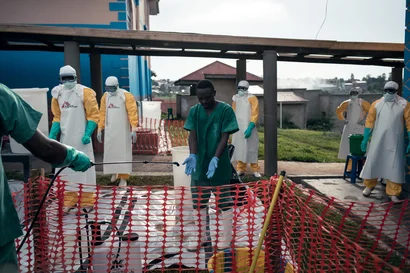
More than 11,300 people have sadly now been infected with Ebola in the escalating outbreak in the Democratic Republic of the Congo (DRC) [1]. Almost half of these infections have proven fatal. Yet there are currently no vaccines licensed against this specific ebolavirus.
Identified in May 2026, the emergency – caused by the Bundibugyo ebolavirus – is both the fastest-growing and second-largest Ebola crisis ever recorded, with cases also detected recently in Kenya and Nigeria [2].
The outbreak’s widening footprint increases the potential for the disease to spread to new areas and infect more people. Concern around further spread is heightened by weakened health infrastructure, staff shortages, public mistrust, incredibly mobile populations and ongoing conflict in the region. Some of the hardest-hit communities have also seen routine childhood vaccinations and maternal health programmes severely disrupted. This, in turn, has resulted in a local uptick of other illnesses and health complications [3][4].
While public health authorities and frontline workers are doing extraordinary work, Bundibugyo vaccines are urgently needed to help bring the outbreak under control and save lives.
And hope could now be in sight.
The launch of Tumaini
At the end of October, an international group of health organisations – including the DRC Ministry of Health, Institut National de la Recherche Biomédicale (INRB), Africa CDC, University of Antwerp, MSF, Epicentre, the World Health Organization and our coalition, CEPI – launched a pioneering trial to test multiple vaccines against Bundibugyo ebolavirus under one research protocol [5]. INRB’s lead, Prof. Jean-Jacques Muyembe was recently awarded the prestigious Virchow Prize for his contributions to pioneering Ebola research.
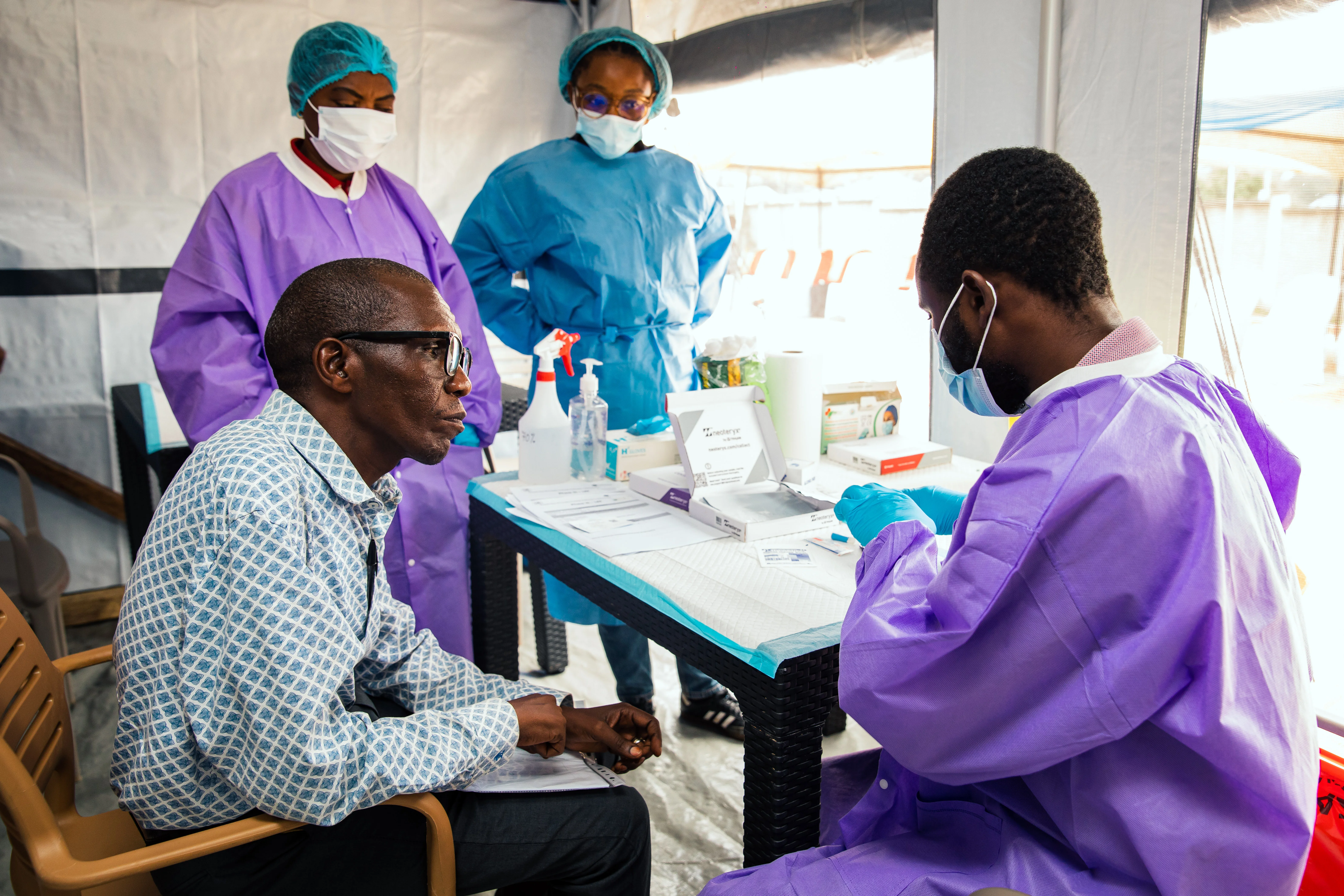
Named ‘Tumaini’ which translates to ‘hope’ in Swahili, one of the four national languages spoken in the DRC, the trial is running right at the heart of the outbreak. It has been designed using an innovative ‘ring vaccination’ approach to gather data on the potential efficacy of promising vaccines as quickly as possible.
Ring vaccination works by following the virus and enrolling those most at risk of infection. When a case is confirmed, the Tumaini team will identify their contacts, such as household members, carers and those who have been in contact after the onset of symptoms. That group is called a ring, and the individuals within it are invited to participate in the study. Unlike vaccinating the general population, it means the people taking part are the people at real risk of infection, which is both the fairest way to run a trial during an outbreak and the fastest way to get an answer. A similar trial design was used to quickly evaluate a vaccine against the related Zaire Ebolavirus that struck West Africa in 2014-2016.
We expect to enrol several thousand people into Tumaini – importantly including pregnant women and newborn mothers praised – as a ‘landmark’ in The Lancet. Since we are conducting this in an active outbreak, the trial has been designed to be adaptive, and the exact numbers will be dependent on the likelihood of disease developing amongst contacts of confirmed cases enrolled in the study.
Ervebo, the vaccine licensed against the related Zaire ebolavirus, is the first to enter the trial. It is being tested to see if it also offers cross-protection against Bundibugyo and could therefore be rolled out in response to this outbreak. Bundibugyo-specific candidates, developed by Moderna and the University of Oxford and the Serum Institute of India with CEPI backing, are also expected to enter the trial shortly, following their recommendation from the WHO Technical Advisory Group and anticipated local approvals.
Ramping up the response
The launch of this major efficacy trial, just months after the declaration of a public health emergency, is significant progress – and the rapid scientific movement to get us to this point is faster than during the 2014-16 West African Ebola epidemic.
First, WHO’s Dr Tedros Adhanom Ghebreyesus got health principals together in Geneva just days after the declaration of an outbreak to plan a coordinated response.
Then, thanks to pre-established vaccine development partnerships and tried-and-tested technologies at the ready, CEPI announced its first funding awards to advance Bundibugyo-specific vaccine candidates just two weeks after the Ebola alarm was sounded.
Our scientific approach also lent itself to this rapid response. While we were unfortunately not prepared for this specific Ebolavirus, it comes from a family—the Filoviruses—that we know a great deal about. This knowledge enabled us to invest quickly in vaccine designs and developers with experience working with this virus family [6].
Prepare in advance
This response shows that vaccines can move from design to human trials within weeks – a pace unimaginable a decade ago. In an outbreak when every day counts, that speed could save lives. Yet, despite this remarkable progress, it has not been enough to change the epidemic’s course. It’s painful proof that in a deadly disease epidemic, even faster than ever is often not fast enough [7].
This highlights the need for action across the whole vaccine chain – from detecting a disease to developing, testing, licensing and delivering countermeasures.
What’s clear is that the global health system needs to build better preparedness before day one so that it can get ahead and not scramble to contain deadly outbreaks. Especially as these viruses become more frequent and widespread.
As a long-established partner to CEPI, Germany’s Federal Ministry of Research, Technology and Space (BMFTR) has been a noble supporter of CEPI’s push towards this goal. Last year, the government department awarded EUR 100 million to CEPI through 2030 to boost our readiness for a future epidemic or pandemic threat [8].
Specifically, this funding will support CEPI’s new plan launching next year to build the capabilities to accelerate vaccine development timelines to as little as 100 days. Our vision lays out three interconnected priorities: continue research on the most threatening viral families, like Filoviruses, build knowledge on rapid and adaptable vaccine technologies, and expand networks of laboratories and manufacturers that can be activated in a crisis.
Today’s outbreak is far from contained. Yet, the response measures demonstrate how investing in preparedness before a crisis can dramatically reduce timescales and save lives.
Rather than defining our response to each new viral emergency as it arises, we must build a world ready to confront whatever deadly outbreak comes our way.
Sources
Related Articles