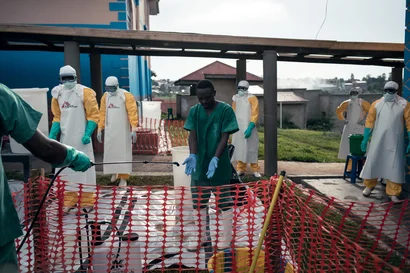
2026 Virchow-Prize Awarded to Ebola Pioneers
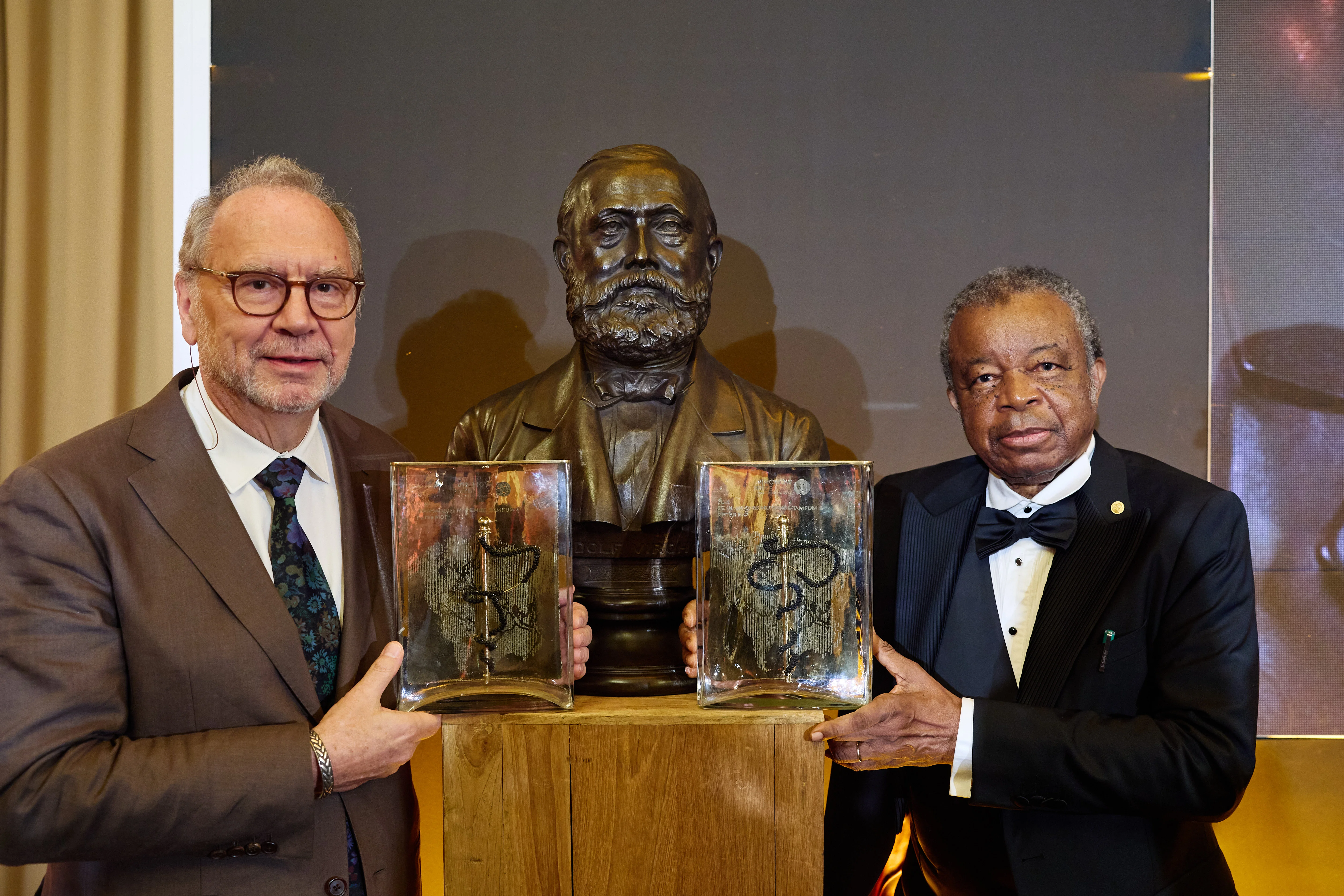
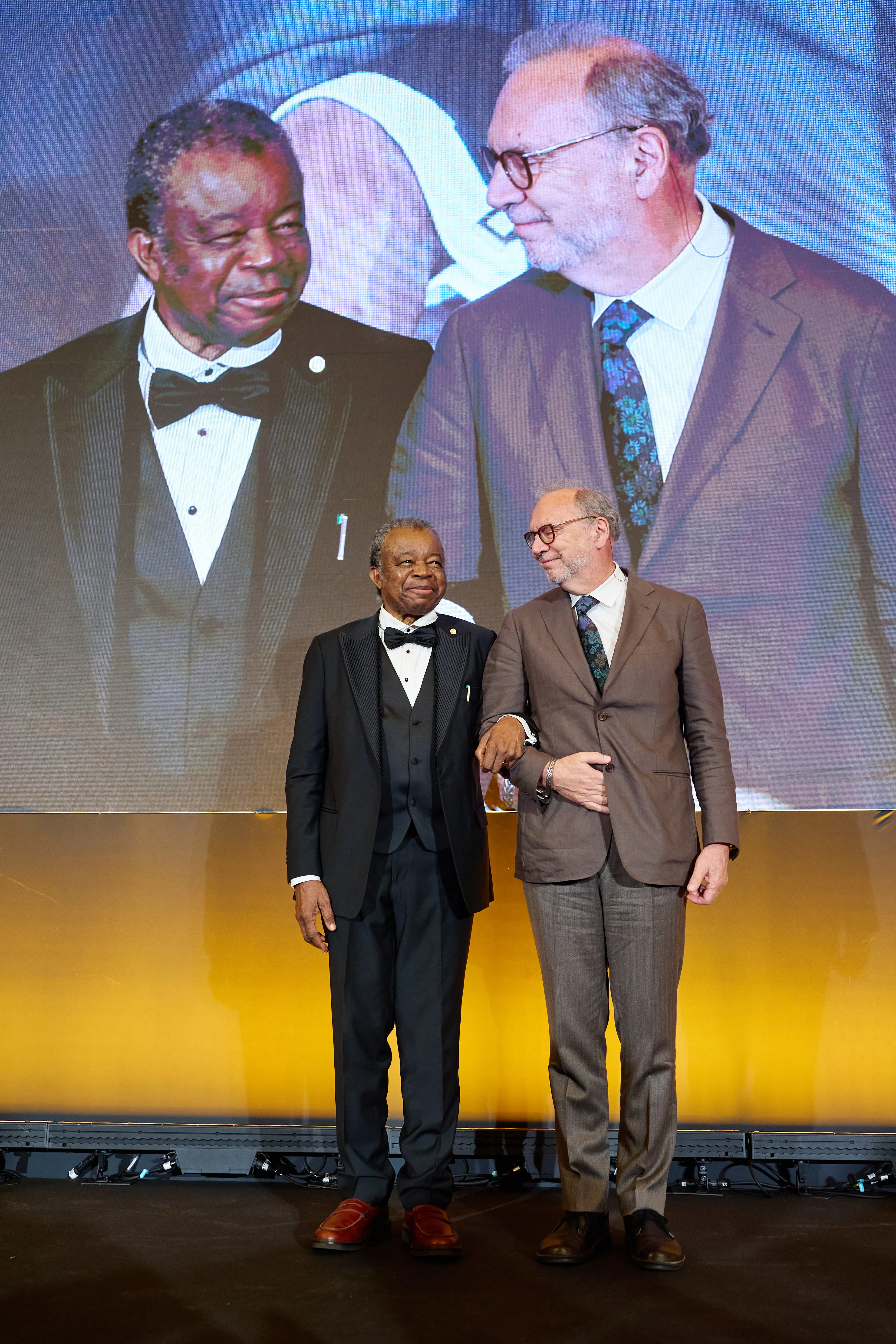
Jean-Jacques Muyembe-Tamfum and Peter Piot received the 2026 Virchow-Prize, worth €500,000, for their pioneering research on Ebola and their commitment to global health.
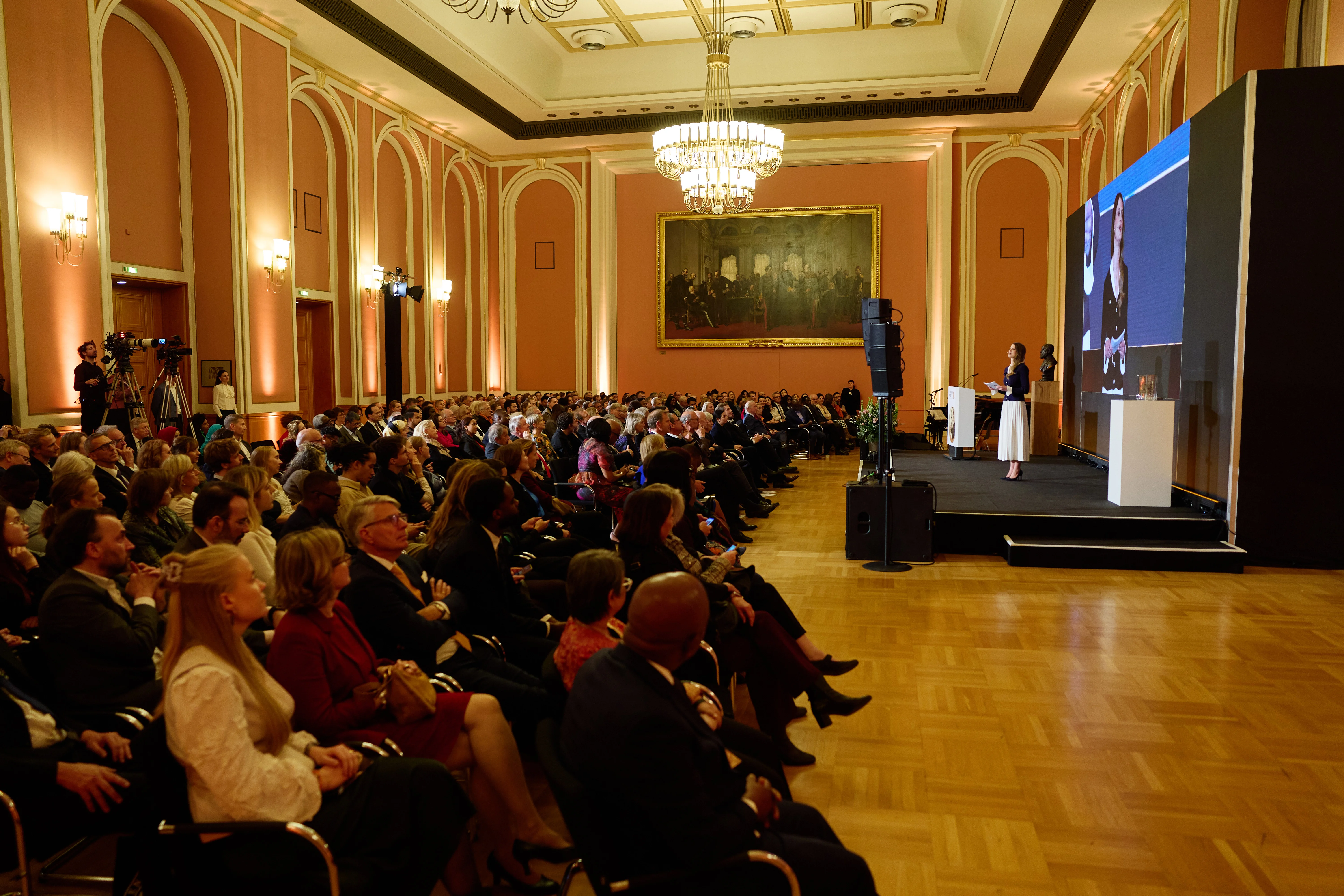
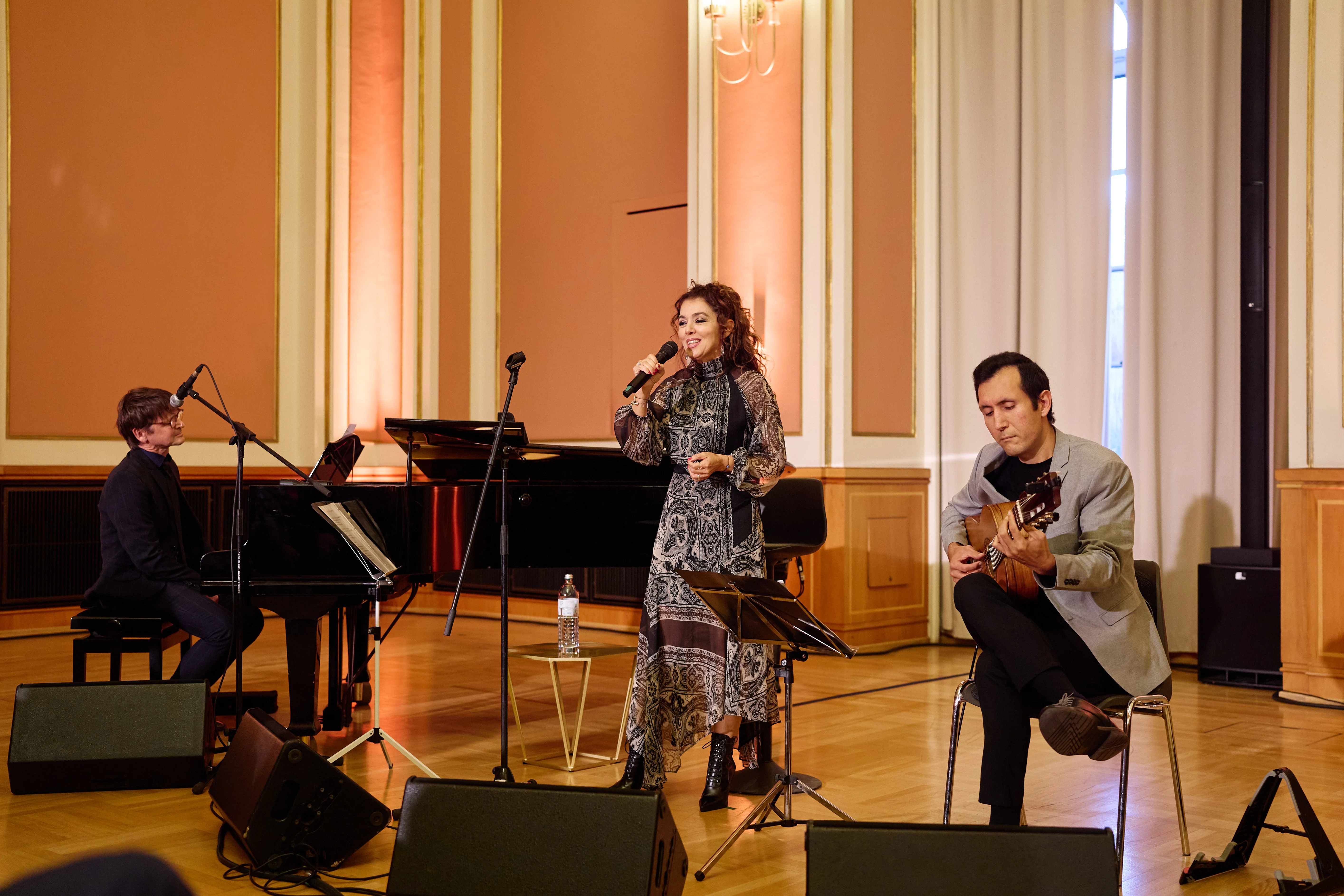
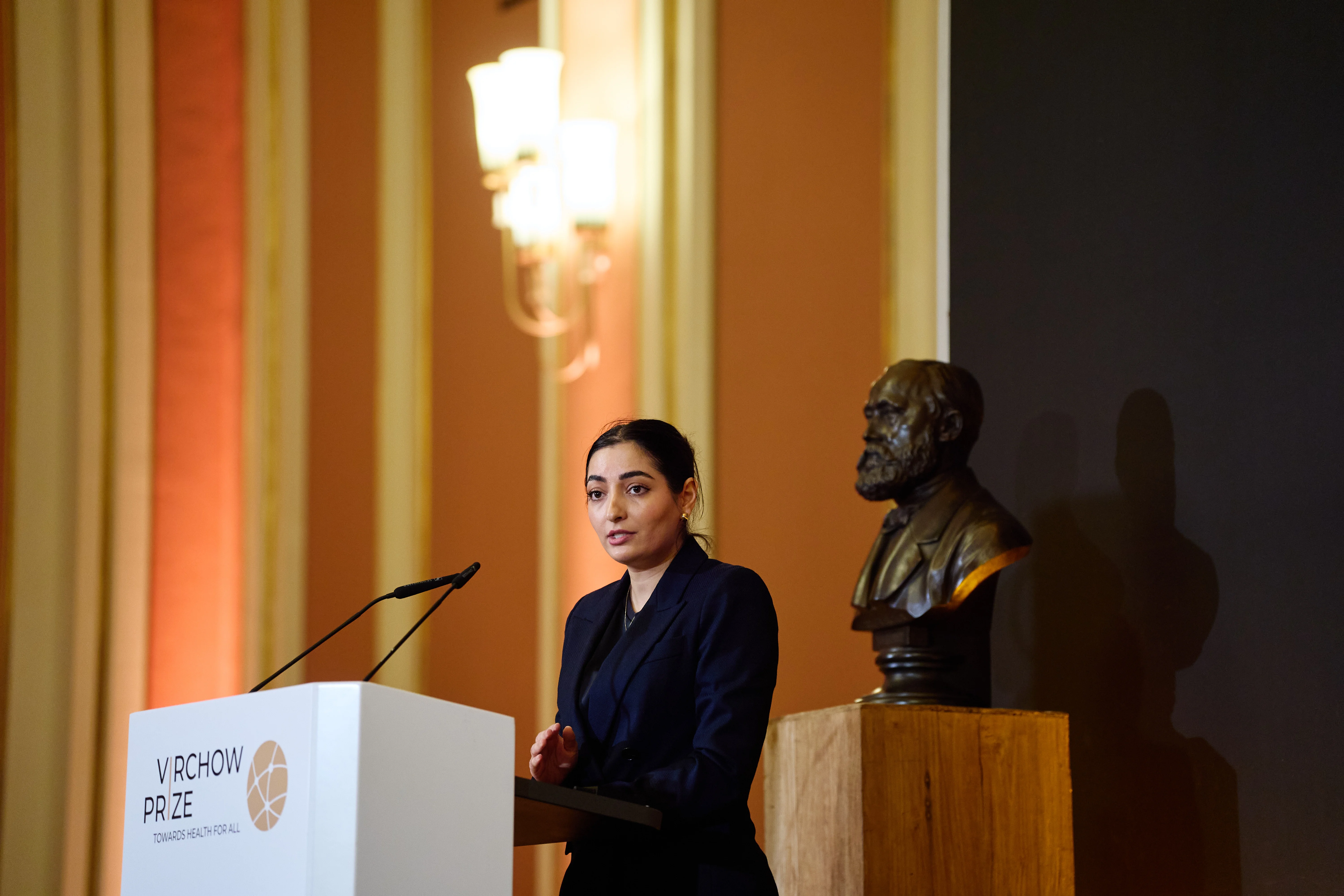
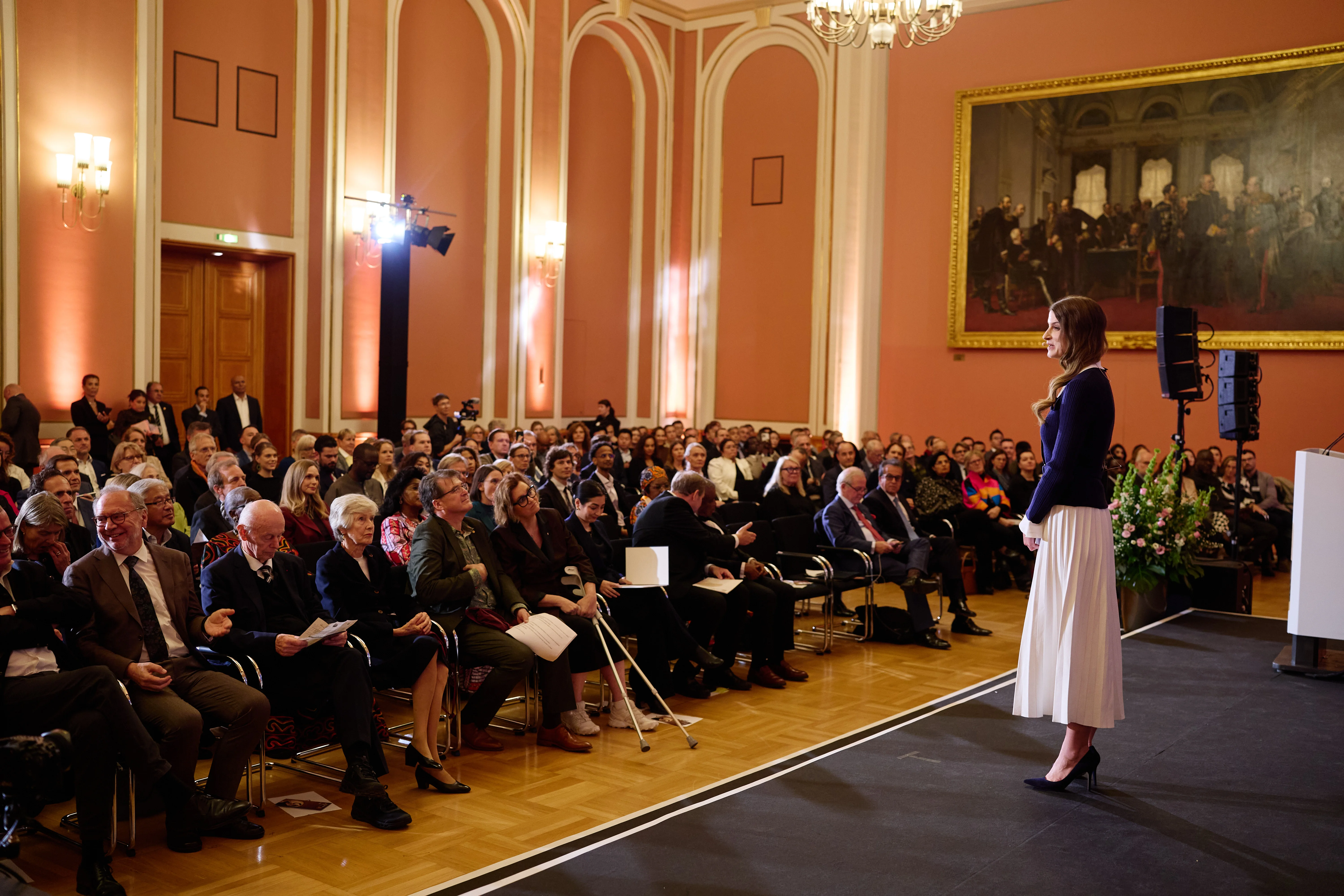
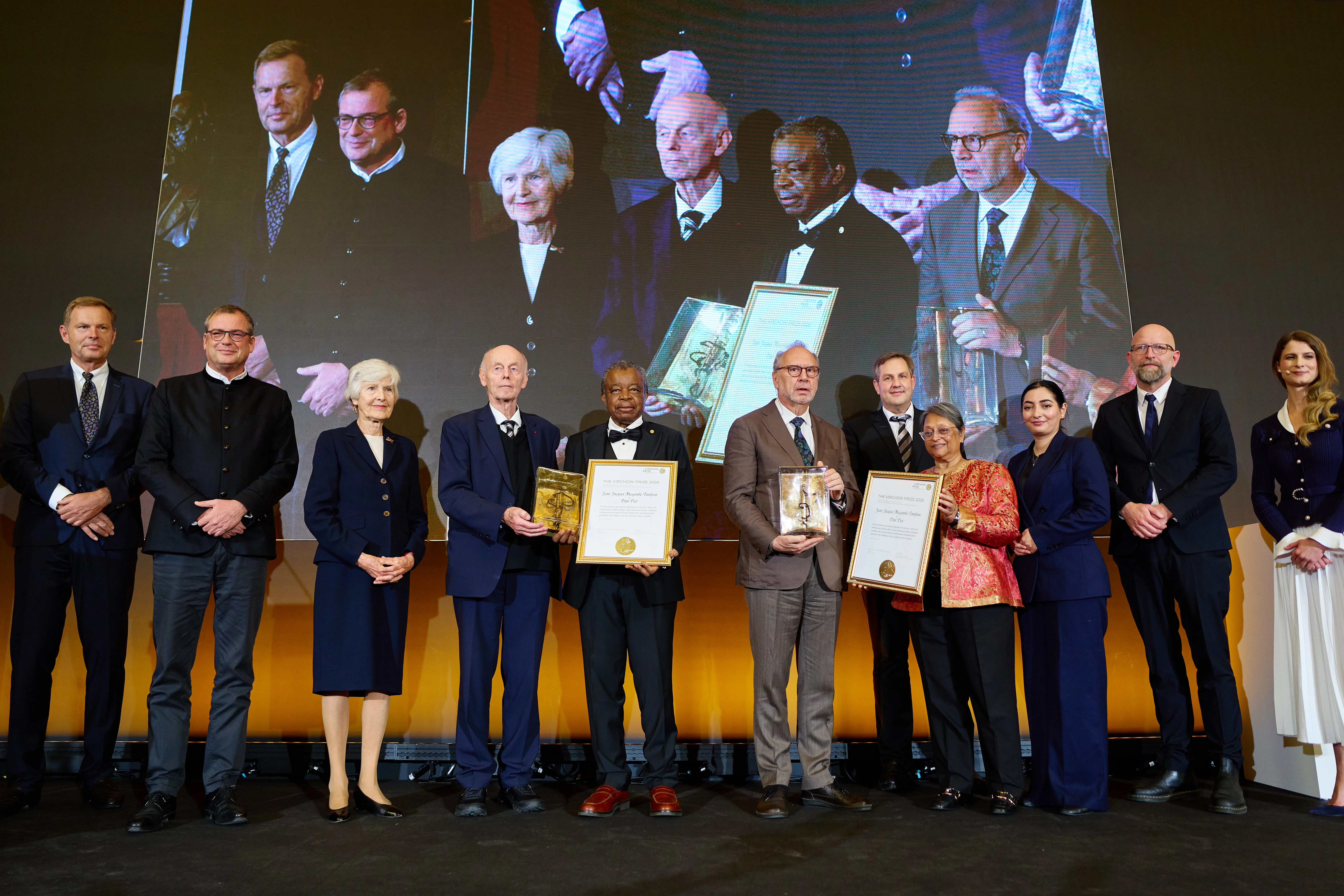
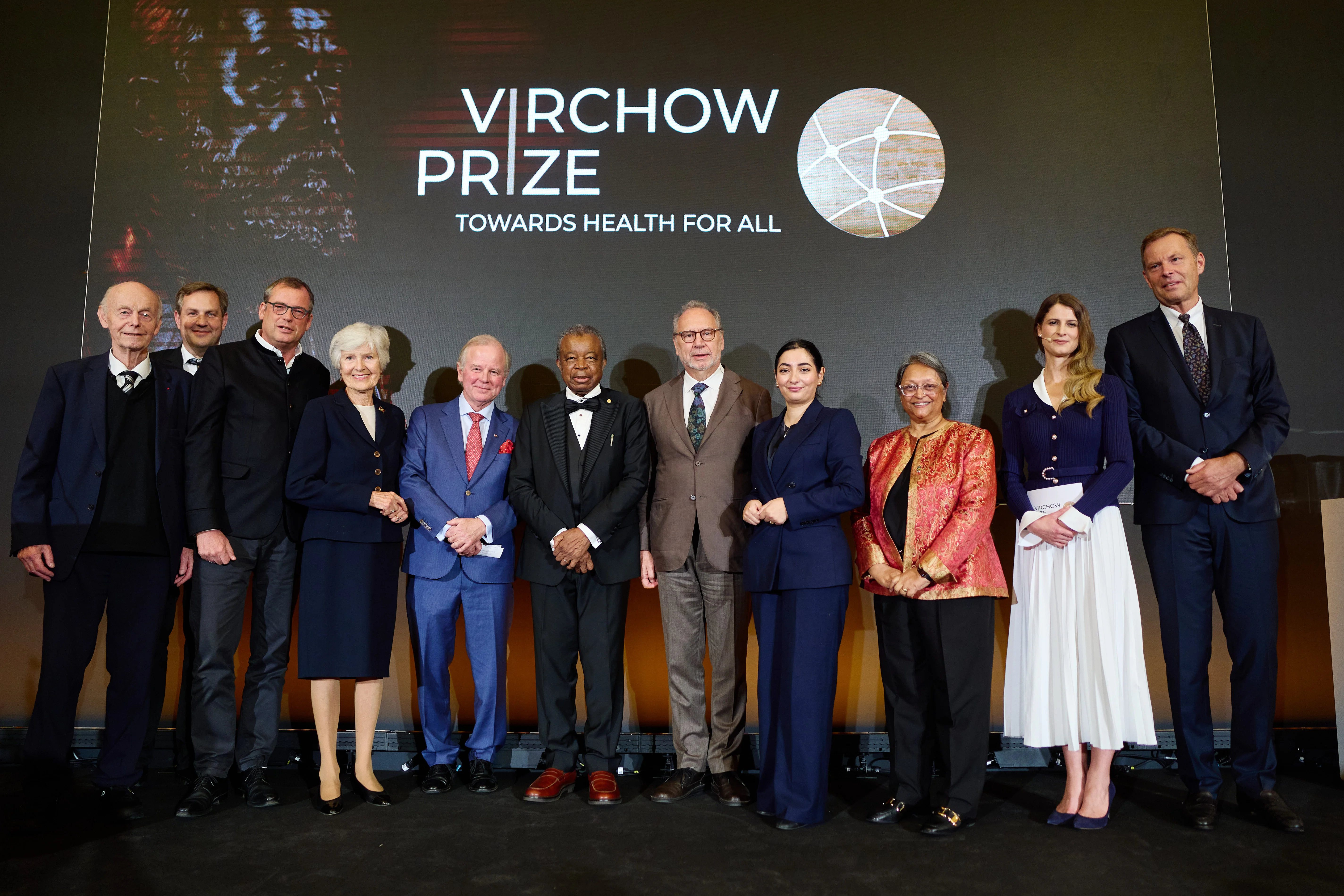
On 10 October 2026, Reem Alabali Radovan, Federal Minister for Economic Cooperation and Development, and Dr. Ina Czyborra, Berlin Senator for Science, Health and Care, presented the 2026 Virchow-Prize, worth €500,000, at the ceremonial hall of Berlin's Rotes Rathaus (Red City Hall). Around 300 guests from science, politics, civil society and business, representing countries from around the world, attended the ceremony.
The Laureates
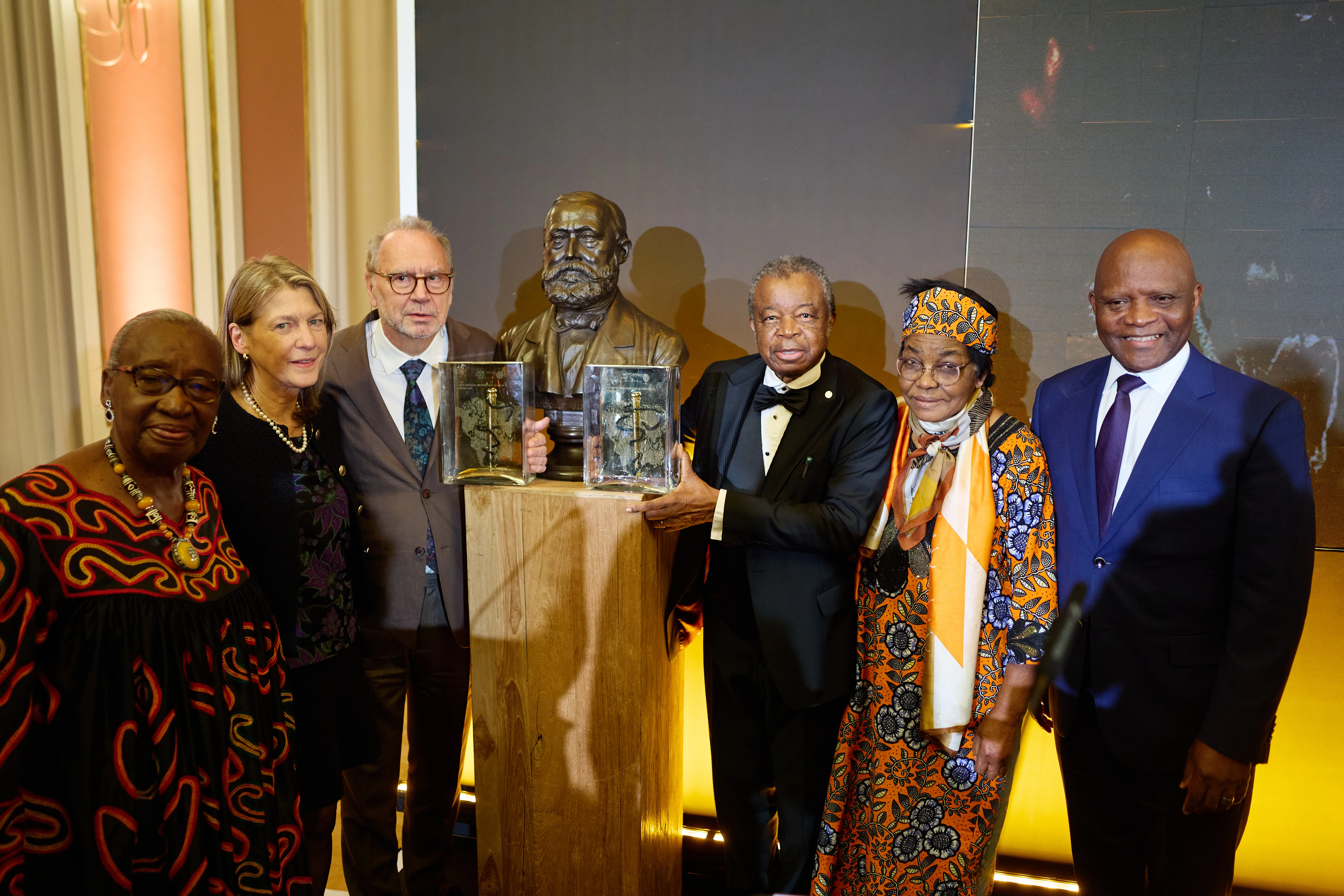
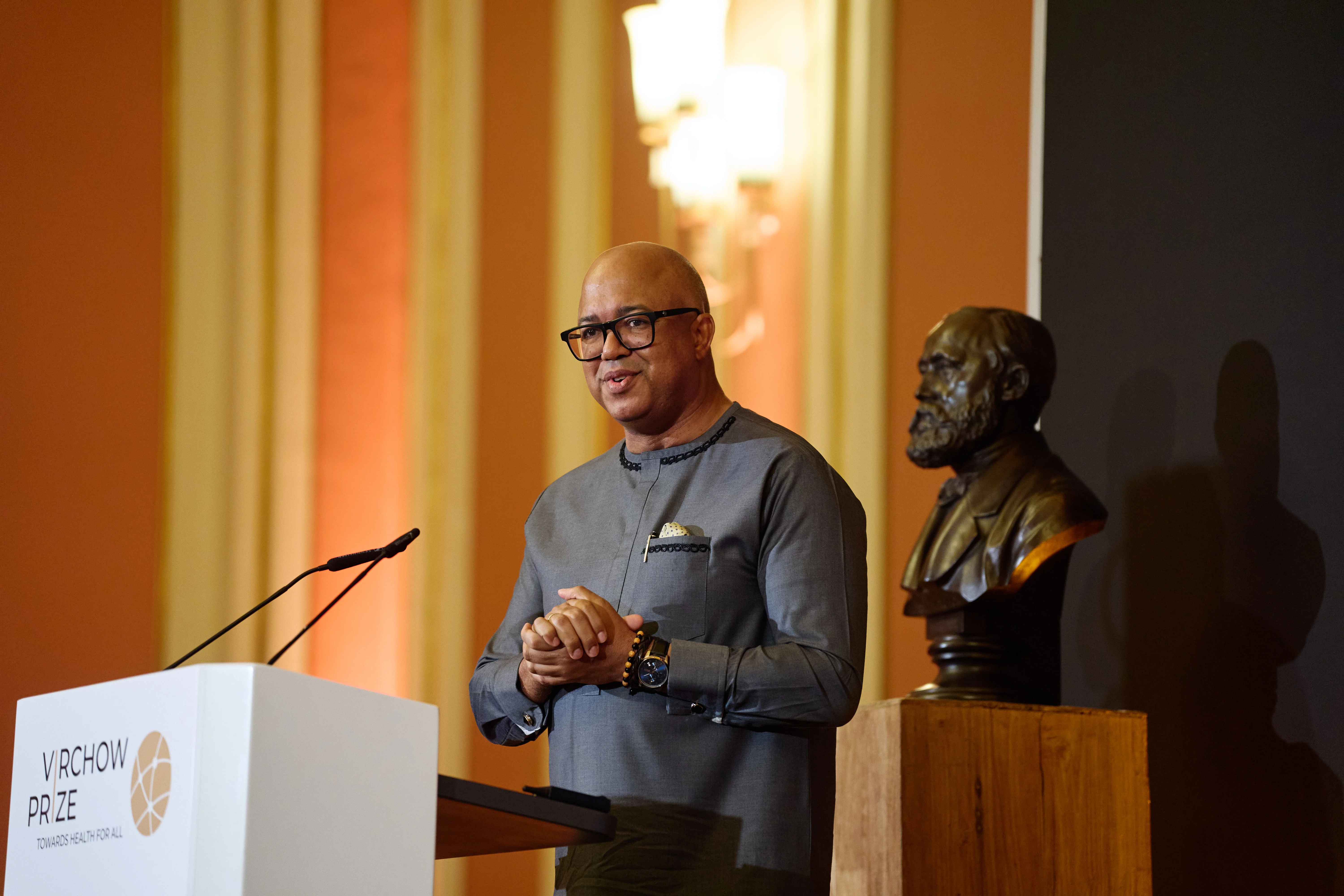
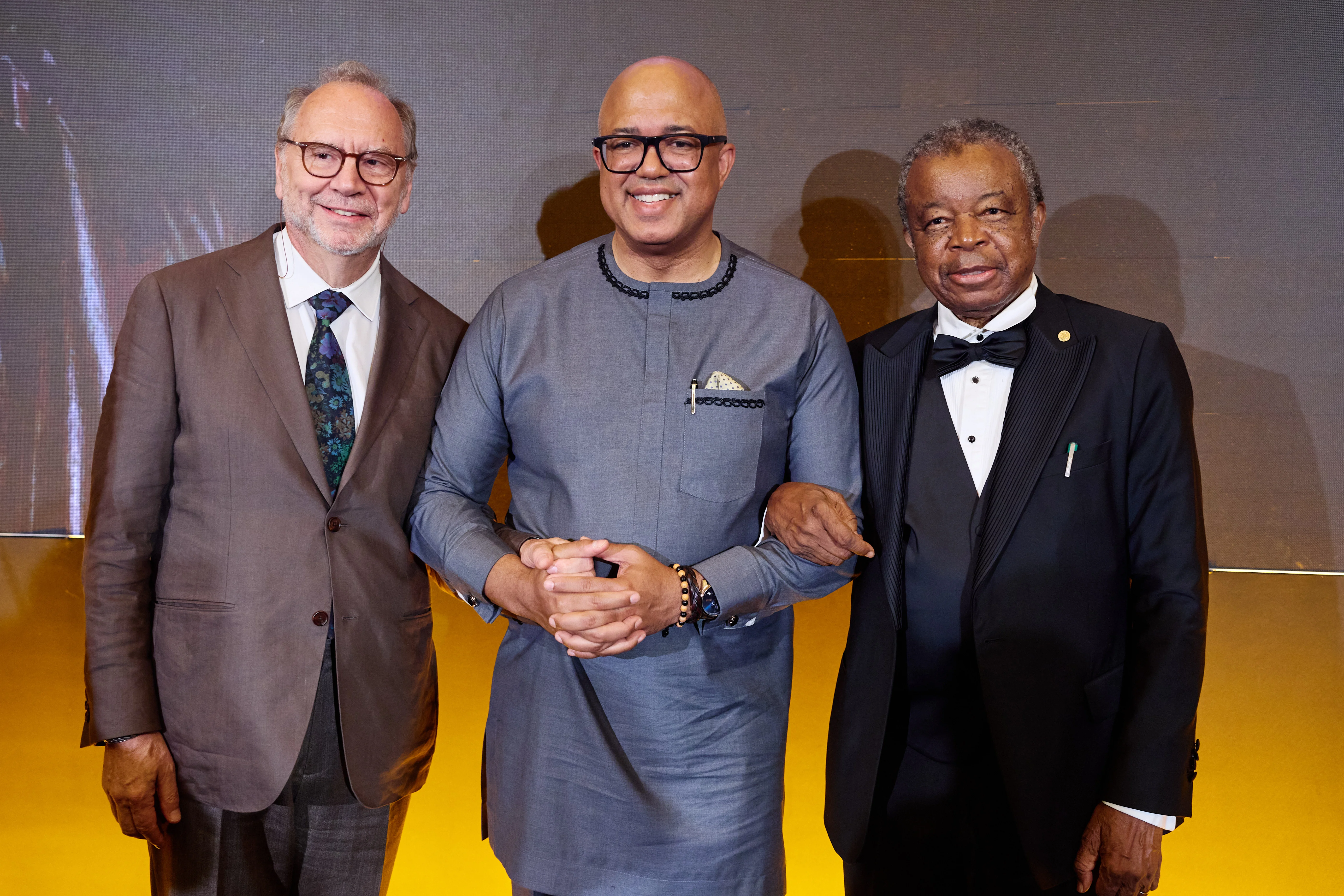
The prize was shared equally between Professor Jean-Jacques Muyembe-Tamfum, a scientist from the Democratic Republic of the Congo, and Professor Peter Piot, a Belgian scientist. Both were honoured for their pioneering contributions to epidemic research and control, as well as their longstanding commitment to international cooperation in global health. The laudation for the laureates was delivered by Dr. Chikwe Ihekweazu, Deputy Director-General of the World Health Organization (WHO).
Jean-Jacques Muyembe-Tamfum has spent decades investigating Ebola outbreaks in the Democratic Republic of the Congo. He has helped establish scientific and medical structures to detect and control epidemics in the country. He played a key role in Ebola research and co-developed the monoclonal antibody mAb114, an approved treatment for Ebola.
Peter Piot has contributed not only to scientific research but also to international health policy, drawing on his experience in Ebola research. He is the founding Executive Director of UNAIDS, the United Nations programme that leads and coordinates the global response to HIV/AIDS. Through this and other international roles, he has helped shape global cooperation in addressing cross-border health crises.
The Virchow Foundation and the Virchow-Prize
The Virchow-Prize is awarded annually by the independent, non-profit Virchow Foundation. The Foundation was established in Berlin in 2021 to mark the 200th anniversary of Rudolf Virchow's birth. It was founded in collaboration with the presidents of the German National Academy of Sciences Leopoldina and the Berlin-Brandenburg Academy of Sciences and Humanities (BBAW). The Foundation aims to honour the legacy of Rudolf Virchow, the Berlin physician, scientist and politician. It also seeks to strengthen the responsibility of science and society for improving global health.
“Medicine is a social science, and politics is nothing more than medicine on a large scale.” - Rudolf Virchow
Rudolf Virchow connected science, medicine, politics and society. More than 175 years ago, he recognised that individual health is inseparable from the health of society. For him, science was not only about gaining knowledge. It also involved responsibility and a duty to act. He advocated freedom, education, enlightenment, prosperity and social justice. He also called for fair access to healthcare and a constitutional order that protects every person's right to a healthy life.
Virchow understood health as the result of broader social conditions. It is neither solely an individual's responsibility nor exclusively a medical concern. Rather, health is shaped to a significant extent by political decisions and the conditions in which people live.
This holistic, evidence-based and humanistic understanding of health remains highly relevant today. Virchow's ideas transcend generations and national borders. They remind us that health, social justice and collective responsibility are inseparably linked.
Today, this perspective finds perhaps its most comprehensive expression in the United Nations' 2030 Agenda and its 17 Sustainable Development Goals (SDGs). Together, they provide a common framework for advancing sustainable development and improving living conditions for people around the world.
The work of the Virchow Foundation is guided by the values of the SDGs, which also reflect key elements of Rudolf Virchow's legacy: humanity, equity in health, scientific integrity and the relentless pursuit of knowledge for the benefit of all.
In line with this mission, the Foundation takes a holistic approach to health and disease. It does not view health solely as a medical issue. It also considers the political, economic and social conditions that influence it. These factors are closely interconnected. They must therefore be addressed together to achieve lasting and effective solutions to health challenges.
The Virchow Prize is a key instrument for bringing this mission to life and recognising outstanding commitment. For the past five years, the Foundation has honoured individuals who have made exceptional contributions to achieving the SDGs, improving Global Health, promoting education and culture, and developing healthy cities. The prize recognises scientific, political, social and economic achievements and innovations that contribute to a healthier and more equitable world in the spirit of Rudolf Virchow.
Previous laureates include John N. Nkengasong, Rose Gana Fomban Leke, Johan Rockström, Lucy Gilson, Zulfiqar A. Bhutta and Quarraisha Abdool Karim.
Statements on the Award Ceremony
The 2026 Virchow Prize laureates, Jean-Jacques Muyembe-Tamfum and Peter Piot, issued a joint statement after receiving a standing ovation in a deeply moving moment during the ceremony:
“We are deeply honoured to receive the prestigious Virchow-Prize. We are also profoundly moved to accept this award together after many decades of collaboration and friendship. It is a privilege to follow in the footsteps of the previous laureates.”
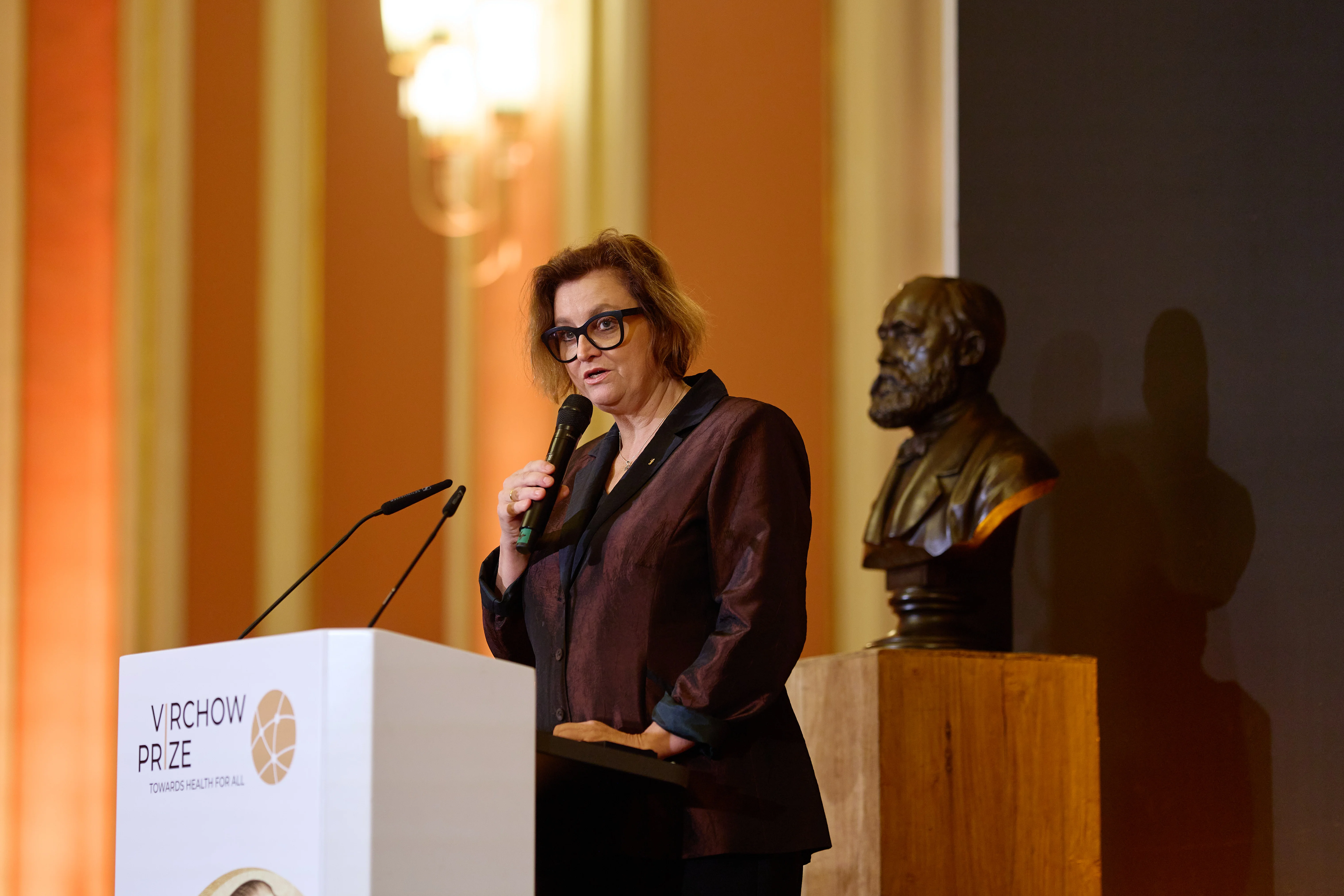
In her welcoming address, Federal Minister for Economic Cooperation and Development Reem Alabali Radovan said:
“The two virologists being honored represent outstanding scientific achievements and decades of commitment to researching and combating Ebola.”
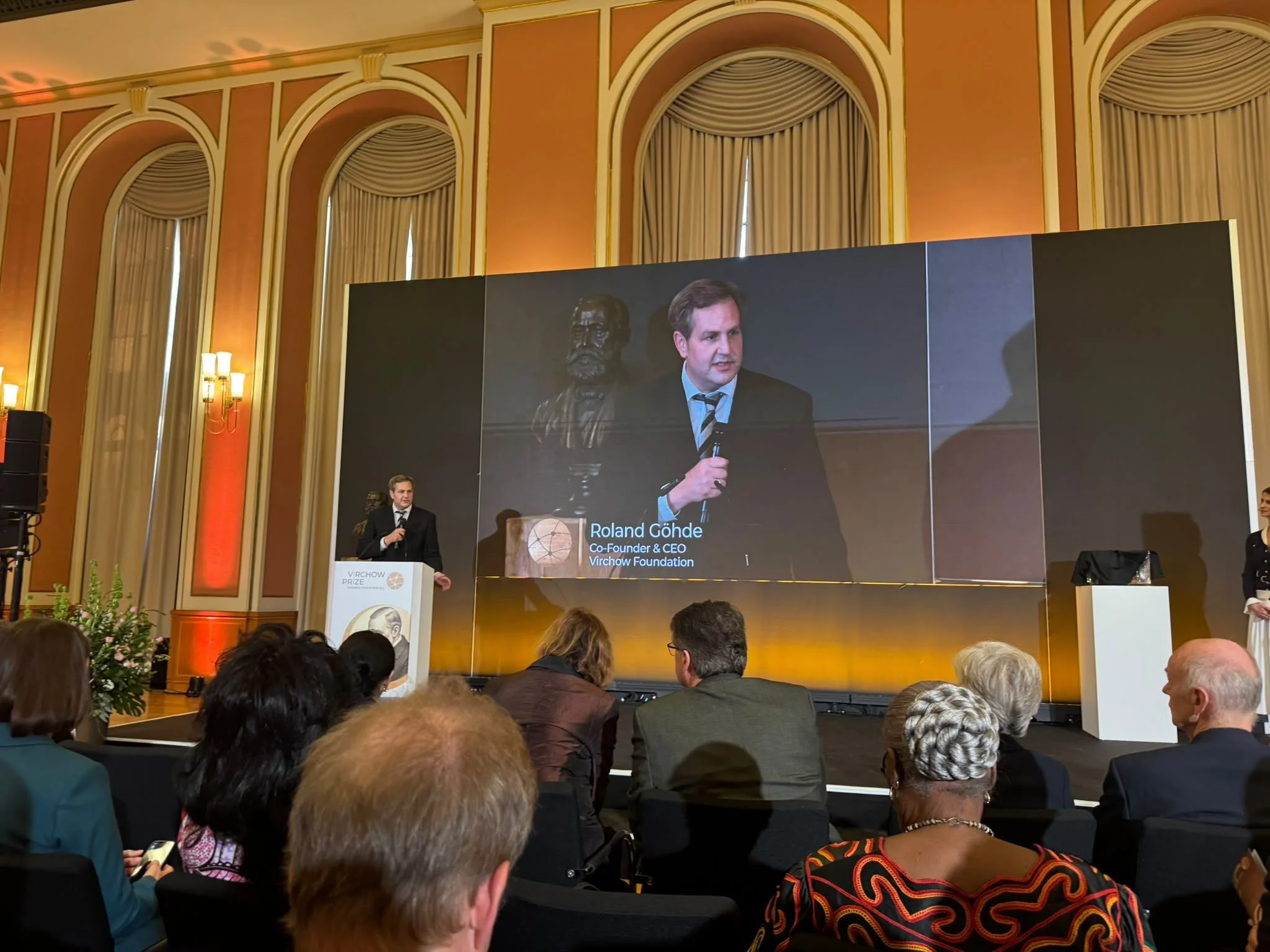
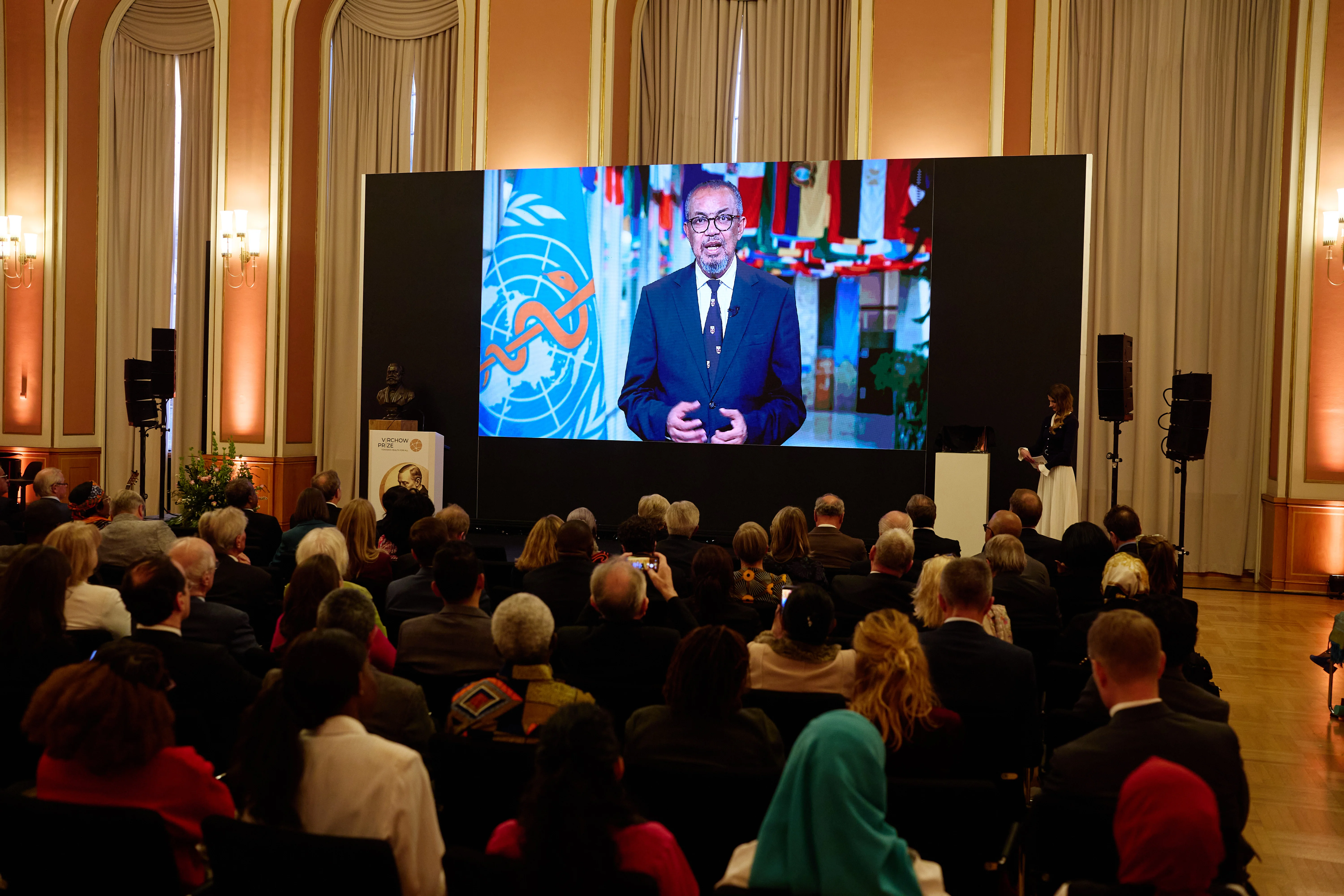
Other speakers delivering welcoming remarks included Dr. Tedros Adhanom Ghebreyesus, Director-General of the World Health Organization (WHO), and Roland Göhde, co-founder and Executive Board Member of the Virchow Foundation.
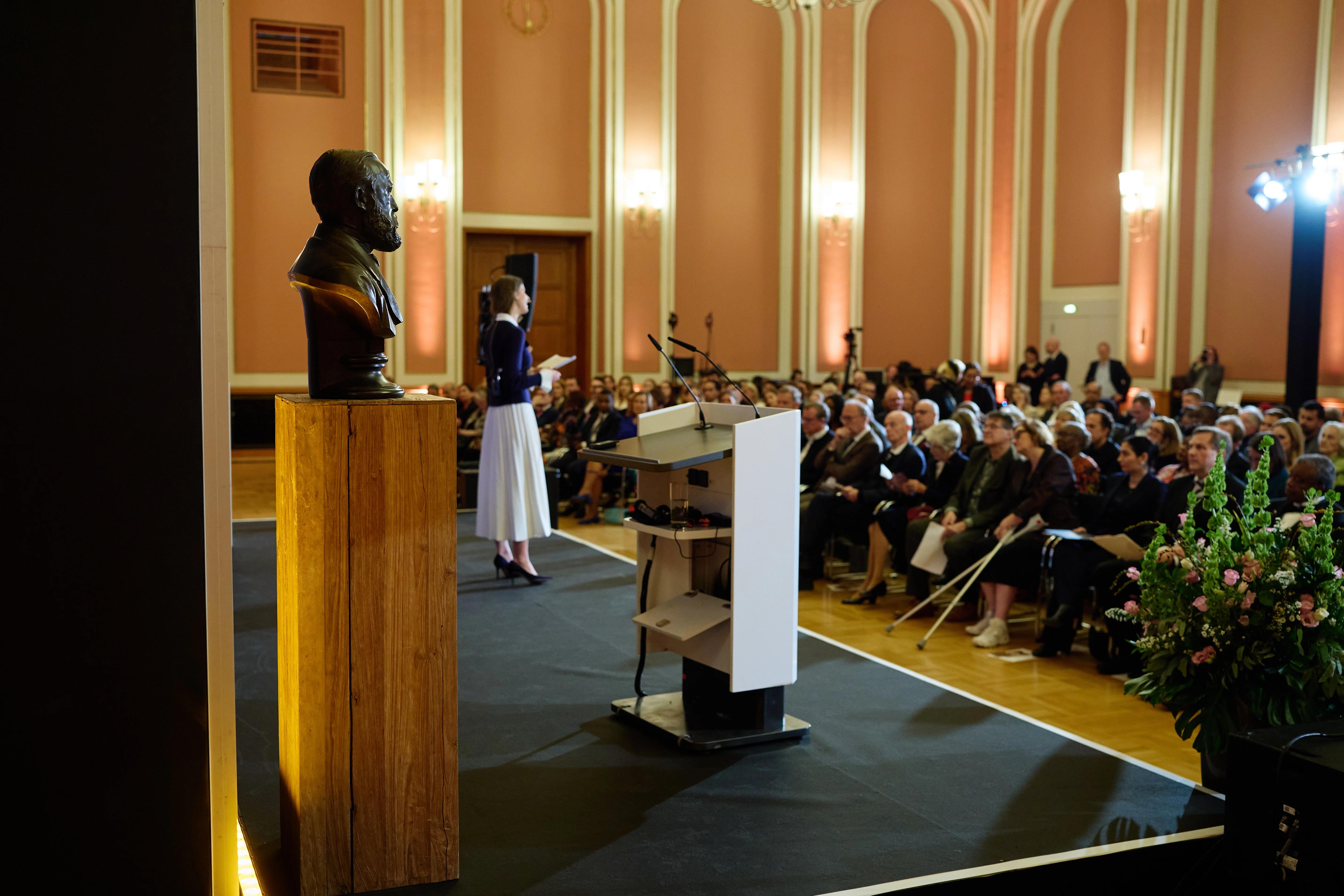
The ceremony was hosted by Dr. Miriam Orcutt, a member of the Virchow Foundation's Board of Trustees and former Director of the Lancet Commission on Migration and Health, established by The Lancet, one of the world's leading medical journals.
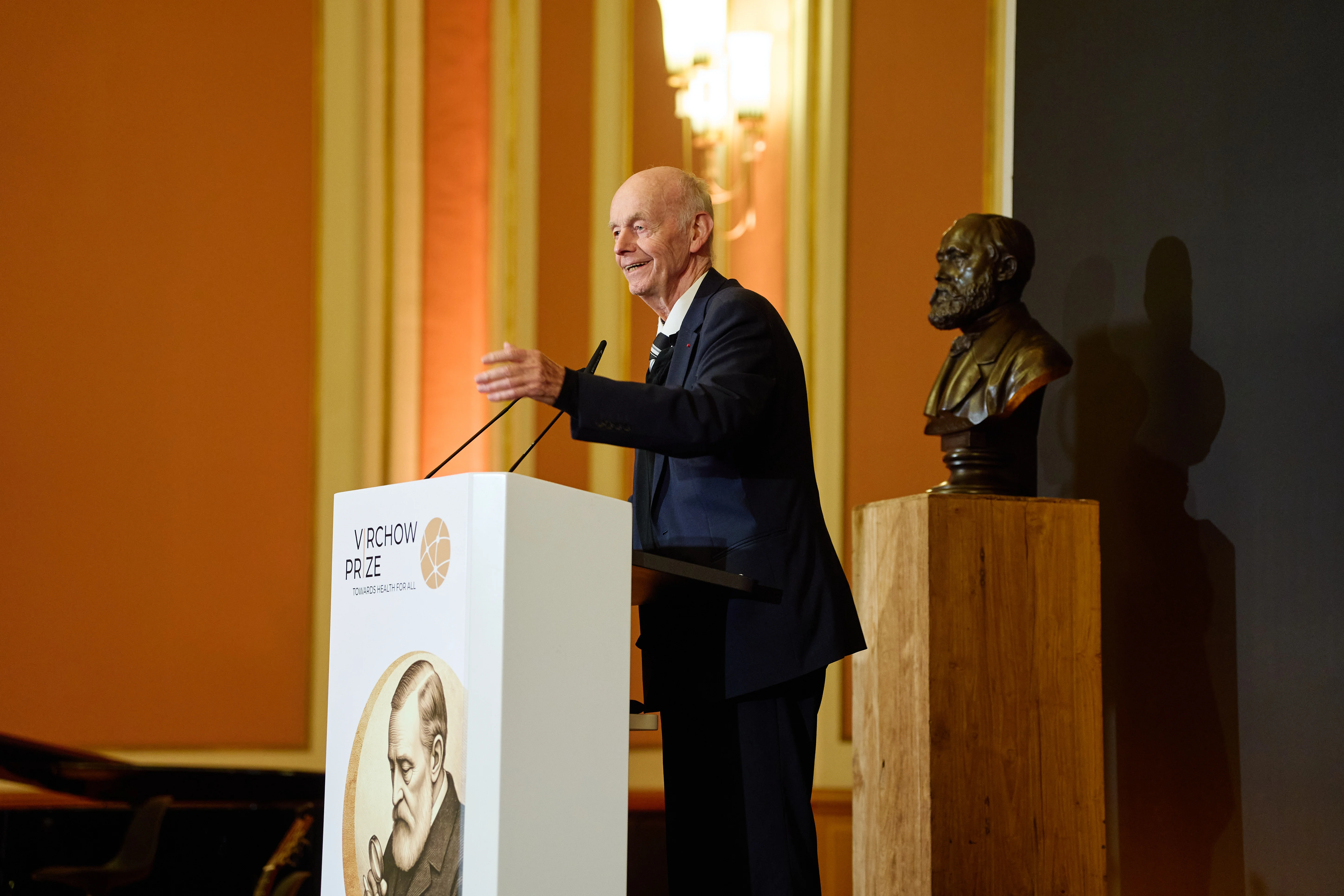
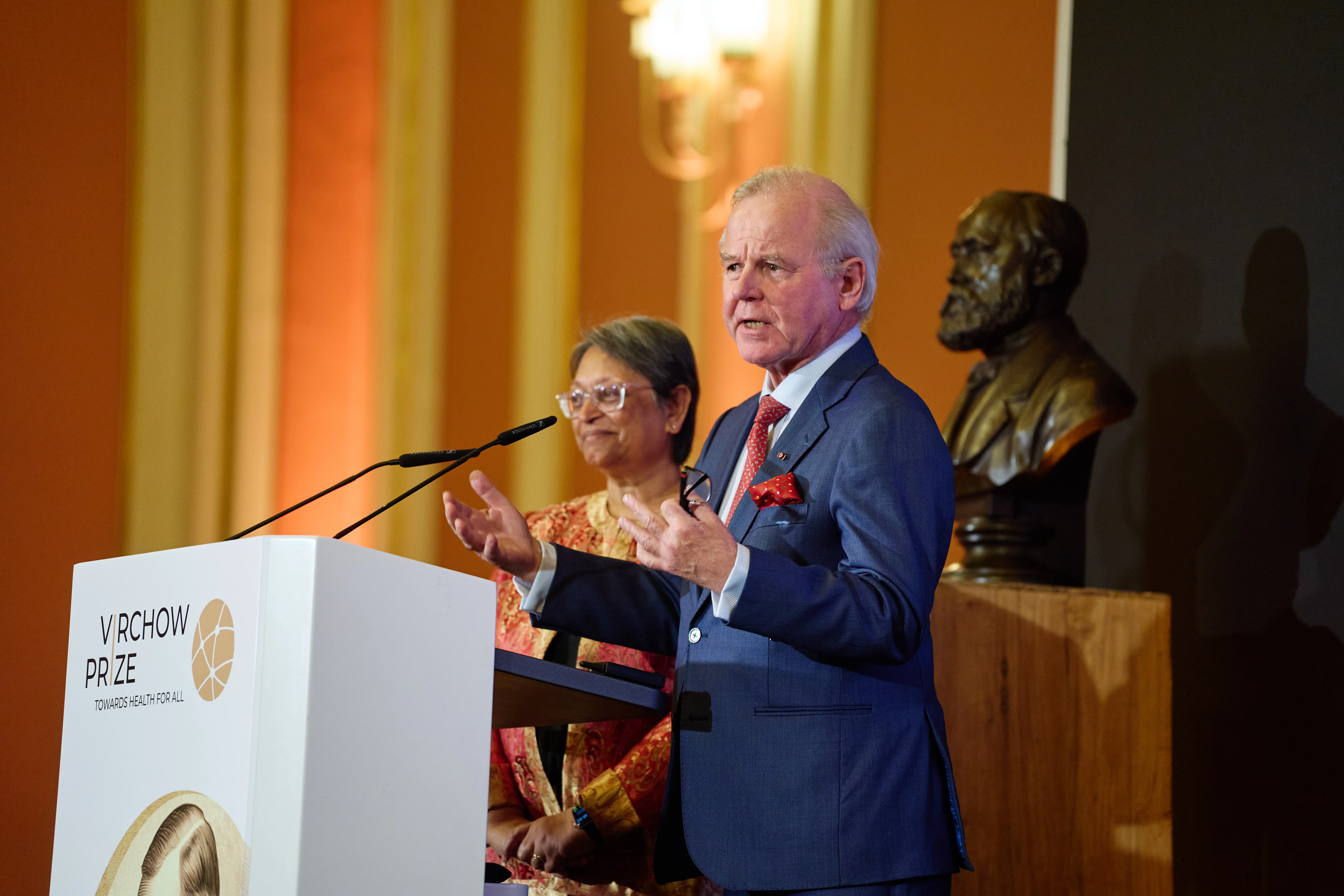
Professor Detlev Ganten, co-founder and member of the Virchow Foundation's Board of Trustees, described the 2026 laureates as worthy successors to Rudolf Virchow, who was among the first to emphasise the social responsibility of science and its obligations to society.
The ceremony concluded with a call for nominations for the 2027 Virchow Prize, issued by the co-chairs of the Virchow Prize Committee, Professor Quarraisha Abdool Karim and Professor Ole Petter Ottersen.
Related Articles