Lead Poisoning: The Biggest Neglected Crisis?
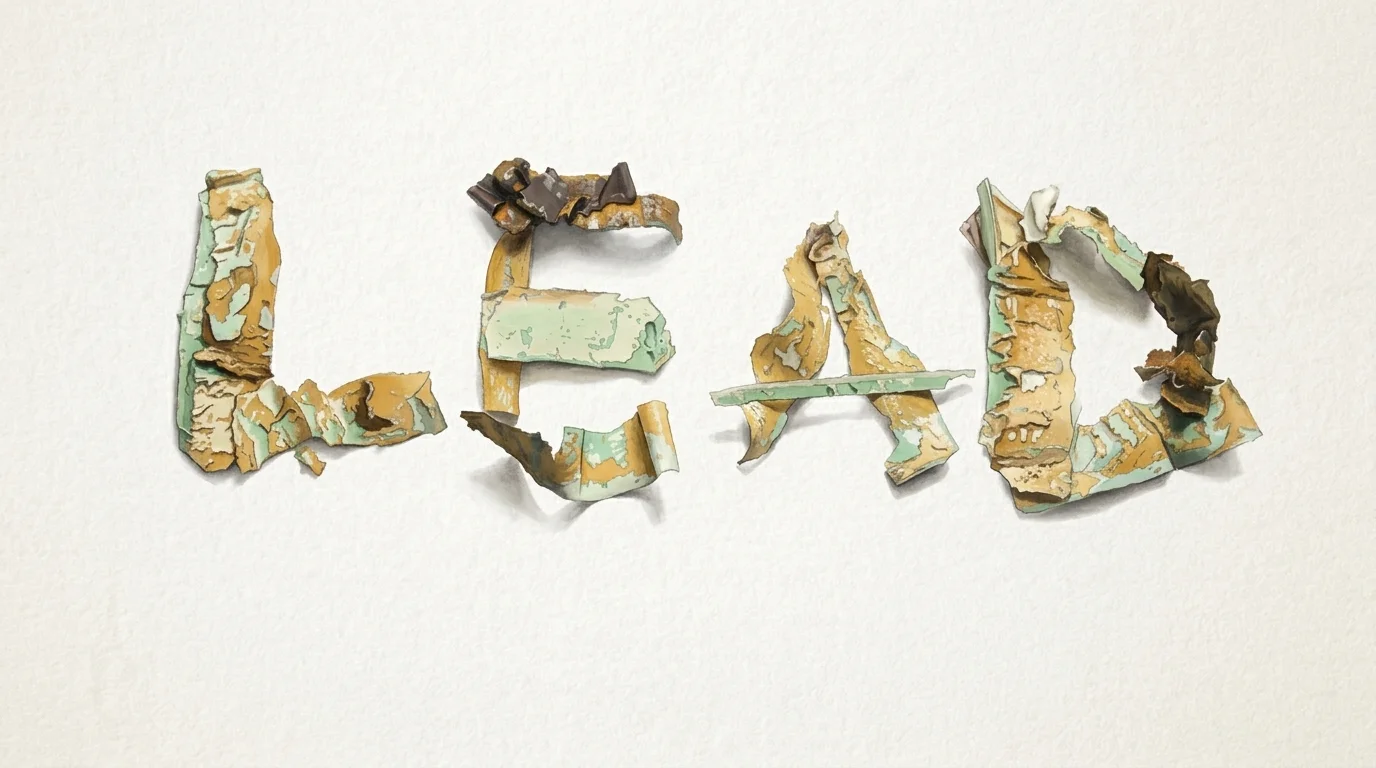
Lead poisoning may currently be one of the world’s biggest neglected global health crises. Around one in three children is affected, despite known solutions.
In a recent online session hosted by the Global Health Hub Germany, Lee Crawfurd, Senior Research Fellow at the Center for Global Development (CGD), discussed the scale of lead poisoning, its consequences for children’s development and learning, and concrete ways to prevent exposure. The session highlighted the striking gap between the scale of the problem and the attention it has received to date: lead exposure causes a massive health and developmental burden. At the same time, many of the most important sources of exposure can be reduced through concrete measures. Yet both the problem itself and potential solutions still receive too little international attention.
The scale of the problem is substantial
A joint analysis by UNICEF and Pure Earth estimated that around one in three children worldwide—up to 800 million children—has blood lead levels of at least 5 µg/dL [1]. At the same time, the World Health Organization emphasizes that there is no known level of exposure that is free from harmful health effects. Children are particularly vulnerable because lead can cause lasting damage to the developing brain and impair cognitive abilities, behaviour, and educational opportunities. For the population, the burden extends far beyond childhood: according to current WHO estimates, lead exposure was associated with more than 3.5 million deaths worldwide in 2023, primarily due to effects on the cardiovascular system [2].
The consequences for education and human capital are also substantial. In a systematic review and meta-analysis, Crawfurd and colleagues examined the relationship between lead exposure and learning outcomes. After accounting for observable confounding factors and publication bias, the researchers estimate that lead exposure could explain more than one-fifth of the gap in learning outcomes between richer and poorer countries. The authors also point out that a large share of the underlying evidence comes from observational studies [3].This connection between health, learning, and long-term economic development also makes lead exposure an important issue for global brain health.
This is where the GHHG Community Paper on Global Brain Health directly connects. The paper views brain health as a life-course concept and identifies healthy environments as well as learning and social participation as key determinants. It also highlights four levers for stronger German engagement: visibility, integration, prevention, and research. Lead exposure is a particularly tangible example of what this preventive approach means. Protecting brain health does not begin only with the treatment of neurological diseases; it begins by preventing environmental exposures that can permanently impair cognitive development.
At the same time, lead poisoning is largely preventable
Key areas for action include better data on blood lead levels and sources of exposure, binding limits and product standards, functioning laboratory capacity and enforcement mechanisms, the remediation of contaminated sites, and safer industrial practices. The Partnership for a Lead-Free Future recommends a cross-sectoral approach that brings together measurement, source analysis, regulation, and enforcement [4]. One particularly important area is the recycling of used lead-acid batteries. New modelling by Crawfurd and colleagues suggests that unsafe battery recycling could account for around one-third of lead exposure in low- and lower-middle-income countries. The authors, however, emphasize the considerable uncertainty surrounding this estimate [5].
Despite growing international attention, the issue still receives far too little attention. The World Bank continues to describe lead exposure as an urgent but overlooked development challenge [6].The Partnership for a Lead-Free Future, founded in 2024, has created new momentum. However, the funding requirements show how large the gap remains: UNICEF estimates that around US$1.6 billion in external financing will be needed by 2040 to end childhood lead poisoning [7]. In September 2026, the Partnership reported that only around one-third of this amount had been mobilized [8].The combination of a very large burden, available solutions, and comparatively low political and financial prioritization therefore remains a defining feature of the problem.
For the Global Health Hub Germany, this creates several concrete opportunities for action
First, the Hub can strengthen the link between lead exposure and its existing work on global brain health, thereby highlighting a concrete and preventable environmental risk factor. Second, its cross-sectoral structure provides an opportunity to bring together stakeholders from health, environment, development cooperation, academia, civil society, and business. One possible next step would be a follow-up to the session, combined with a mapping of German expertise, ongoing activities, and relevant funding instruments. Third, the Hub can bring international experience, for example from the Partnership for a Lead-Free Future, into the German global health debate and give concrete substance to the four levers identified in its own brain health paper: visibility, integration, prevention, and research.
The German government also has several concrete options for action
These include supporting representative blood lead surveys and source analyses in partner countries, building laboratory, regulatory, and enforcement capacity, promoting safer practices for recycling lead-acid batteries, and remediating heavily contaminated sites. Such measures can be supported through existing development, health, and environmental cooperation instruments and coordinated with multilateral actors. Another option is stronger participation in international coordination and financing mechanisms around the Partnership for a Lead-Free Future. Many of these approaches do not require entirely new programs. Instead, they primarily require the systematic integration of a previously neglected risk factor into existing work on child health, education, the environment, the circular economy, and human capital. [9; 10].
Bibliography
[1] UNICEF & Pure Earth (2020). The Toxic Truth: Children’s Exposure to Lead Pollution.
[2] World Health Organization.Lead poisoning and health.
[4] [9] Partnership for a Lead-Free Future.Partnership Strategy.
[5] Center for Global Development.Estimating Population Lead Exposure from Battery Recycling.
[6] World Bank.A World Without Lead: Paving the Path to a Healthy, Productive Future.
[10] World Bank (2025).How the World Bank Is Addressing Lead Pollution.
Related Articles