Heat Adaptation Plans for Health: Are Countries really Prepared? Lessons from different countries
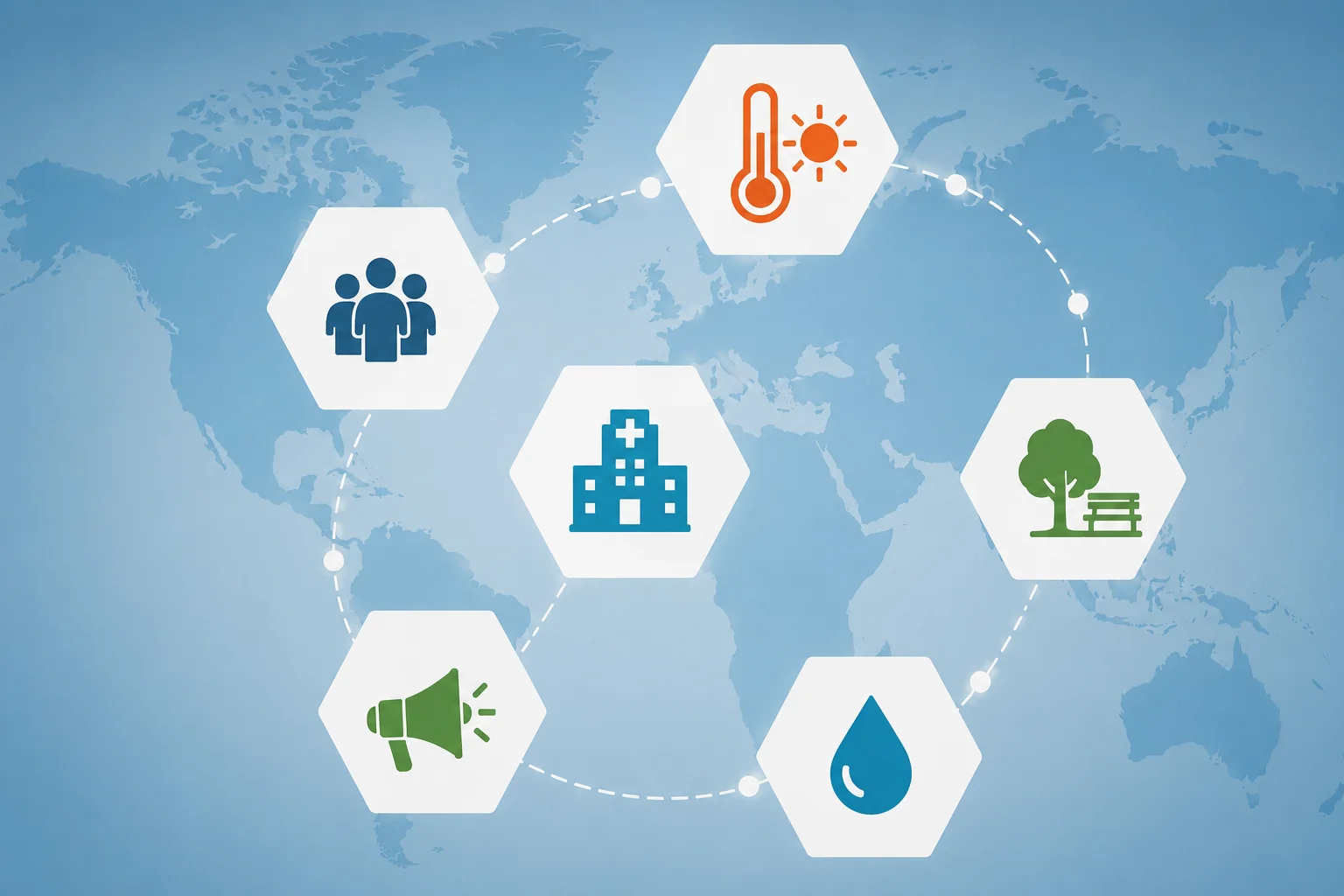
In our article series we explore how countries are preparing for a hotter future. For the first article we provide a map of heat adaptation strategies around the world.
This summer one health topic dominated the headlines—the impact of extreme heat on health. Since the beginning of weather recordings, temperatures in June 2026 have never been as high as this summer in western Europe according to the World Meteorological Organization (WMO). [1]
The World Health Organization (WHO) describes heatwaves as one of the “most dangerous of natural hazard[s]." [2] Between 2000 and 2019 an estimated 489,000 people were victims of the “silent killer” every year [3], as extreme heat is often referred to. [4] Certain groups—including older adults, pregnant women, young children, and people with chronic diseases—are particularly vulnerable, highlighting the urgent need for effective heat adaptation strategies.
In our article series on heat stress, we explore how countries are preparing for a hotter future and what is at stake if they do not.
For the first article we developed a map that shows how well-prepared countries around the world are against extreme heat. Therefore, we considered heat (health) action plans and (health) national adaptation plans. For each WHO world region, we took a closer look at the heat-health response of one specific country based on best-practice criteria. [5]
What are heatwaves?
The WMO considers heatwaves to be “one manifestation of extreme heat” and defines them as the build-up of heat over several days without cooling during the night, limiting the capacity to reduce heat absorbed during the day. [6] The understanding of what constitutes a heatwave depends also on the region, differing in days and temperatures. [7,8] Compared to heatwaves, heat days are characterized by high temperatures during sunlight hours balanced by comparatively cool nighttime temperatures. [9] Exposure to excessive heat can have various negative health effects like heat stress and heat illnesses such as heat stroke etc.
The health impact of extreme heat
Fundamentally, exposure to extreme heat impedes the body's ability to thermoregulate which in turn can negatively affect the whole body. [10,11] Under mild heat conditions, the body’s main pathways for cooling or maintaining optimal body temperature—increased blood flow to the skin and sweating—can keep the body’s temperature balanced. However, if these temperature-regulation systems are overwhelmed, excessive heat exposure can lead to heat stress which can turn into acute heat-related illnesses, such as heat exhaustion and heat stroke, the latter of which is defined by a core body temperature above 40°C. If a person remains untreated, extreme exposure to heat can even be deadly. The health effects of heat exposure depend on the duration, frequency, and intensity of the exposure, as well as on individual vulnerability factors:
Physiological vulnerability: Elderly people for example sweat less compared to younger adults and this change increases their risk for heat illnesses. People living with chronic illnesses or taking certain medications as well as pregnant people are also more vulnerable to extreme heat.
Behavioral vulnerability: Children for example spend a lot more time outdoors being active. Besides, their thermoregulation systems are still developing, and they lack the knowledge of heat risks or cooling measures. This makes them more vulnerable. Outdoor workers and athletes are also especially vulnerable.
Socioeconomic vulnerability: People living in precarious situations with no or inadequate housing which does not provide enough protection from the heat, makes them more exposed to the health consequences of heat. [12,13,14,15]
Excessive heat exposure can also damage organ systems as well as exacerbate existing conditions, especially heart, lung or kidney diseases and it negatively effects mental and sleep health. [16,17,18,19]
Annually around 498,000 persons die from extreme heat, most of them in in Asia (~46%), especially Southern Asia ~23%, followed by Europe (~37%), particularly in Eastern Europe ~19%, the Americas (12%), Africa (~5%) and Oceania (~1%). [20]
Besides these direct health impacts from extreme heat or heatwaves, exposure to heat can also indirectly affect human health negatively: i.e. heat-related pressure on health infrastructure, issues with food or water safety or heat-related reductions in labour productivity and the subsequent reduction of income and livelihoods. [21,22]
Measures against heat stress
As an individual, one can take several measures to deal with extreme heat [23,24,25]:
→ Keeping the body cool[26]: The main risk of excessive heat is a harmful rise in core body temperature. Therefore, the key strategy is to keep the body cool and maintain an optimal temperature i.e. by
- avoiding outside activities especially during the hottest times of the day,
- staying in the shade outdoors,
- keeping living and working spaces cool,
- wearing adapted clothes against heat,
- Taking cool showers or baths and wetting the skin
- predominantly consuming cool food and drinks
→ Hydrating the body: You should drink enough water to avoid dehydration. Water or other non-alcoholic, un-sugared beverages should be consumed regularly and even if one does not actually feel thirsty. The recommended amount is around 1 cup of water per hour and at least 2–3 liters per day, the needed amount varies, for example depending on activities.
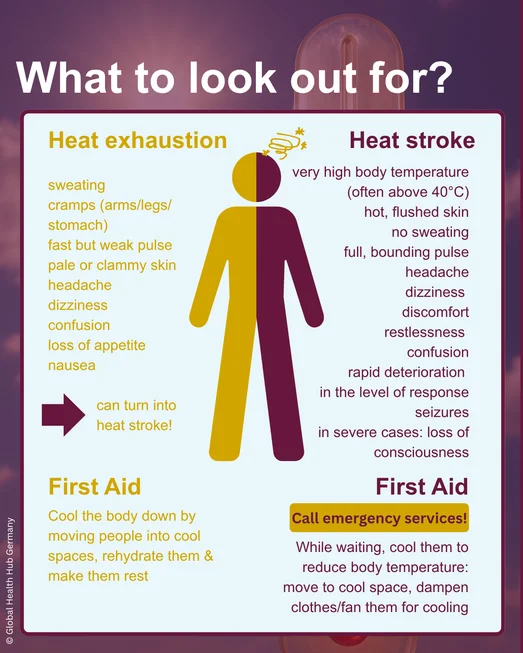
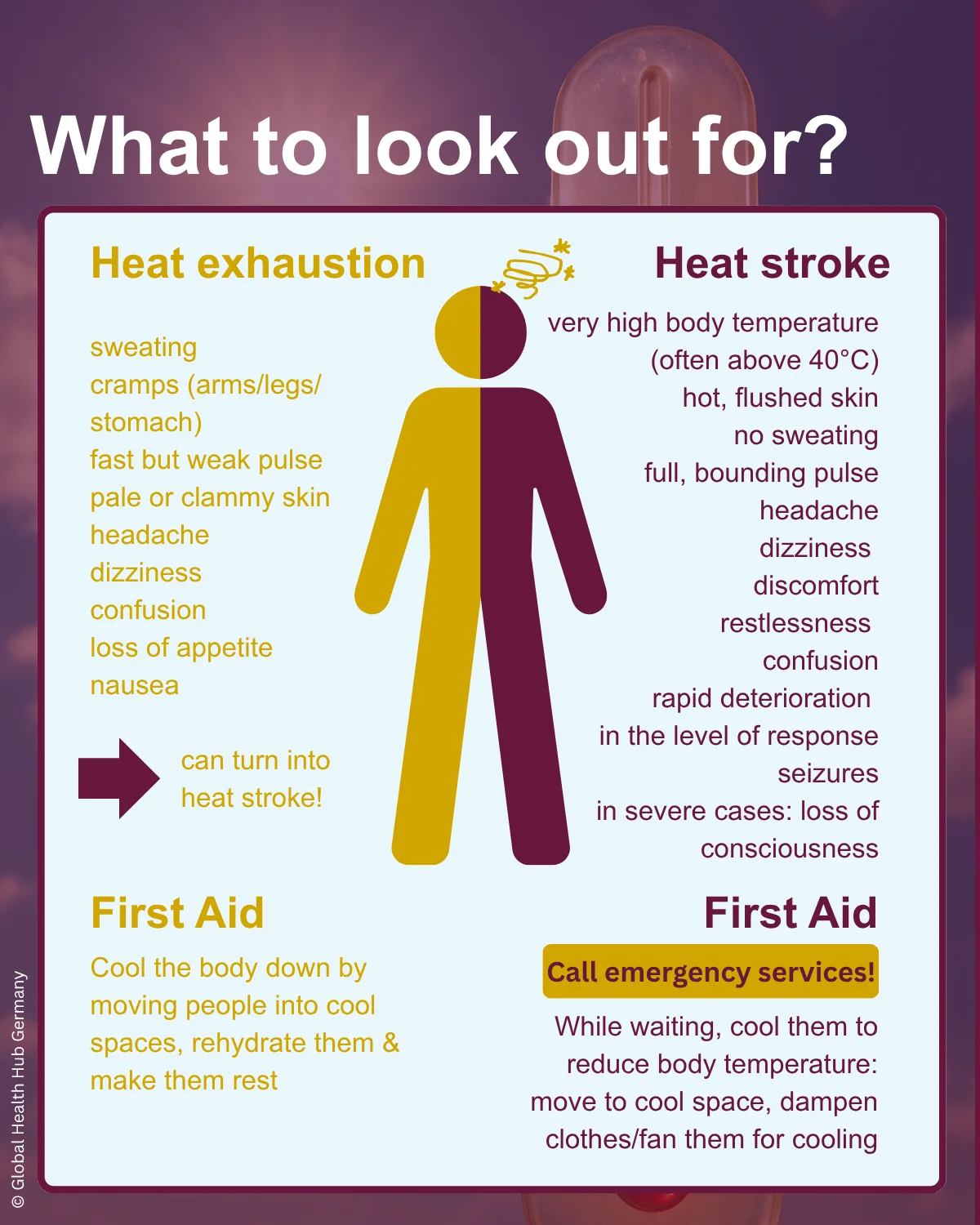
→ Check for signs of heat illness in yourself and others: It is important to regularly check in on the most vulnerable, i.e. older people, children or animals, to ensure they are coping well with the heat. In the image below you can find first aid tips on what to do if somebody experiences different forms of heat stress. To avoid other indirect health consequences of the heat, food and medicine should be stored properly.
Besides these individual measures each person can take to protect themselves and others from the negative health consequences, there are overarching steps a government can undertake to protect its population from the effects of extreme heat—beyond taking action to mitigate overall global warming and the increased risk of heatwaves and extreme temperatures by mitigating climate change.
National Adaptation Plans for Climate Change (NAP), Health National Adaptation Plan for Climate Change (HNAP) and Heat Adaptation Plans (HAP)/Heat Health Adaptation Plans (HHAP)
When it comes to adaptation strategies against climate change and heat in particular the international landscape is very heterogenous and so are the types of adaptation plans and strategies. For you not to lose orientation with all the different forms of plans, we combed through the research and give you an overview of types of adaptation plans and guidelines and deep dive into some country examples.
At the 16th Conference of Parties (COP) in 2010 countries established a process to formulate and implement National Adaptation Plans for Climate Change (NAP). These plans aim at reducing vulnerability of climate change through resilience and adaptation - not to confound with nationally determined contributions (NDC), which show a country’s contribution to the 2016 Paris Agreement with the goal to limit the temperature increase to 1.5°C above pre-industrial levels. The NAPs shall facilitate the integration of climate change adaptation strategies into policies, programs and activities.[27] On COP17 the Least Developed Countries Expert Group (LEG) was requested to prepare technical guidelines. These were developed in 2012 and updated in 2025.[28] The NAP process was precedented by the United Nations Framework Convention on Climate Change (UNFCCC) initiative to support planning of climate change adaptation in LDCs. In 2001, LDCs were invited to develop National Adaptation Programmes of Action (NAPAs), which addressed short-term needs, while NAPs focus on medium- and long-term adaptation. LDCs can build on their NAPA experience when developing NAPs.[29] Besides the formalized NAPs, there exist also National Adaptation Strategies (NAS), that are “broad policy document[s] that outline […] the direction of action in which a country intends to move in order to adapt to climate change” compared to NAPs that are “more detailed documents giving guidance on specific adaptation actions that are being planned." [30]
However, a lot of the NAPs might not address health issues sufficiently and lack detailed guidance for policymakers as research from South America suggests. [31] Therefore, the Ministries of Health of some countries have introduced specific Health National Adaptation Plan (HNAP) as part of the NAP process. The WHO has established guidance for the development of HNAPs. [32]
Some of these plans name extreme heat or heatwaves as potential climate change related threats on a national level and describe the health impacts of extreme temperatures and name adaptation measures. Some name adaptation measures specifically against heat while others address adaptation actions targeting climate change hazards more broadly with heat as one example. The comprehensiveness of these plans, however, varies significantly.
For a more specifically heat-centric approach, several countries have established action plans against heat on national, regional and/or local level. [33] However, there is no formal standard of structure, purpose and implementation. Many plans focus on short-term preparedness and response mechanisms against the effects of heat on health. [34]
Responding to rising temperatures in Europe in recent years, some European countries have developed so called heat-health action plans (HHAPs), that outline roles and responsibilities, short- and long-term adaptive measures against extreme heat. [35] For the WHO European Region the WHO established a guidance for heat health action plans, that supports countries in developing, strengthening and implementing plans. A second update of that guidance was recently published and although it focusses on Europe it recognized that the challenges and approaches might also be relevant for other regions (see image below). [36]
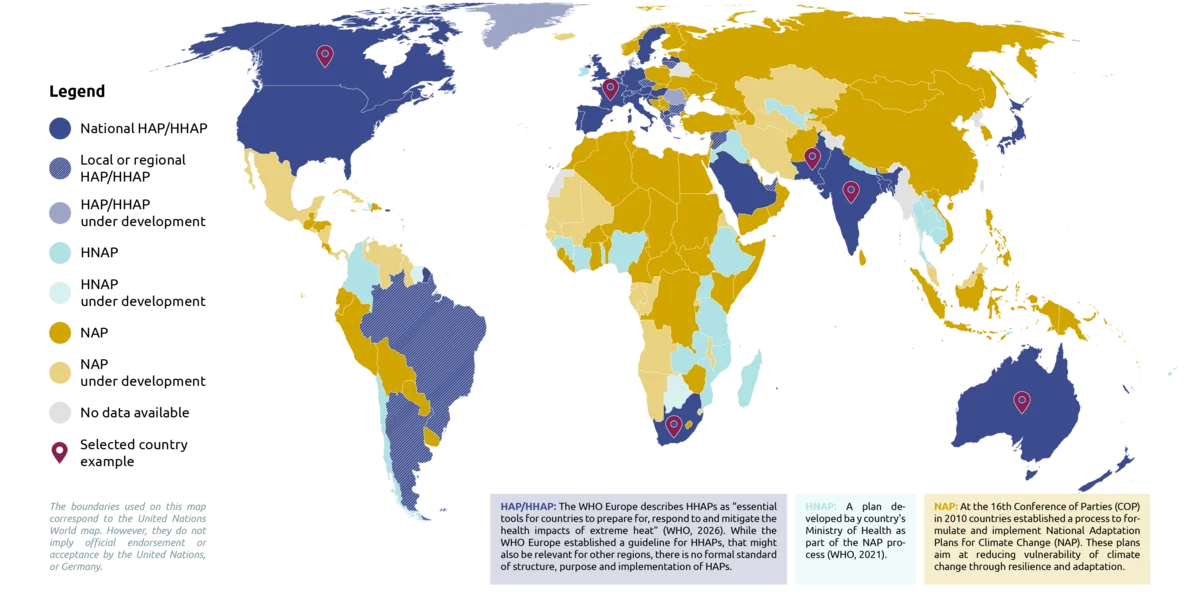
The information graphic below provides an overview of countries that have developed or are currently developing National Adaptation Plans for Climate Change (NAPs), Health National Adaptation Plans for Climate Change (HNAPs), or Heat Adaptation/Action Plans (HAPs)/Heat Health Action Plans (HHAPs).
Footnote:
For clarity and to avoid listing multiple categories for the same country, we show only one category per country. Where a country has developed/is developing an HAP/HHAP, we list the country as such. This does not automatically imply a country has an (H)NAP as well. Where a country has an HNAP, but no HAP/HHAP, we list it under HNAP rather than NAP, regardless of whether they may also have an NAP. Thus, the graphic does not provide a complete overview of all types of adaptation plans that may exist in each country; rather, it presents a simplified categorization intended to show how well countries are prepared against heat.
Local and regional HHAPs: If indicated as such, this confirms only the presence of at least one of these plans within the given country but not guarantee a nationwide coverage of such plans.
Plans under development: Refers to existing reports on the respective countries working on developing the respective plan, yet no finalized plan has been made public to our knowledge.
HNAPs: Only standalone health sector national adaptation plans were considered as HNAPs in this map.
The categories of the country’s examples have been chosen based on the six best practice elements mentioned in: Global Heat Health Information Network, UNDRR, WMO (2025). An Assessment of Heat Action Plans: Global standards, good practices and partnerships.
Sources:
NAPs:
- United Nations Climate Change and NAP Central. (2026). Submitted NAPs from developing country Parties. Retrieved from: https://napcentral.org/submitted-naps [last updated: August 2026]
- United Nations Climate Change and NAP Central. (2025). NAPs shared by developed country Parties. Retrieved from: https://napcentral.org/developedcountriesnaps[last updated: November 2025]
- United Nations Climate Change and NAP Central. (2026). NAP tracking tool. Retrieved from: https://napcentral.org/nap-tracking-tool [last updated: August 2026]
- NAP Global Network (n.d.). In-country NAP Support Programs. Retrieved from: https://napglobalnetwork.org/
HNAPs:
- Alliance for Transformative Action on Climate and Health. (n.d.) Country Documents Repository. Retrieved from: https://www.atachcommunity.com/resources/country-documents-repository/?tx_llcatalog_pi%5Bfilters%5D%5Bcountry_document_types%5D%5B0%5D=0&tx_llcatalog_pi%5Bfilters%5D%5Bcountry_document_types%5D%5B1%5D=953&tx_llcatalog_pi%5Bfilters%5D%5Bgeographical_locations%5D%5B0%5D=0&cHash=02b69e34f2dfadf10ce40a7e893ab67d
HAPs/HHAPs:
- Global Heat Health Information Network. (n.d.). Heat Action Plans and Case Studies. Retrieved from: https://heathealth.info/heat-action-plans-and-case-studies/ [last accessed August 2026]
- European Environment Agency. (2024). The impacts of heat on health: surveillance and preparedness in Europe - Briefing. Retrieved from: https://www.eea.europa.eu/en/analysis/publications/the-impacts-of-heat-on-health?activeTab=babece34-c8a2-478e-b947-4eaedc9fb9e3
- European Climate and Health Observatory. (2024). Heat Mortality and Morbidity Surveillance in European Countries – Technical Report. Retrieved from: https://climate-adapt.eea.europa.eu/en/observatory/topics/health-impacts/heat-and-health/2024-heat-mortality-technical-background-document.pdf/@@download/file
Additionally, the findings from these sources were supplemented by a complementary search in relevant search engines.
Disclaimer: The data is intended to give a general overview but without any claim to comprehensiveness and has not been analysed using a scientific method.
Country Examples adapting best practices in their Heat Health Adaptation Plans
The Global Heat Health Information Network, the World Meteorological Organization, the UN Office for Disaster Risk Reduction and the Duke Nicholas Institute for Energy, Environment and Sustainability assessed the heat adaptation plans of six countries (Australia, Canada, France, India, the United Kingdom, and the United States). Their synthesis report identifies best practices and gives recommendations for the development of national frameworks. Six overarching best practices emerged:
- Standardized national frameworks: including a clear structure that can be used on local, regional and national level.
- Clear roles and responsibilities across government levels: setting goals and objectives and including responsibilities, communication channels, timeframes and coordination mechanisms.
- Sustainable funding mechanism: integrating strategies for fiscal sustainability, funding sources and assessment of high-impact interventions.
- Usage of existing plans and infrastructure for implementation: e.g. climate adaption and disaster management plans.
- Multi-sector coordination: connecting efforts of health, urban planning, transportation etc. for inclusive heat risk management.
- Metrics-based evaluation: with regular performance reviews measuring the plan’s success including adaptive capacity, response timelines, resource allocation and community engagement.[37]
We analysed the action plans for heat health (HAPs/HHAPs) of Australia, Canada, France, India, Pakistan, and South Africa. We chose one country per WHO World Region with a HHAP/HAP and prioritized countries that have been included in the narrative analysis on case studies in heat resilience [38] and in the assessment of heat action plans [39] by the Global Heat Health Information Network, UNDRR and WMO (2025) for supplementary information.
In Southeast Asia only India has an action plan for heat health and in Africa only South Africa. In the Eastern Mediterranean Region Pakistan, Saudi Arabia, Syria and the United Arab Emirates have action plans for heat health. However, only Pakistan has a plan on national level. We thus chose Pakistan. In the Western Pacific Region Australia, Brunei, Japan, New Zealand and Singapore have action plans for heat health. Australia is mentioned in a narrative analysis on case studies in heat resilience and in an assessment of heat action plans by the Global Heat Health Information Network, UNDRR and WMO (2025). Therefore, we took a deeper look on Australia. In the WHO European Region 23 countries have developed a HHAP and four have one under development. Out of the 23 countries we decided to take a closer look at France, since it is the country within the European Union, that was also analysed in the narrative analysis on case studies in heat resilience and in the assessment of heat action. In the WHO Americas Region six countries have action plans for heat health. We decided to look at Canada, since it is included in the narrative analysis on case studies in heat resilience and in the assessment of heat action plans by the Global Heat Health Information Network, UNDRR and WMO (2025) and because it has established “Heat alert and response systems (HARS) as best practices.
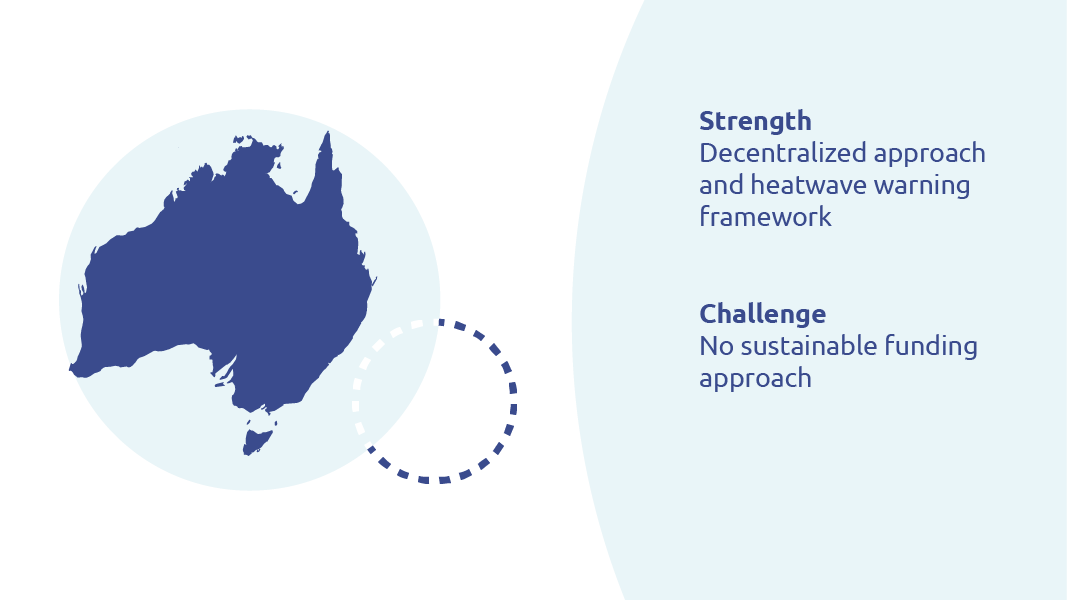
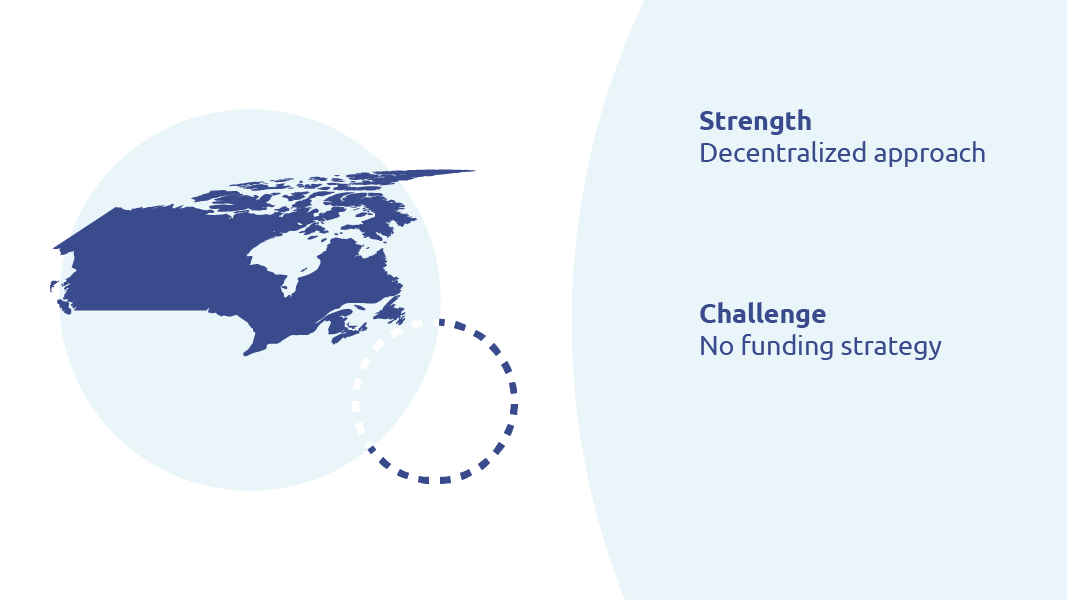
These country examples show that a decentralized approach or localized action works best in implementing action against heat waves. National warning frameworks also play an important role in extreme heat response. The biggest challenge for a lot of countries remains the lack of a clear funding strategy for heat health action. Actions are mostly funded on local level with some countries directly criticizing the lack of specific emergency funds.
Australia


National framework:
The Australian National Health and Climate Strategy states that a national heat-health action plan will be developed. [40] However, the Australian Bureau of Meteorology launched a National Heatwave Warning Framework in 2022. [41] The six states of Australia already developed or are currently developing their own plans. [42]


Roles and responsibilities (as stated in the National Heatwave Warning Framework):
Federal Level:
The Bureau of Meteorology issues meteorological information, warnings and forecasts on heatwaves and extreme weather conditions.
State and Territory Level:
State and territory governments are responsible for protecting life, property and the environment and decision making in these areas.
Lead agencies in states and territories vary but normally include health departments, emergency services, and meteorological bodies. [43]
Heatwave plans should include communication strategies, strategic priorities for preparation, response and recovery from heatwaves as well as triggers and alert action.


Sustainable funding:
The National Heatwave Warning Framework does not address funding mechanisms. Only the strategies of New-South Wales and Western Australia address funding. Yet, the plan for Western Australia mentions no funding is available for the hazard of heatwaves. In New-South Wales each agency covers costs for training and emergency operations, but New-South Wales Treasury may provide supplementary funds, if the expenditure prevents agencies from continuing normal operations.


Usage of existing strategies:
The National Heatwave Warning Framework provides guidance for the plans established on state level.


Multi sectoral coordination:
The plan relies on cooperation between state and territory government departments and agencies, local governments and specialist organizations. Cooperation across sectors includes public health, meteorological services and emergency management. [44]


Metrics-based evaluation:
The National Heatwave Warning Framework calls for a post event review and debrief including evaluation of all activities across the total warning system to be executed by the state or territory.
Canada
National framework:
The Pan-Canadian Framework on Clean Growth and Climate Change [45] includes actions to address climate change related health risks such as extreme heat. Besides, Health Canada provides guidance to Canadian communities in developing heat alert and response systems (HARS). [46] Four out of 10 provinces have dedicated HARS, Quebec has a risk management plan, and two provinces are currently developing HARS. [47]
Roles and responsibilities:
For more specific information on roles and responsibilities, we look at Manitoba’s Heat Alert and Response System (HARS) Guide from 2024, that is comparatively comprehensive.
Federal Level:
Environment and Climate Change Canada and the Meteorological Service of Canada establish heat alert thresholds, monitor and forecast heat, issue official heat warnings, and provide weather and climate data to support preparedness, response, and mitigation.
The Public Health Agency of Canada coordinates federal public-health support during significant heat events, including information sharing, preparedness and mitigation planning, response support, and post-incident evaluation.
Health Canada provides evidence-based heat-health guidance, communication materials, and best practices to support provincial messaging, mitigation planning, and post-incident evaluation.
Provincial Level:
At the provincial level, relevant health, emergency management, communication, and education authorities collaborate to monitor and respond to extreme heat events. Their responsibilities include issuing alerts, coordinating communication, informing health care providers and vulnerable populations, and supporting local authorities, schools, and childcare facilities, as well as mitigation measures Heat-related morbidity and mortality are monitored, and preparedness and response activities are regularly evaluated and used to update the Heat Alert and Response System (HARS).
Regional Level:
Regional health authorities collaborate with local authorities, Indigenous communities, NGOs and municipalities to reduce heat in cities and build interventions for healthy environments.
Local Level:
Local authorities and Indigenous communities provide information and safety messaging, adapt services if needed (e.g. extending opening hours of outdoor pools, ensure public access to cooling spaces and hydration stations, monitor the impacts of heat on critical infrastructure, and review actions taken).
Sustainable Funding Mechanism:
The HARS guideline does not address funding and neither do the five existing provincial plans.
Usage of existing strategies:
Most provinces established and developed their strategies in accordance with the Canadian HARS guideline.
Multi sectoral coordination:
As the example of Manitoba shows, heat response is developed across different sectors such as health, emergency management, communication, and education.

Metrics-based Evaluation:
The HARS guideline calls for performance measurement and evaluation. These evaluations can rely on tools developed for the evaluation of public health programs.
France
National Framework:
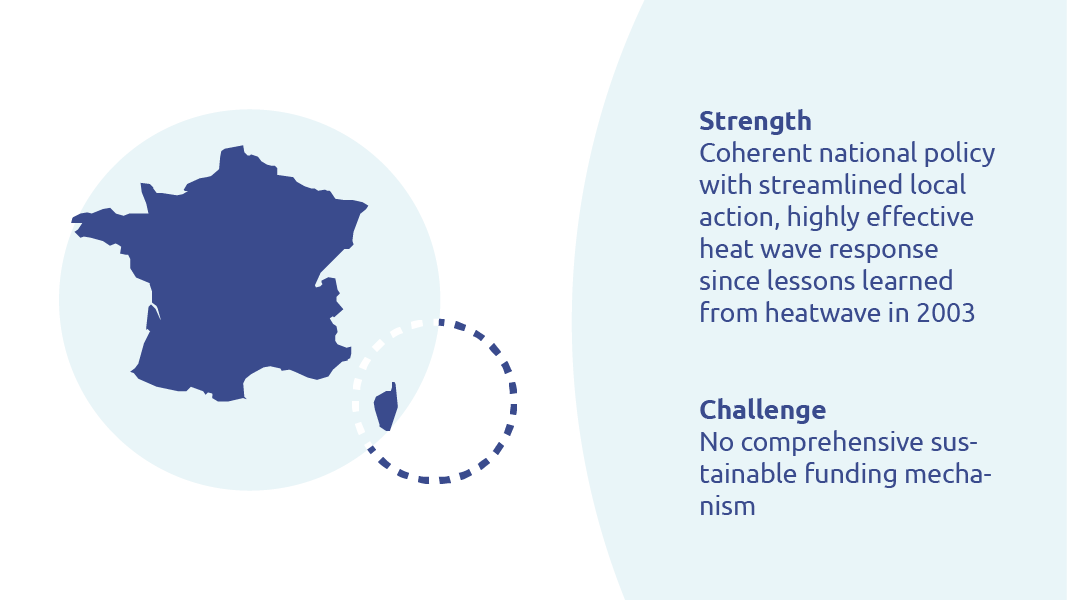
In 2017 France established its National Heatwave Plan with the contribution of different agencies in the sector of heath care and public health, social welfare, civil security, crisis management, information and communication, and meteorology. [48] In 2023 the plan was complemented by a Heatwave Management Plan. [49]
Roles and responsibilities:
The measures addressing heatwaves are organized around four main areas: (1) preventing the effects of a heatwave; (2) protecting populations through the implementation of management measures adapted to the levels of meteorological vigilance; (3) informing and communicating; and (4) capitalizing on experience.
Federal Level:
National authorities provide the meteorological and health surveillance backbone of the heat response. National climate change adaption efforts are led by the Ministry for Ecological Transition. The Ministry of Health guides the health management of heatwaves across ministries during the heatwave season [50] and communicates prevention advice and operates the national heatwave information service. France’s Meteorological Agency (Météo-France) issues twice-daily heat-vigilance information, while the national public health agency monitors health impacts.
Regional Level:
Regional Health Agencies coordinate healthcare preparedness, monitor healthcare capacity and adapt the organisation of care to demand. They also lead regional/local communication, while regional Météo-France offices provide heat-specific information to health and emergency authorities.
Departmental Level:
Prefects implement the national strategy through departmental heatwave plans such as ORSEC (Organisation de la Réponse de Sécurité Civile), coordinate relevant institutions and associations, and ensure measures for vulnerable populations, including accommodation, day facilities, outreach and social monitoring. They also coordinate preventive measures for children and other vulnerable groups.
Local Level:
Municipalities, social and care services, associations, childcare facilities and employers provide targeted protection on the ground—identifying vulnerable people, maintaining contact and outreach, providing cooling and support such as urban cooling islands, preparing facilities, and protecting workers exposed to extreme heat.
Sustainable Funding Mechanism:
The updated heatwave management plan indicates that the green fund (fonds vert), a government funding program, provides financial support for greening and renaturation projects, as well as measures to combat urban heat islands. Yet the plan does not provide any further information on funding mechanisms.
Usage of existing strategies:
After the deadly heatwave of 2003 in France the country developed a heatwave response. The lessons learned were used to establish the heatwave action plan of 2017 and the further update.
Multi sectoral coordination:
The plan gives indications for a heat response across different sectors such as government, meteorology, health, communication, and education focusing on different vulnerable target populations. France also relies on public-private partnerships i.e. with water and electricity company like Electricité de France (EDF). NGOs i.e. the Franch Red Cross assist local governments and international cooperations exist with the WHO and the EU.
Metrics-based Evaluation:
Following a heatwave or period of extreme heat, a post-event review is organized at the national level involving all relevant stakeholders. It is based on information collected at the local and regional level. Heat-related mortality in France reduced significantly since 2003 and the impact of public awareness campaign has been proven high.
India
National Framework:
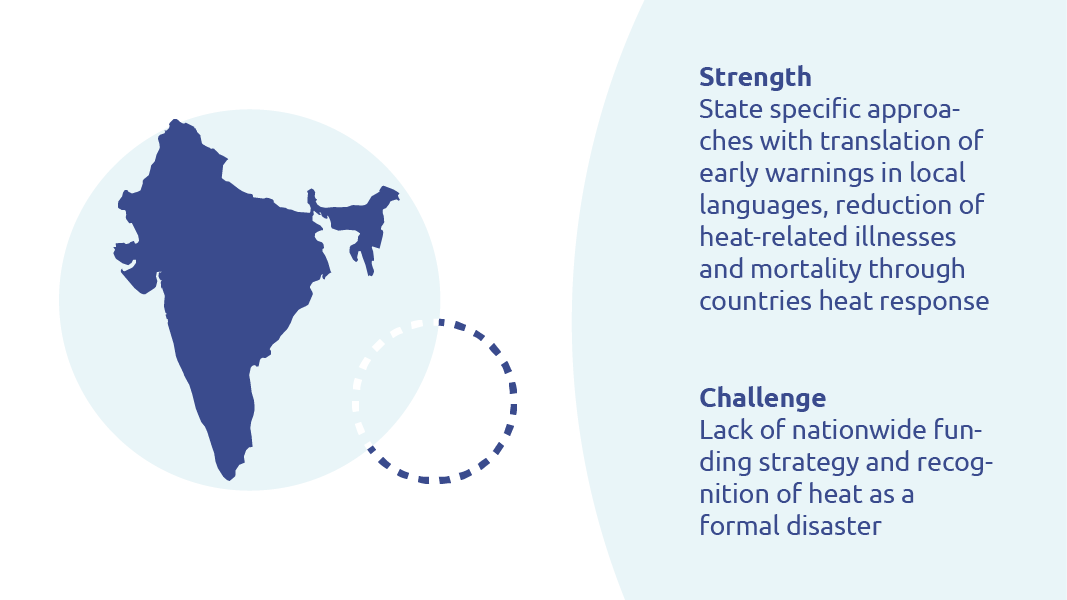
India’s Ministry of Health and Family Welfare (MoHFW) established the National Action Plan on Heat Related Illnesses [51] in 2021. Beyond the national guidance India’s response to heat stress is decentralized with specific local plans in at least 14 states and union territories and 39 cities and districts. [52]
Roles and responsibilities:
The National Action Plan on Heat Related Illnesses provides guidance on the treatment of Heat Related Illnesses on primary health care level and tertiary care level, as well as specific guidance for the paediatric age group. However, there is no overall guidance for actors beyond the healthcare sector and on federal level
Nevertheless, guidance on the roles and responsibilities of agencies outside of the healthcare sector can be found in state plans. To complete the roles and responsibilities below, we also considered the Delhi Heat Action Plan (2025). [53]
Federal Level:
The Delhi plan states that India’s Meteorological Department (IMD) provides heat-wave forecasts, alerts and district-wise temperature information, supporting timely activation of the response and post-season assessment. The Department has a “five-day probabilistic heat early warning system” and a seasonal forecast. [54]
The Ministry of Health and Family Welfare’s National Centre for Disease Control (NCDC) is responsible for capacity-building for the health system. [55]
State Level:
The National Action plan provides a hospital preparedness plan as a framework for preparing, implementing, coordinating and evaluating extreme heat response activities in state health facilities.
Delhi’s state government coordinates the heat response through the Nodal Officer for State and relevant departments. It escalates alerts, convenes agencies, maintains communication, and oversees sectoral preparedness and response across health, labour, education, transport, water, power, emergency services and public information.
Local Level:
The national plan provides a detailed workflow for Primary Health Care (PHC) on how to cool down the person, monitor the person’s status and referral to a close by hospital and gives an overview of risk factors. The plan also provides specific guidelines for children doing sports activity during the summer season.
For hospitals, specialist medical care providers and other health care providers at tertiary care level the national plan provides a detailed workflow starting for the Emergency Department for Management of Heatstroke for general patients and for children from triage, breathing and emergency investigation and protection, application of cooling measures to close monitoring of temperature, vital signs, complications etc.
Delhi’s district and municipal authorities provide local action: identifying high-risk areas and vulnerable groups, disseminating warnings, providing water, shade, shelters and cooling spaces, coordinating emergency and health services, and monitoring local impacts. Community groups and NGOs support last-mile outreach and protection of vulnerable residents.
Sustainable Funding Mechanism:
The national plan states that PHC, Community Health Centers (CHC) and District Hospital (DH)/Medical College (MC) shall provide the availability of funds. Yet, there are no designated funds available on federal level. On state level five of 14 plans of the existing plans have a funding strategy. [56]
Usage of existing strategies:
The national plan relies on the “Guidelines on prevention and management of Heat Related illnesses” established in 2015 by the MoHFW and adds an additional chapter on heat related illness (HRI) in pediatric age group, hospital preparedness plan, new surveillance formats and its standard operating procedures and guidelines for investigation of suspected HRI deaths.
Multi sectoral coordination:
While the national plan only addresses the health care sector, the state plans include different stakeholders from the local to the national level and from different sectors such as health, labour, education, transport, water, power, emergency services and public information.
Metrics-based Evaluation:
The national plan collects and compiles data on heat related illnesses every year from 17 heat vulnerable states. Over the year heat-related illnesses and mortality have reduced. [57] Delhi’s plan also includes feedback, epidemiological case reviews of heat-related mortality, and a review of the implementation of the heat wave action plan and a revision of the plan after the heat season.
Pakistan
National Framework:
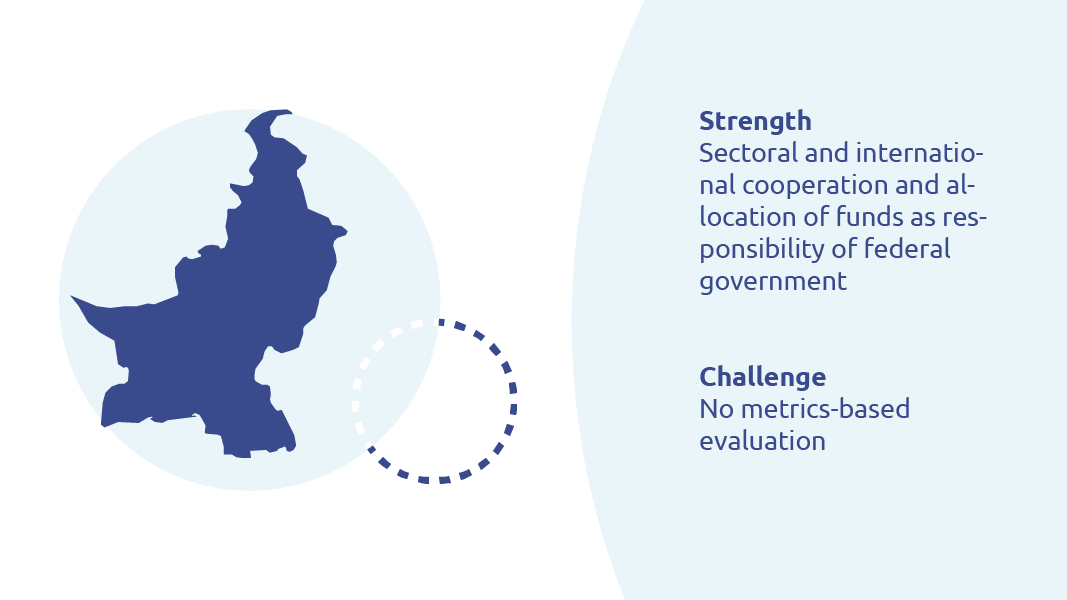
Pakistan’s national disaster management authority developed Heatwave Guidelines [58] in 2024. These guidelines encourage the development of provincial /local comprehensive heatwave emergency response plans with protocols for heatwave warnings, cooling centers and public outreach strategies. To date, the provinces of Punjab (2026) [59] and Khyber Pakhtunkhwa (2022) [60] have specific heatwave plans.

Roles and responsibilities:
The Pakistani Heatwave Guidelines outline concrete roles and responsibilities from individual to government level. However, it does not specify the concrete agencies on governmental level.
Federal Level:
The national disaster management authority and the federal government as well as academia, NGOs, development partner organizations, humanitarian organizations and the media contribute to heatwave preparedness, response and recovery. Their objective is to strengthen national heatwave resilience through risk assessment and monitoring, timely warnings, national emergency coordination and resource mobilization and allocation. The authorities shall develop heatwave policies and guidelines, coordinate with provincial and local authorities, ensure healthcare and emergency response capacities, and support training, public awareness and community resilience. Academia, NGOs and development partners provide research, financial and technical support such as advocacy and capacity-building, while humanitarian organizations assist vulnerable populations and the media disseminates warnings and heat-safety information. The media offers timely information and amplifies community voices.
Area and Provincial Level:
Specialist Authorities for disaster management, military, law enforcement and the provincial government are called upon to develop heatwave emergency response plans, including heatwave warnings, security plans and public outreach strategies. Their objective is to enhance heatwave resilience in urban areas (installing cooling centers and urban green spaces, identifying vulnerable areas, managing traffic), of healthcare facilities (equipment with medical supplies and cooling facilities) and for individuals (restriction of outdoor activities, supporting vulnerable populations, guidance for farmers to mitigate the impact of heatwaves). Therefore, the authorities shall raise awareness about heatwave risks, allocate resources, organize trainings for local emergency response teams, and ensure effective coordination between municipalities and communities.
Local Level:
Local communities shall set up cooling centers in public buildings. Community organizations can organize outreach programs, distribute fans and water, arrange transport to cooling centers and coordinate volunteer efforts for wellness checks or delegate assistance tasks. The plan also calls households and individuals to action.
Sustainable Funding Mechanism:
Mentions funding provision for resilience building projects as the responsibility of Development Partner Organizations as well as of the Federal Government, which is supposed to allocate funds for heatwave preparedness, response, and recovery efforts.

Usage of existing strategies:
The plan is built on national and global best practices against heat waves.
Multi sectoral coordination:
The plan includes different stakeholders from the local to the national level and from different sectors such as military/police, academia, disaster management and policy.
Metrics-based Evaluation:
No evaluation is mentioned, just a projection of expected effects post plan implementation.
South Africa
National Framework:
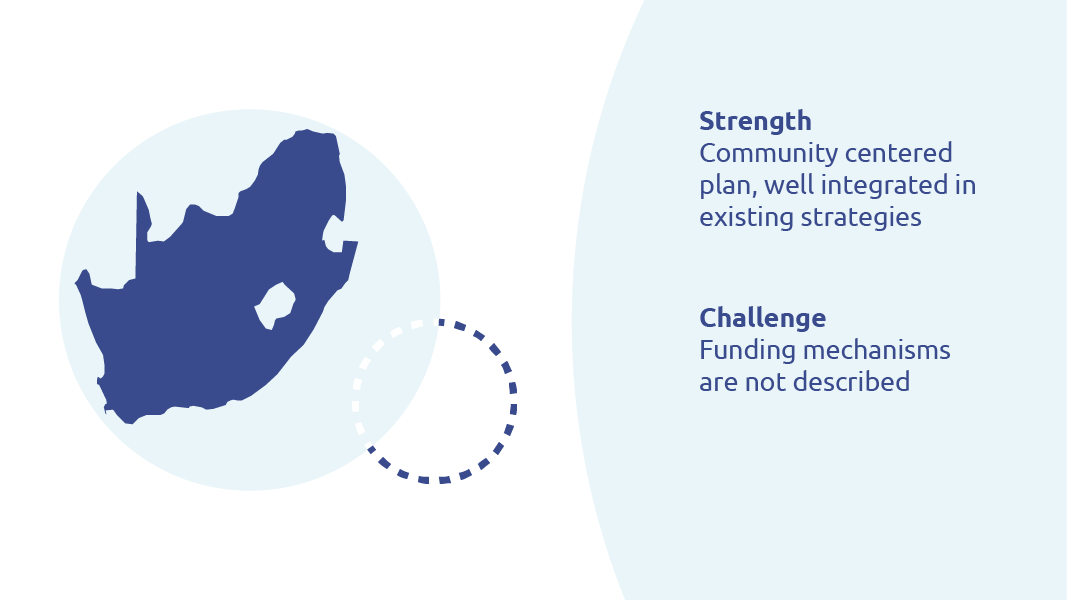
Since 2020 South Africa has a specific guide for the human health sector to extreme heat planning. [61] This plan is a national guideline, “aimed at Provincial Departments of Health, District Health Services and Municipalities to support them in designing, implementing and improving Heat Health Action Plans”. The nine provinces of South Africa do not have individual plans.
Roles and responsibilities:
The health sector is the lead of the Heat Health Action Plan on national provincial and local level and needs to coordinate with relevant departments, stakeholders and institutions.
Federal Level:
Within the Department of Health the Environment Health and EMS (Disaster Management) will lead the plan. On national and global level, the key collaboration partners are the South African Weather Services (SAWS), the South African Medical Research Council (SAMRC), the Council for Scientific and Industrial Research (CSIR), and institutions of higher learning.
Provincial/Municipal Level:
Provinces and municipalities shall develop heat health plans based on the national guidelines. So called “Environmental Health Practitioners (EHPs)” act at an interface between communities and federal government. They can contribute to the development of local strategies supporting vulnerable communities but require additional training.
Local Level:
Community education and awareness should be assisted by ward-based outreach teams, community development workers and community health workers. They should be formed to provide the correct messages and take necessary actions to assist vulnerable groups.
Sustainable Funding Mechanism:
Funding mechanisms are not described.
Usage of existing strategies:
The document outlines how the guidelines fit into the existing legislation. Furthermore, it describes the use of existing systems and the link to general disaster plans as a general principle of emergency response for heat and health. The plan gives the example of making use of existing tools, for example, the Heat-Health Warning Systems developed by South African Weather Services.

Multi sectoral coordination:
National to local involvement is described. The plan outlines a multi-agency and intersectoral approach as a general principle of emergency response for heat and health. “The implementation of the plan will take place at the provincial and local level, with oversight from national level. The plans should be included in the disaster management plans as per sphere, hence the involvement of district.”
Metrics-based Evaluation:
The plan explicitly states the need for monitoring health impacts of extreme heat during such periods but also of routinely recorded data about inputs and outputs of the health-health action plan.
References
[1] World Meteorological Organization (2026, July 9). Western Europe has hottest June on record.
[4] The Lancet Planetary Health, 5, e415-e425.
[5] World Meteorological Organization (2026, July 9). Western Europe has hottest June on record.
[22] The Lancet Planetary Health, 5, e415-e425.
[23] WHO (2026). Heat Health Action Plans. Guidance.
[25] WHO (2026). Heat and health
[26] European Commission (2026). Factsheet - Stay safe in the heat: 10 tips to protect your health
[27] National Health Services (2026). Heatwave: how to cope in hot weather
[28] Global Health Information Network (2026). Manage and Adapt to Heat in the Body.
[29] United Nations Climate Change (n.d.). National Adaptation Plans.
[34] WHO (2021). Quality criteria for health national adaptation plans. Geneva.
[35] Global Heat Health Information Network (2026). Heat Action Plans and Case Studies.
[37] European Environment Agency (n.d.). Heat-health action plans.
[37] Global Heat Health Information Network, UNDRR, WMO (2025). An Assessment of Heat Action Plans: Global standards, good practices and partnerships.
[38] Global Heat Health Information Network, UNDRR, WMO (2025). Narrative Analysis: Case studies in heat resilience.
[39] Global Heat Health Information Network, UNDRR, WMO (2025). An Assessment of Heat Action Plans: Global standards, good practices and partnerships.
[40] Action 6.1 (S. 86), Australian Government – Department of Health and Aged Care. National Health and Climate Strategy (2023).
[41] Bureau of Meteorology. National Heatwave Warning Framework (2022).
[42] In New South Wales the NSW Climate Change Adaptation Plan 2025-2029 (2024) and a State Heatwave Subplan (2023), Victoria is currently preparing Adaption Action Plans 2027-2031, the Human Health and Wellbeing Climate Change Adaptation Plan for Queensland (2018) with a Heatwave Management Sub-plan (2025), in Western Australia the Heatwave State Hazard Plan (2025), in South Australai the SA Health Extreme Heat and Heatwave Strategy (2024) and the strategy Heatwave Ready Tasmania (2016).
[43] Global Heat Health Information Network, UNDRR, WMO (2025). Narrative Analysis: Case studies in heat resilience.
[44] Global Heat Health Information Network, UNDRR, WMO (2025). Narrative Analysis: Case studies in heat resilience.
[45] Canadian Government (2016). Pan-Canadian Framework on Clean Growth and Climate Change.
[46] : https://www.canada.ca/content/dam/hc-sc/migration/hc-sc/ewh-semt/alt_formats/pdf/pubs/climat/response-intervention/response-intervention-eng.pdf
[47] Ontario (2023), New Brunswick (n.d.), Manitoba (2024), Nova Scotia (n.d.) and British Colombia (2026) already developed HARS. Quebec developed an Risk Management Plan—Overwhelming or Extreme Heat(2024). Prince Edward Island (2026) conducted engagement sessions for the development of an HARS. Saskatchewan and Alberta don’t have HARS yet but provide information on extreme heat on their government websites.
[48] République Française (2017). PLAN NATIONAL CANICULE.
[49] Ministère de la Transition écologique et de la Cohésion des territoires (2023). Plan de gestion des vagues de chaleur.
[50] Global Heat Health Information Network, UNDRR, WMO (2025). Narrative Analysis: Case studies in heat resilience.
[51] Ministry of Health and Family Welfare (2021). National Action Plan on Heat Related Illnesses.
[52] Global Heat Health Information Network. (o. J.). Heat Action Plans and Case Studies. [last accessed in August 2026]
[53] Delhi Disaster Management Authority (2025). Delhi Health Action Plan.
[54] Global Heat Health Information Network, UNDRR, WMO (2025). Narrative Analysis: Case studies in heat resilience.
[55] Global Heat Health Information Network, UNDRR, WMO (2025). Narrative Analysis: Case studies in heat resilience.
[56] In the plans of Himachal Pradesh, Karnataka, Odisha, Tamil Nadu, Telangana funding responsibilities are mentioned.
[57] Global Heat Health Information Network, UNDRR, WMO (2025). Narrative Analysis: Case studies in heat resilience.
[58] National Disaster Management Authority of Pakistan (2024). Heatwave Guidelines.
[59] Government of the Punjab – Environment Protection and Climate Change Department (2026). A Climate Governance Instrument for Preparedness and Response in Punjab.
[60] Government Khyber Pakhtunkhwa – Relief, Rehabilitation and Settlement Department. Khyber Pakhtunkhwa Heat Wave Action Plan 2022.
[61] Republic of South Africa – Department of Health (2020). National Heat Health Action Guidelines.
Related Articles