Germany's Sugar Tax: A Welcome Step in the Right Direction — But Is It Part of a Strategy?
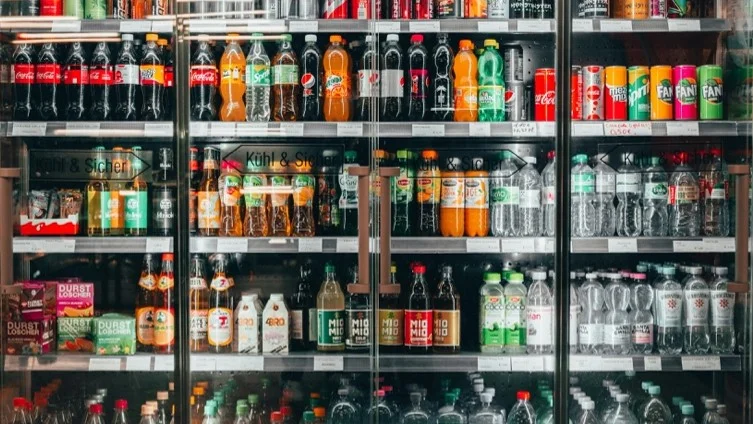
Germany is finally taxing sugary drinks – a decade after most of Europe. But with the levy driven by a funding gap rather than a prevention strategy, the harder question is what comes next.
The Burden Behind the Debate
Sugar-sweetened beverages (SSBs) are among the most significant dietary drivers of noncommunicable diseases – linked to obesity, type 2 diabetes, and cardiovascular disease, which together account for most premature deaths (before the age of 70) globally. Germany is not insulated from this burden. The proportion of people diagnosed with diabetes has risen from 5.8% to 10.3% between 2003 and 2024, and Germans consume more sugar via soft drinks than people in any of the ten most populous countries in Western Europe – nearly 26 grams per person per day, compared to 16 grams in the UK. Yet as a recent analysis in the Lancet Public Health put it „Germany has long prioritised „expensive repair medicine over structural prevention“.
Against this backdrop, the German federal cabinet’s April 2026 approval in principle of a tiered levy on sugar-sweetened beverages – a measure long advocated by the NCD Community of the Global Health Hub Germany – is significant. The levy is expected to generate around €450 million annually, reserved for the statutory health insurance system (GKV), with implementation planned for 2028.
The news is welcome. But context matters.
Better Late Than Never: Germany Joins a Global Health Wave
Norway introduced an SSB tax in 2009. France followed in 2012. The United Kingdom launched its landmark Soft Drinks Industry Levy (SDIL) in 2018. By the time Germany’s levy comes into effect in 2028, over 130 jurisdictions globally will have taxed sugary drinks – including roughly half of all EU member states. Germany, Europe’s largest sugar consumer, will be among the last in its neighbourhood to act.
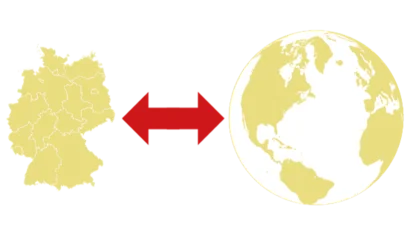
Bringing a global health perspective to this debate, it is worth drawing on the experience of Latin America – the region with the highest SSB consumption per capita in the world, and one that has been implementing and refining these policies for well over a decade.
In January 2014, Mexico became the first country in Latin America to introduce a national SSB tax. Despite fierce industry opposition, the tax delivered: SSB purchases fell by around 6% in the first year, with the greatest reductions among lower-income households. A study in JAMA Pediatrics found that in cities with larger price increases, the share of adolescents at risk of overweight or obesity fell by almost 2%. Mexico’s experience catalysed SSB tax adoption across the region and beyond.
The Regional report on Sweetened Beverage Taxes in the Americas (2025) of the Pan American Health Organization (PAHO) maps the wider picture. Overweight and obesity affected 67.5% of adults in Latin America and the Caribbean in 2022, up from 44.4% in 1990. The report’s central finding: taxes work – but how they are designed, and what accompanies them, determines how much of their potential is realised.
Brazil's experience is particularly instructive. Over the last decade, obesity prevalence has almost doubled in Brazil — yet in 2016, the government sharply reduced federal SSB taxes from 27% to 4%, going against the global trend. President Lula's landmark tax reform — signed in January 2025 — reverses this course. The new Imposto Seletivo taxes sugary drinks alongside tobacco and alcohol, while simultaneously zeroing taxes on healthy and sustainable foods— a model of coherent, prevention-oriented fiscal policy. This distinction — between a tax as a fiscal instrument and a tax as part of a broader prevention strategy — is precisely the question Germany must now confront.
A Fiscal Fix or a Health Strategy
Germany’s levy has come forward not a spart of a national prevention agenda, but as a response to a structural funding crisis: the GKV deficit is projected to reach €15 billion by 2027. The tax is designed to cover GKV contributions for Bürgergeld (Germany's primary state-funded unemployment and basic income benefit) recipients – necessary, but primarily fiscal in framing.
In the UK, SDIL revenues were partly directed toward school support and healthy food programmes. In Brazil, the SSB levy is embedded within a sweeping food policy reform. In Germany, the debate has been led by health finance ministers rather than prevention advocates. As European Commission Director-General for Health Sandra Gallina put it at the Wellbeing Economy Forum in April 2026: „Prevention, prevention, prevention. That is how we really find success“.
The tiered structure proposed for Germany is designed to incentivise industry formulation – the right approach, and one that delivered a 35% reduction in sugar content in UK soft drinks following the SDIL. But reformulation requires monitoring, enforcement, and sustained political will – none of which can be taken for granted without a broader prevention framework.
What Germany’s Own Data Says
Germany’s surveillance data makes the structural prevention gap plain. A May 2026 paper in the Journal of Health Monitoring from the Robert Koch Institute assessed six key NCD contextual indicators – including food taxation, prevention expenditure and poverty risk. The conclusion: all indicators point to inadequate prevention measures.
The OECD-EU policy brief launched by JA PreventNCD in April 2026 brings the economic case to light: if EU countries reached top-quartile performance on key NCD risk factors, there would be 150,000 fewer premature deaths (before the age of 75) per year across the EU, health expenditure would fall by 4.6% and GDP would rise by 1.4%. For Germany specifically, the OECD’s 2026 country report models substantial gains from reducing NCD risk factors to the level of the 25% best performing OECD countries. And a 2023 TU Munich microsimulation study found — where higher sugar content means a higher tax rate — alone could prevent up to 244,100 cases of type 2 diabetes and save €16 billion in societal costs over 20 years.
The evidence base for investing in prevention is overwhelming. The question is whether Germany’s political system is ready to act on it comprehensively.
A Turning Point – If Germany Chooses to Make It One
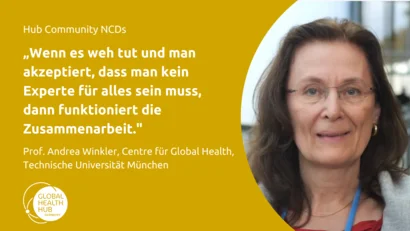
Germany’s sugar tax is the right measure. It is backed by strong evidence, by civil society, and by 60% of the German public. It reflects years of advocacy by the public health community, including the NCD Community of the Global Health Hub Germany.
But a single levy is not a prevention strategy. The Americas – from Mexico’s pioneering 2014 tax to Brazil’s 2025 reform – show both what is possible when political will meets public health evidence, and what is lost when it does not. With over 130 jurisdictions having acted on SSB taxation, the question for Germany is not whether to move. It is whether this first step becomes the foundation of a comprehensive, long-term NCD prevention strategy.
The NCD Community of the Global Health Hub Germany calls on policymakers to treat the sugar tax not as a fiscal measure, but as the opening move of a serious national prevention agenda – one that finally matches Germany’s spending power with health outcomes that reflect it.
We asked Gabriela Pen Nasser from the NCD Hub Community to share her analysis of the sugar levy to be implemented in Germany in 2028. The views expressed are her own and do not necessarily reflect those of Global Health Hub Germany.
Related Articles