Insights into the Hub’s Steering Committee
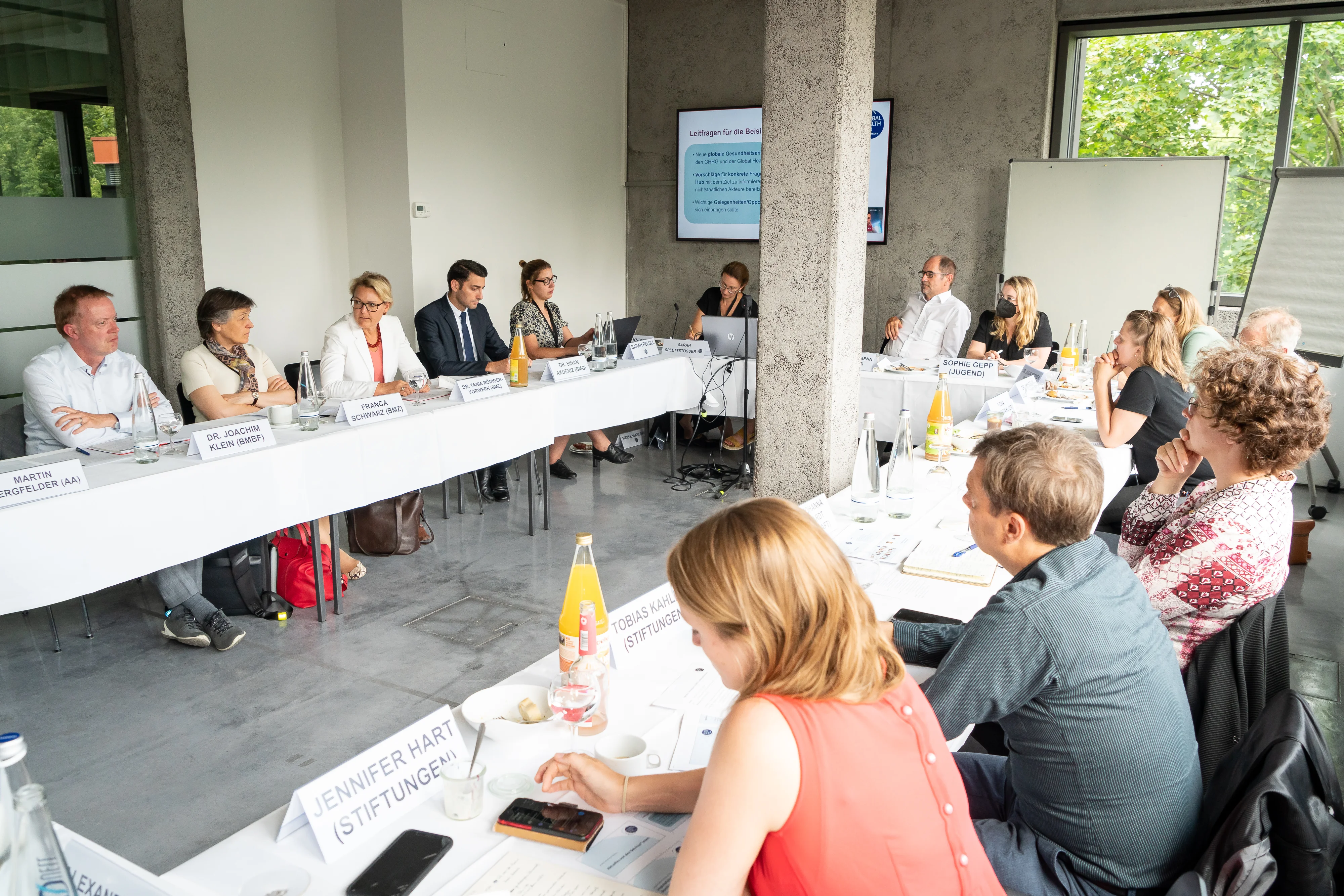
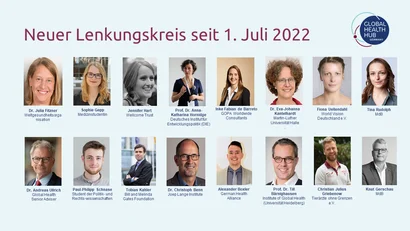
On 6 July 2022, the new Steering Committee came together at the margins of the Global Health Talk. For our members, we want to share some key points.
The Steering Commitee
The Steering Committee of the Global Health Hub Germany consists of two representatives of each of the Hub’s eight stakeholder groups to reflect the diversity of the global health landscape. In addition, the Steering Committee has non-voting observers: representatives of the German government (BMG, BMZ, BMBF, AA, BMUV and BMEL), the president of the World Health Summit, and the head of the secretariat of the German Alliance for Global Health Research. During Steering Committee meetings, the Hub Management Team gives updates, the Steering Committee members provide comments and advice, and the observers share information on current global health activities and strategies.
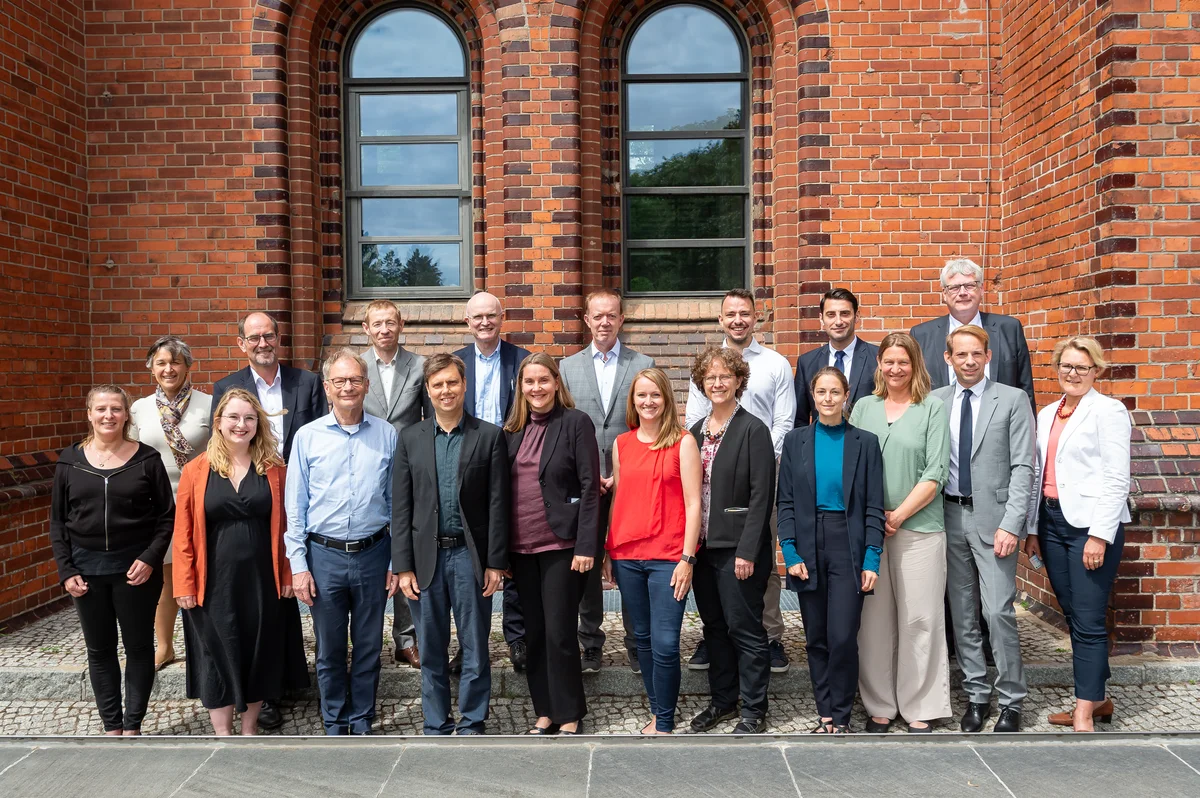
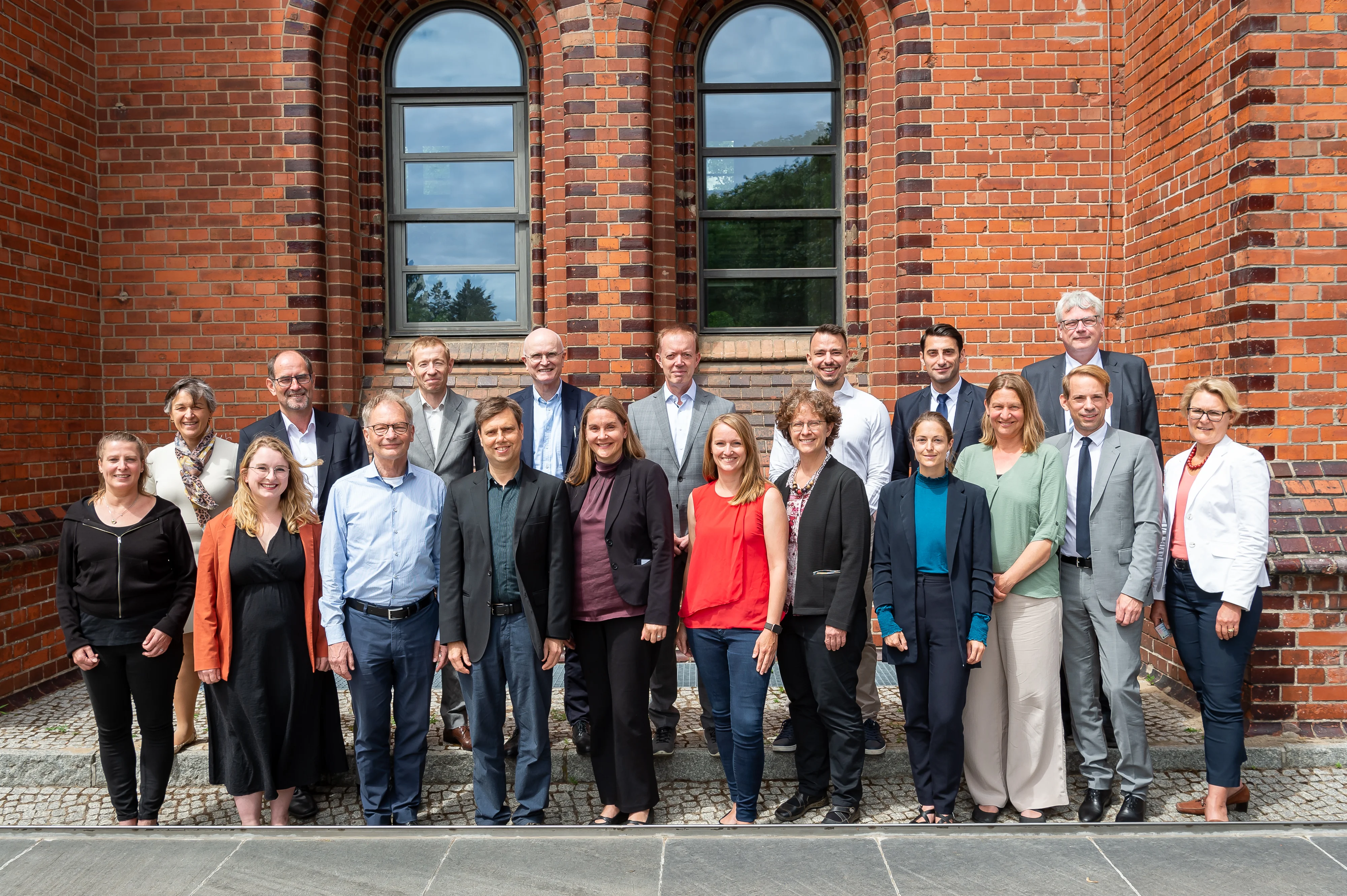
Bottom row: Fiona Uellendahl (World Vison), Sophie Gepp (CPHP), Dr. Andreas Ullrich (Charité), Tobias Kahler (Bill and Melinda Gates Foundation), Inke Fabian de Barreto (GOPA Consultants Worldwide), Jennifer Hart (Wellcome Trust), Dr. Eva Johanna Kantelhardt (Universität Halle), Tina Rudolph MdB (SPD), Dr. Julia Fitzner (WHO Hub), Paul Zubeil (BMG), Dr. Tania Rödiger-Vorwerk (BMZ)
Top row: Franca Schwarz (BMZ), Christoph Benn (Joep Lange Institute), Niklas Schulze-Icking (BMEL), Prof. Dr. Axel Pries (Charité, WHS), Joachim Klein (BMBF), Alexander Boxler (GHA), Sinan Akdeniz (BMG), Knut Gerschau MdB (FDP)
At a glance: Perspectives into current Global Health Developments
The G7 Ministers’ Meetings and the G7 Summit have taken place. During the second half of Germany’s 2022 G7 presidency, the Ministries will work on implementing the commitments made. For instance, the ministry of health’s priorities include supporting Ukraine, pandemic preparedness and in particular the Pact for Pandemic Readiness, antimicrobial resistance, and climate change and health. The Hub shared information on the results of the G7 Health Ministers’ Meeting as well as other G7 Communiqués at a glance.
The G20 is discussing the setup of the new Financial intermediary Fund (FiF) for Pandemic Preparedness and Response. Germany will support the FiF financially with 50 Mio. EUR. The different ministries are closely coordinating on the German input in this process. Since the FiF is a topical issue of interest to many stakeholders, the Hub has compiled and shared currently available information and discussions surrounding the FiF.
The European Union’s member states are collectively the biggest global health donors. To maximize impact, the process of developing a new European Union strategy for global health has started and consultations with countries and non-state actors are ongoing. Until 19 September 2022, all interested stakeholders may contribute their views. The Hub shared this information to allow for even greater participation (find more information here).
This year, the World Health Summit (WHS) is being implemented in cooperation with WHO and will be larger than previous years. The Hub will conduct two closed-door side events at the WHS (more information to follow).
Ministries at a glance: Internal Strategies and Priorities
The Federal Ministry of Health supports the reforms and strengthening processes concerning the WHO and its core budget. A key achievement during the World Health Assembly was the member states’ decision to gradually increase their assessed contribution to represent 50% of WHO’s core budget by the 2030. The Hub has shared further information on the process behind the scenes in an interview with the Chair of the Sustainable Financing Working Group. Moreover, the Ministry of Health is currently vice-chair of the Programme Coordinating Board of UNAIDS and will be chairing the PCB in the upcoming year. However, the financial contribution of Germany to UNAIDS in 2023 is not yet secured in the federal budget planning.
The Federal Ministry of Education and Research (BMBF) is engaged in expanding research partnerships and currently prepares the continuation of two programs: Product Development Partnerships (PDP) to fight Poverty-related and Neglected Diseases and the African-German Research Networks for Health Innovations in Sub-Sahara Africa. BMBF also aims to increase the translation of research findings into practice and encourages collaboration among all actors in Global Health.
For the Federal Ministry of Food and Agriculture (BMEL), the hunger and food crisis in the context of the war in Ukraine and subsequent effects are of concern. Food safety is a priority that BMEL cooperates on with FAO and WHO. The WHO Food Safety strategy and the Codex Alimentarius are key frameworks. The One Health approach is particularly relevant in the Ministry’s cooperation with the World Organization for Animal Health and for example, in the implementation of the EU's Farm to Fork strategy, which for the first time will raise concerns about pesticides based on environmental protection.
The Federal Ministry for Economic Cooperation and Development (BMZ) has adopted four guiding principles: addressing the Covid-19 pandemic and its consequences; tackling poverty and hunger; ensuring a just transition; and adopting a Feminist Development Policy. Additionally, “health, social security and population policy” became a new core topic for which the ministry is currently developing an internal strategy.
Together with the BMBF, the BMZ financially supports the German Alliance for Global Health Research (GLOHRA) to promote involvement of partner countries in the network.
The BMZ cooperates with the Ministry of Foreign Affairs on the Last Mile Initiative to ensure vaccines reach the patients and are used in countries with low vaccination rates. The Hub will address this initiative in an online event in October 2022.
The Hub at a glance: Reporting on the Strategic Pillars
The members of the Steering Committee also spoke about the Hub’s developments and next steps in its three pillars: Community organizer, Impact catalyst and Policy contributor.
Community Organizer: During the Community Day of the Global Health Talk, members of 10 Hub Communities came together in person to work on topics within Global Health. The feedback was very positive. A lessons learned from current Hub Communities is to expand the use of partnerships with other institutions to strengthen the Hub Community management. This is for instance already done in the NCD Community where the Hub partners with the Technical University Munich.
Impact Catalyst: The work of the first Catalyst Dialogue on global health architecture is being finalized and will be published in September (watch the preview from the GHT), while the work of the second catalyst dialogue on climate change and health is kicking off with a new set of national and international experts. Objective of these dialogues is to show the diverse perspectives of different stakeholders on one complex issue and thus provide a solid basis for political decision taking. Stay tuned!
Policy Contributor: The Hub is in contact with members of the parliament and representatives of the different ministries in order to introduce the Hub, be informed what is of interest to the political actors and take these questions up in the work of the Hub. The members’ survey on priorities to be considered in the international pandemic treaty is one example of how this can be done.
Verwandte Artikel