Recap: World Health Summit 2026 – Global Health Architecture as a crosscutting theme
This year’s World Health Summit (WHS) took place under the theme “From Crisis to Resilience: Innovating for Health.” Held in Berlin and online from October 11 to 13, the summit brought together participants from around the world. In this article, we look back at selected sessions and share some of our highlights.
A key focus across this year’s WHS discussions was the global health architecture (GHA) reform - the institutions and partnerships that shape international cooperation on health. Participants explored how to improve coordination, align priorities and ensure that global cooperation can respond effectively to today’s health challenges.
The WHO Director-General prospective candidates’ visions for the future
On Sunday, Björn Kümmel, Head of the Global Health Policy Unit at the German Federal Ministry of Health (BMG) welcomed the prospective candidates for the position of World Health Organization (WHO) Director-General (DG) to talk about the future of the WHO and the GHA. He opened the conversation with the question: “There have been many initiatives focused on reforming the GHA. From your perspective, what are the main challenges, and how would you address them?” The candidates pointed to funding challenges, the need to keep in mind whom the GHA is intended to serve, the fact that it was designed for a different era, and the importance of translating recommendations into action.
The discussion then turned to a WHO reform and how to prepare the organisation for the future. The candidates’ responses on what they aim to achieve in their first 100 days in office ranged from refocusing the organization on its core mandate, strengthening change management, fostering a motivating work environment to encouraging countries to rejoin the WHO.
How the Global South and the Global North shape a more resilient Global Health Architecture
While the WHO DG-candidates focused on the challenges of reforming the WHO and the wider GHA, the session “The EU’s Role in Global Health: Harnessing Europe’s Strengths for Global Health,” co-hosted by Germany’s Federal Ministry of Health, explored how Europe could help address those challenges. It examined how the European Union can strengthen its leadership amid geopolitical fragmentation, weakened multilateral institutions, and growing gaps in global health financing and preparedness. Bringing together perspectives from the European Commission, WHO, government, and industry, the discussion explored how Europe can leverage its public health expertise, research and innovation capacities, and commitment to multilateral cooperation to help shape a more resilient GHA. A central question was how the EU and its Member States can establish shared priorities and demonstrate the added value of European engagement for both Europe and its global partners. In his closing appeal, WHO Regional Director for Africa Mohamed Yakub Janabi underscored the importance of equitable partnerships, calling on the audience to "Stand with Africa, not as beneficiaries, but as partners.” A demand that is particularly important in addressing global power asymmetries within a global health landscape that continues to be shaped by strong Eurocentrism and colonial legacies.
This call for partnership also resonated in the discussion on “The Accra Reset: A New Global Development Framework,” which examined how global health reforms can better reflect countries’ priorities and leadership. The session focused on a Global South-led effort to turn recommendations into political action and build a system that is less dependent on external funding. The high-level panel report under President John Dramani Mahama “A sovereign future for health” lists ten recommendations that are intended to be practical and actionable: each specifying what needs to happen, how, by whom, and by when. You can read the full report here: https://www.accrareset.org/UNGA81/HLP
Speakers noted that global health has no shortage of technical processes; the challenge is translating recommendations into action. The Accra Reset addresses this gap by placing reform on heads of state’s agenda and providing a path forward. Political leadership, they argued, can move institutional boards where expert advice alone may not.
Resilience in times of war and crises
The focus on country-led reform and stronger health systems was also featured in a previous session on Sunday, which examined what resilience means when health systems face war and other crises.
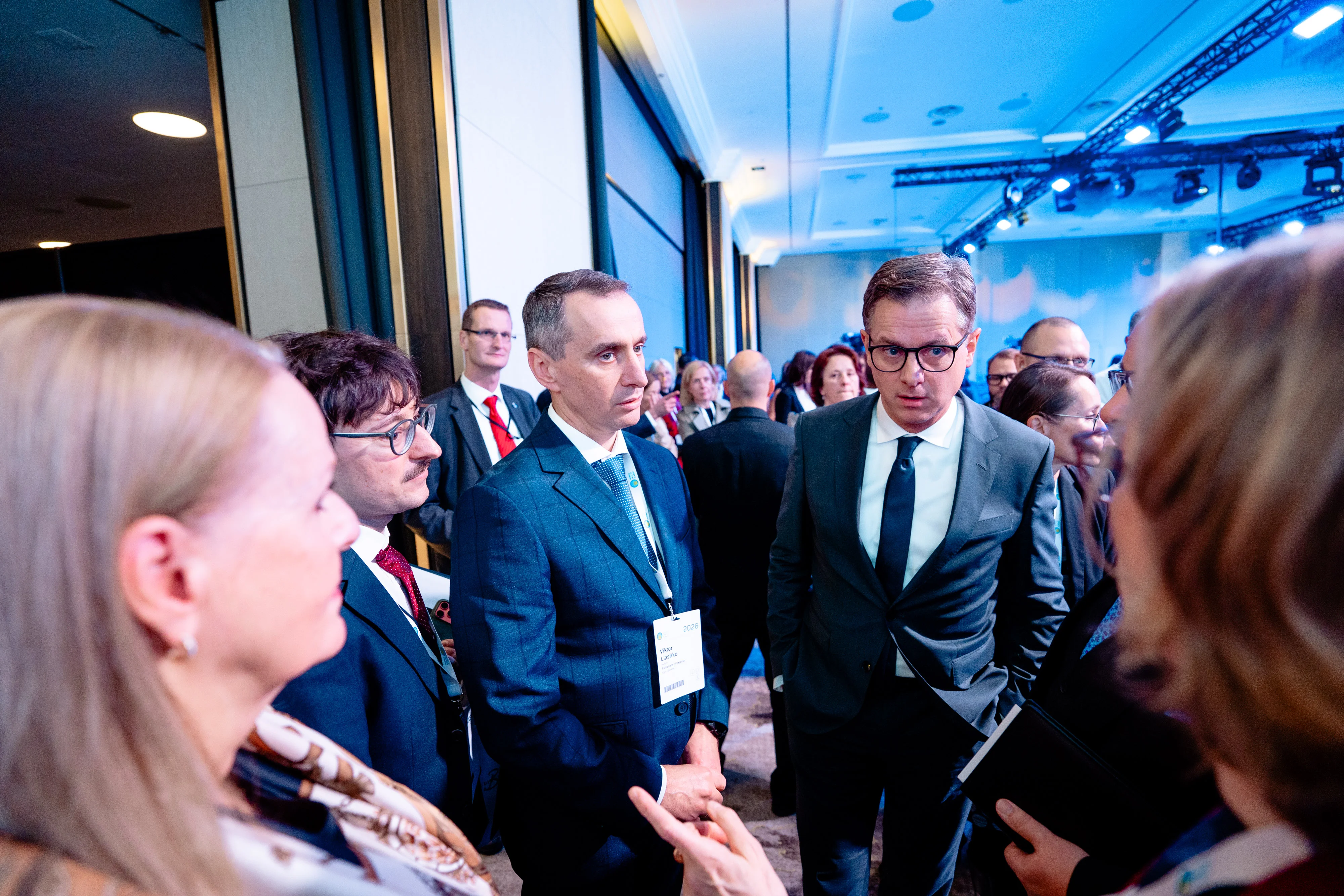
Germany’s newly appointed Health Minister Carsten Linnemann opened the session on “Resilience in Healthcare: Experiences from Ukraine and Other Crises Contexts” by reaffirming Germany’s support for Ukraine: “Germany stands firmly with Ukraine. You can count on us.”
He stressed that health systems must be prepared for war-related crises and remain functional even under extreme pressure. Linnemann also emphasized that crisis resilience is a shared societal responsibility, calling for cooperation and solidarity across borders.
His speech was followed by an emotional address from Ukrainian Health Minister Viktor Liashko. Drawing on figures and images documenting attacks on Ukraine’s health system, he illustrated the scale and impact of the war while also sharing the personal experiences of patients and health workers facing its consequences every day. He highlighted the lessons Ukraine has gained during the war and their contribution to global health, reminding the audience not to lose sight of the lives behind the numbers.
Boarding time machines, collaboration between European Global Health Platforms and Community Networking – The GHHG activities at the WHS
The Global Health Hub Germany (GHHG) was involved in organising engaging events outside of the WHS main program, such as the side event, “Critical Choices: Beyond the Pathogen. The Social Dimension of Pandemic Preparedness,” which opened an important conversation about the role of social factors in managing future pandemics. The GHHG also organised a lunch for managers from its communities and steering committee members attending the WHS, offering an opportunity to connect and exchange experiences. Finally, a workshop with international global health hubs was hosted to explore ways to strengthen collaboration between European Global Health Platforms. A key finding was the need for collective action to sustain political and financial support for global health. Together, these events created space to discuss shared challenges, build connections and consider opportunities for future cooperation.
The World Health Summit provided the GHHG with an opportunity to contribute to important discussions, connect its community with international partners, and explore new avenues for collaboration. The exchanges in Berlin highlighted the value of shared responsibility and sustained cooperation - and offered a strong foundation for the GHHGs continued work to bring diverse perspectives together and help advance a more resilient future for global health.
Related Articles