Neglected Tropical Diseases – Neglected People: Why the Fight Against Tropical Diseases Is Also Crucial for Germany
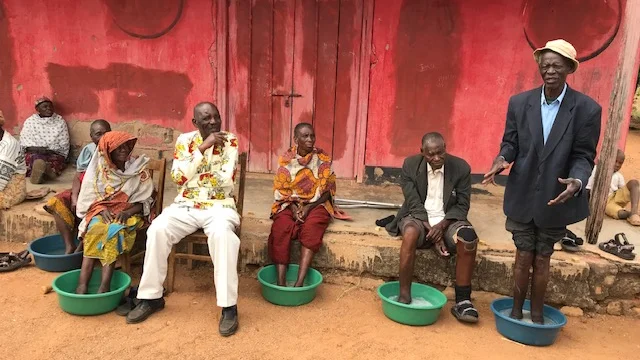
Over 1.6 billion people suffer from neglected tropical diseases. Germany supports global research, migration, and prevention efforts.
Neglected tropical diseases (NTDs) are not an isolated health issue. They are a measure of climate resilience, social justice, and sustainable development. On January 30, World NTD Day draws attention to a silent global crisis. More than 1.6 billion people suffer from diseases that could be prevented yet receive little attention. They live with pain, disability, and social exclusion. Talking about NTDs ultimately means talking about neglected people – people whose living conditions often prevent them from accessing medical care. Combating NTDs is therefore not only a medical issue. It is a matter of dignity, justice, and global responsibility. It is also a matter of German interests and responsibility in an interconnected world.
Old diseases in a modern world
Many NTDs have accompanied humanity for millennia. Researchers have found genetic traces of tapeworms in skeletons from Anatolia and Southeast Europe, and Schistosoma eggs in Egyptian mummies. Leprosy is considered one of the oldest chronic diseases in history. Today, the WHO lists 22 diseases as neglected tropical diseases. They primarily affect people living in poverty and, despite severe health consequences, remain in the shadow of other global priorities. Poverty often makes people invisible – a reality that persists to this day.
New challenges from climate, crises, migration, and funding
Fighting NTDs is becoming increasingly difficult. Climate change is altering the geographic distribution of many pathogens. Mosquitoes, flies, and snails are spreading to new regions. Conflicts destroy health systems, interrupt mass drug administration programs, and migration adds further challenges, as people flee heavily affected regions or are limited in mobility due to chronic illness. Pathogens also reach new areas, meaning health systems in Europe must be prepared for diagnostics, prevention, and care. Financial uncertainty threatens progress – even small cuts can halt programs. Combating NTDs remains an integral part of poverty reduction and the United Nations Sustainable Development Goals.
Why this matters to Germany
Germany has a direct interest in effectively combating NTDs.
First, NTD research strengthens the innovation capacity of German universities and companies. New vaccines, diagnostics, and therapies often emerge through international partnerships, fostering excellence and economic value in Germany.
Second, fighting antibiotic resistance also concerns NTDs, particularly in the case of snakebites. Many regions lack antivenoms, leading to inappropriate antibiotic use that drives resistance. Germany is politically and scientifically engaged in the global fight against resistance, and NTD prevention is a critical part of this effort.
Third, strong health systems stabilize the economies of partner regions. Functional health systems ensure reliable markets, create favorable conditions for exports, investments, and resource cooperation. If NTDs exacerbate poverty or permanently disable people, social structures and economic development are at risk – including global supply chain stability.
Germany’s responsibility
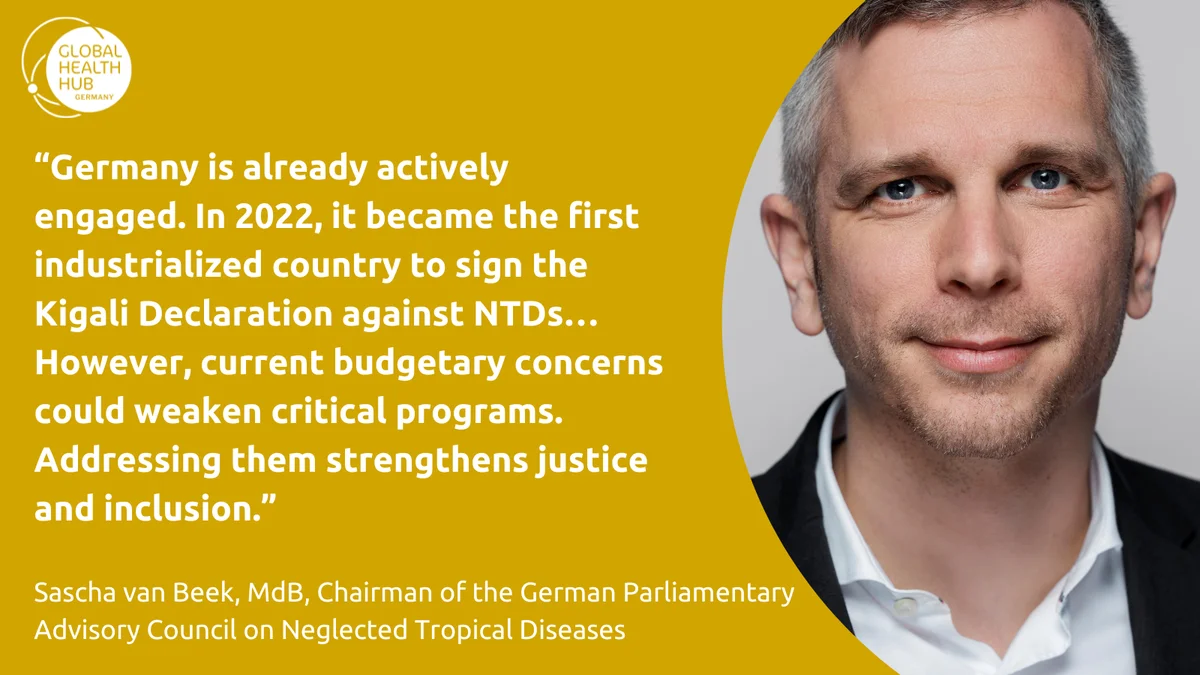
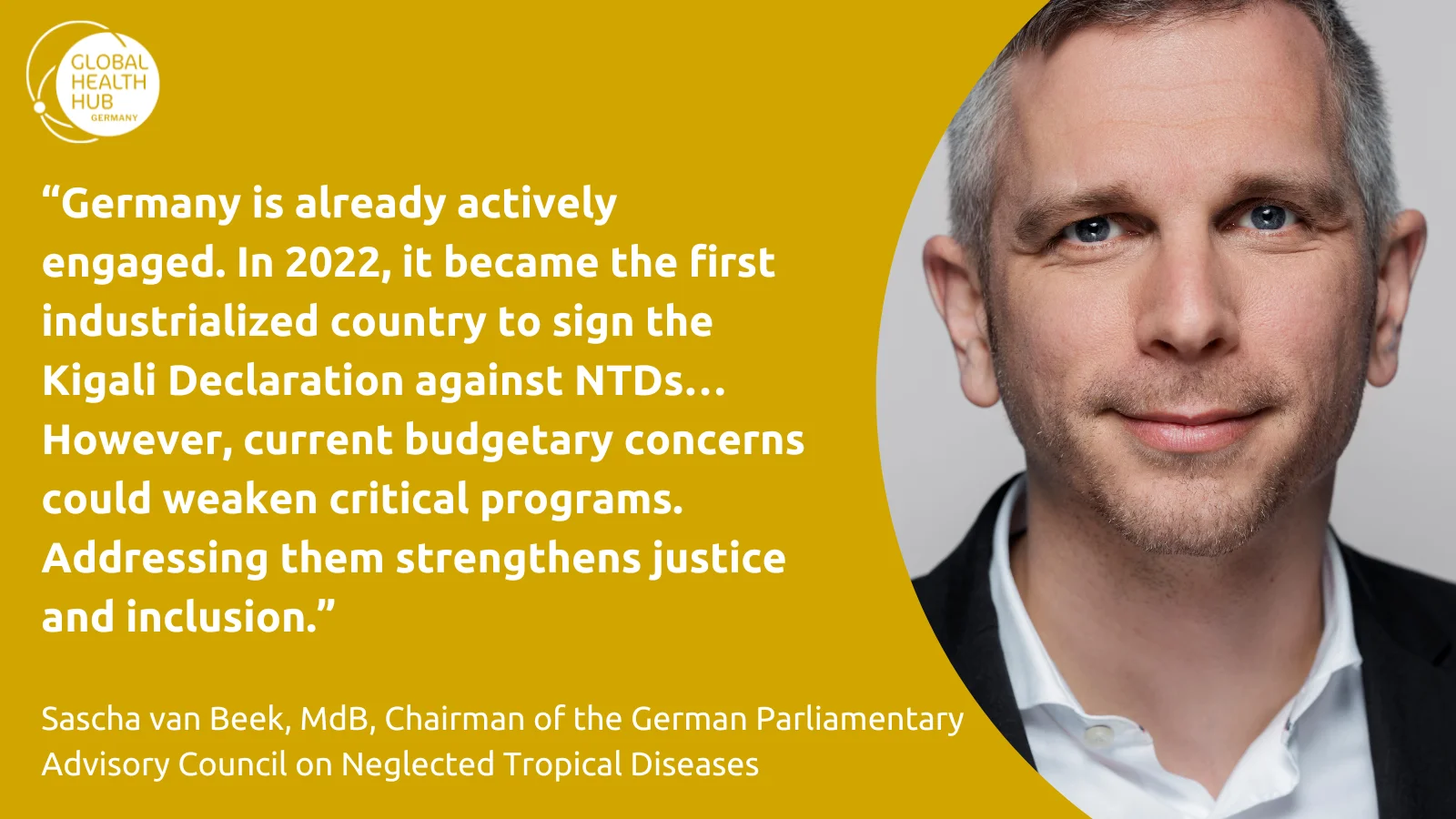
Germany is already actively engaged. In 2022, it became the first industrialized country to sign the Kigali Declaration against NTDs. Combating NTDs is included in the coalition agreement and Germany’s 2020 Global Health Strategy. The 2015 G7 declaration under German presidency reaffirmed this course. However, current budgetary concerns could weaken critical programs. NTDs mean lost opportunities and social exclusion. Addressing them strengthens justice and inclusion.
Innovation and collaboration
New technologies are transforming NTD prevention. Advanced diagnostics, vaccine development, and AI-supported data analysis accelerate detection and treatment. Germany supports this transformation through research funding and partnerships with African universities and pharmaceutical institutions. The One Health approach links human, animal, and environmental health. Many NTDs have animal hosts or are influenced by ecosystem changes. Sustainable NTD control requires climate and environmental policies, agriculture, and water management. Effective NTD strategies strengthen the resilience of entire regions.
Successes that give hope
In 2025, the WHO announced the elimination of trachoma in Egypt. Countries like Japan, Taiwan, and South Korea demonstrate that consistent action works. Diseases such as schistosomiasis, echinococcosis, or lymphatic filariasis, once widespread there, have been overcome. These successes prove that NTDs can be defeated when politics, research, civil society, and industry act together – provided there is reliable funding and political priority.
Health as a universal good
The WHO roadmap 2021–2030 aims to significantly reduce neglected tropical diseases. Overcoming NTDs would not only be a medical success but also a moral commitment: no one should be forgotten simply because they live in poverty.
We invited Sascha van Beek, a member of the German Bundestag Member of Parliament and Chair of the Parliamentary Advisory Council on Neglected Tropical Diseases to discuss the relevance of combating neglected tropical diseases for Germany. The views expressed are his own and do not necessarily reflect the positions of Global Health Hub Germany.