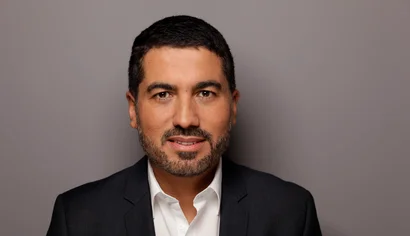
Global Health in Focus: An Interview with Stella Merendino (Die Linke)

In this interview series, we speak with political decision-makers about how global health can be permanently anchored in Germany even without a dedicated subcommittee, and what role Germany should play in the future. Our guest today is Stella Merendino, rapporteur for global health of the party Die Linke.
You are the rapporteur on global health for your parliamentary group in the Bundestag. What do you see as the most important challenges in the field of global health during the current legislative term?
For me, the biggest challenges are, first, the erosion of multilateral structures; second, the massive underfunding of key global health actors; and third, the ever-widening inequality in access to healthcare. We are currently seeing that the WHO needs more stable and independent funding. According to the WHO, there remains a significant funding gap for the 2025–2028 work program. At the same time, cuts in international cooperation and the withdrawal of key donors have direct consequences for healthcare, prevention, and crisis response. This always affects people in countries with weak health systems first. On top of that, global health today no longer means just focusing on individual diseases. It is about pandemic preparedness, climate-related health risks, poverty, war, hunger, and fragile healthcare systems. This is precisely why the WHO has focused its program for 2025 to 2028 on climate, social determinants, health care, and crisis resilience. To me, it is clear that global health is a matter of justice. Those who are poor, displaced, discriminated against, or living in a crisis-stricken region bear the heaviest burden.
What are the Health Committee’s priorities regarding global health, and what issues do you personally wish to advance in the field of global health?
The Health Committee must not treat global health as a secondary issue, but rather as an integral part of health security, equitable access to care, and international responsibility. In my view, this includes pandemic preparedness following the adoption of the WHO Pandemic Agreement in May 2025, strengthening the WHO, climate-resilient health systems, and the question of how Germany fulfills its international responsibility in a way that not only manages crises but also builds structures. At the EU level, too, global health is now explicitly understood as part of foreign policy and the European Health Union.
Personally, I want to advance three issues above all. First, strong public health systems and equitable personnel policies instead of global competition for scarce skilled workers. Second, sexual and reproductive health and rights, because this field demonstrates whether health is truly taken seriously as a human right. Third, the interconnection between climate and health, because heat waves, water scarcity, infectious diseases, and displacement have long been realities of health policy.
How can global health be firmly established in Parliament in future without a dedicated subcommittee?
I believe that the decision not to continue the subcommittee during this parliamentary term sends out the wrong signal. Especially at a time of growing crises, global health needs greater parliamentary visibility, not less. But even without a dedicated subcommittee, the issue can be firmly established if there is genuine political commitment. The Health Committee can hold regular expert discussions, request reports and systematically place global health on the agenda as a cross-cutting issue. The fact that the committee has already organised an expert discussion on global health for the end of 2025 shows that this is possible. It is crucial that global health does not depend on committed individuals, but is considered as an institutional priority. This requires fixed reporting requirements, inter-ministerial hearings, close cooperation with the Development, Research, Environment and Foreign Affairs Committees, and a clear expectation that the Federal Government will report regularly on the implementation of its global health objectives. Global health does not disappear simply because a committee is abolished. The question is whether Parliament is prepared to assume responsibility in an organised manner regardless.
Global health is an area where multisectoral cooperation is crucial. How do you ensure that health policy considerations are taken into account and integrated into areas such as development, research, foreign or environmental policy within your parliamentary group?
Anyone who talks about poverty, war, the climate crisis, water, food, migration or patents is always talking about health as well. My aim is therefore to treat global health as a cross-cutting issue within the parliamentary group and not to confine it to traditional health policy. In concrete terms, this means maintaining close dialogue with colleagues from development, foreign, research and environmental policy, and considering the health implications of political decisions at an early stage. The WHO itself explicitly defines health determinants as a task that transcends sectoral boundaries. In Germany, we must finally ask more consistently what international implications our policies have. This applies, for example, to research funding, access to medicines and vaccines, climate policy, and trade and patent issues. At European level, it is precisely this integrated approach that is now described as the core of the global health strategy. Our parliamentary work should also be guided by this.
The changes in the global health landscape and funding gaps are particularly evident in the field of sexual and reproductive health and rights, amongst other areas. Where do you see the greatest need for action here, including for Germany and Europe?
In my view, the greatest need for action lies in politically defending and financially safeguarding SRHR, rather than repeatedly allowing these rights to be called into question in times of crisis. The WHO clearly emphasises that access to sexual and reproductive health is part of the human right to health and part of universal health coverage. At the same time, the Council of Europe paints a mixed picture of Europe, with progress on the one hand and setbacks, barriers and political pressure on the other.
Internationally, funding gaps are exacerbating the situation significantly. UNFPA has reported a funding requirement of 1.4 billion US dollars for 2025 alone to secure life-saving reproductive health services and protection against gender-based violence in 57 countries. When major donors withdraw or funding is cut, this particularly affects women, girls and marginalised groups in crisis and conflict regions. Germany and Europe must become more reliable in this regard. Not just through empty rhetoric, but through more long-term funding, a clear human rights-based approach and the political will not to accept setbacks in SRHR.
For Germany, this also means treating SRHR not as a niche issue in development cooperation, but as an integral part of feminist foreign policy, humanitarian aid and European partnerships. And for Europe, it means not merely lamenting the gaps rhetorically, but closing them financially and politically.
The WHO estimates that by 2030 there will likely be a shortage of 11 million healthcare professionals, particularly in low- and middle-income countries. What role can Germany play in addressing this challenge at national and international level?
Germany must first put its own house in order. Countries that themselves offer poor working conditions and allow staff to burn out are exacerbating the international competition for skilled workers. The WHO estimates a shortfall of around 11 million healthcare workers by 2030, particularly in low- and middle-income countries. The answer to this cannot simply be to import the shortfall from poorer countries. These countries rely on their own skilled workers! Germany must therefore expand training, make these professions more attractive, improve working conditions and finally strengthen the care sector structurally.
At the international level, we need a policy that focuses on partnership rather than on the poaching of skilled workers. Germany can support healthcare and nursing training in partner countries, promote the development of public health systems, and adhere to WHO guidelines on ethical international recruitment. It is crucial that the migration of skilled workers does not lead to a one-sided depletion of systems that are already understaffed. Our own staff shortages must not (!) be resolved at the expense of other countries.
Related Articles