From Commitments to Implementation: How Germany and the EU Can Support the Manila Declaration on NCDs and Mental Health
![[Translate to English:] Photo health worker: by Carlos Magno on Unsplash](/fileadmin/_processed_/b/a/csm_carlos-magno-wNcxVKDfwUQ-unsplash_88f8256fc0.webp "[Translate to English:] Photo health worker: by Carlos Magno on Unsplash")
Manila hosts the 3rd International Dialogue on Sustainable Financing for NCDs and Mental Health. In this guest article, Hub Members Sarbani Chakraborty, Ertila Druga, and Gabriela Pen Nasser explore how Germany and the EU can help shift the conversation from commitments to solutions.
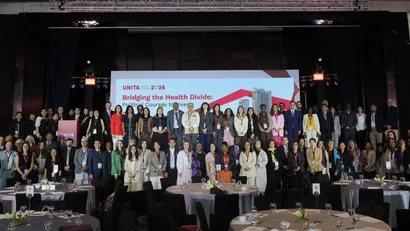
The 3rd International Dialogue on Sustainable Financing for non-communicable diseases (NCDs) and Mental Health — originally scheduled for 2–4 September 2026 and now postponed to February 2027 — will take place in Manila, hosted by the Government of the Philippines with the WHO and the Asian Development Bank.[1] It offers a timely opportunity to shift the conversation from commitments to solutions and to define what sustainable financing for NCDs and mental health must look like in the context of universal health coverage (UHC).
Building on the earlier dialogues in Copenhagen (2018) and Washington, DC (2024), this third meeting comes at a critical moment. It is the first to be hosted by a low- and middle-income country (LMIC), amid a severe global health financing crisis of declining external assistance and tightening domestic budgets. [2]
The Dialogue also follows the Fourth UN High-Level Meeting on NCDs and mental health (HLM4) and its December 2025 Political Declaration [3]- an important milestone, yet one whose ambition on prevention, including health taxes and other fiscal and regulatory measures, was significantly diluted during negotiation. [4] HLM4 did, however, set a concrete anchor: a target for at least 60% of countries to have mechanisms in place by 2030 covering essential NCD and mental health services and products.
The consequences of limited financing are acute for NCDs and mental health, where needs are rising rapidly impacting communities and families worldwide. Prevention remains chronically underfunded: across OECD countries, only 3% of health spending went to prevention in 2023, although preventing illness delivers far greater social and economic returns than treating it later.[5] In LMICs, the imperative is even sharper where most premature mortality from NCDs are clustered. These countries need the capacity to deliver integrated care embedded in prevention, early diagnosis and management through primary health care (PHC).
The Manila Declaration, expected as an outcome of the Dialogue, reflects a central reality: the global NCD and mental health crisis is not primarily a problem of knowledge. The solutions are increasingly well understood. The challenge is political prioritization, sustainable financing and implementation at scale.
Germany and the European Union (EU) are well placed to support this agenda as major development partners, health-system funders, and important actors in pharmaceutical markets. Their contribution should go beyond new political statements: the priority is to align existing financing, development cooperation, trade, regulatory and health policies towards a common objective: making NCD and mental health services an integral and sustainably financed component of UHC.
First, Germany and the EU should place sustainable domestic financing at the centre of their support since long-term progress cannot depend primarily on external assistance. Health taxes on tobacco, alcohol and sugar-sweetened beverages deserve particular attention as a triple win: they can reduce consumption of harmful products, prevent NCDs, and generate domestic revenues for health and human capital development. [6] The Philippines, host of the Dialogue, show the potential - its 2012 Sin Tax Reform earmarked tobacco and alcohol taxes for health, doubling that revenue as a share of GDP and helping lift UHC coverage from 74% to 82% within four years. [7,8] Germany can increasingly speak from experience: it will introduce a levy on sugar-sweetened beverages in 2028. Yet the German case carries a lesson: the levy emerged primarily as a fiscal response to health-system deficits rather than from a coherent prevention strategy. Supporting partner countries means helping them design health taxes as instruments of prevention, not merely of revenue collection. For further information read also
Gabriela’s article on Germany’s sugar tax
“Leader countries such as Germany have a key role in supporting regional and country-led fiscal and regulatory policies to tackle NCD risk factors. For example, health taxes are win-win policies because they disincentivize the consumption of unhealthy products, as tobacco, alcohol, and sugar-sweetened beverages, while also increasing tax revenue that can be finance healthcare and prevention strategies.” — Eduardo Nilson, Fiocruz, Brazil |
External financing nonetheless remains essential for many LMICs with constrained fiscal space. NCDs and mental health are not simply health costs, but major social and economic issues, driving poverty, productivity losses and household financial hardship. As debt-servicing costs further constrain domestic health spending, domestic resource mobilisation should complement, not replace, external financing and must protect equity.
“Germany should lead a major shift in global health funding. The goal should be expanding country-led health systems that can provide essential health services for all. This will end the neglect of NCDs. An IDA Health Window at the World Bank would be one such solution“ — Pete Baker, Center for Global Development |
Second, Germany can build on its longstanding support for health-system strengthening by helping partner countries develop integrated models of care, strengthen the workforce and improve referral systems, while EU programmes encourage integration rather than fragmented, disease-specific approaches. Europe offers relevant examples: Finland’s Neuvola system embeds mental health promotion within routine maternal and child health services and WHO/Europe documents integrated approaches across 12 countries. [9] Integration can build on existing primary-care platforms rather than requiring entirely new services. [10]
Third, Germany and the EU should make access to affordable medicines, diagnostics and health technologies a central pillar of their support, building on the Declaration's focus on strategic procurement and market shaping. This is the premise of what the Dialogue calls the "2026 access pivot": a wave of high-impact medicines, including GLP-1 receptor agonists such as semaglutide and selected cancer and chronic-disease biosimilars is losing patent protection across many LMICs. As these patents expire, cheaper quality-assured generic and biosimilar versions become available. This opens a narrow window for countries to bring these medicines into UHC benefit packages.
Germany and the EU can help countries seize such opportunities through regulatory and procurement decisions that turn falling prices into lasting protection, and by backing the regional initiative on access to NCD medicines. Within Europe, the Beneluxa Initiative [11] shows that coordinated purchasing works even among wealthier markets. EU trade and intellectual property policies should likewise be assessed against their impact on access in LMICs.
Fourth, Germany and the EU should use their diplomatic influence to strengthen global governance, advocating through WHO and other forums for measurable implementation targets, transparent monitoring and regular reporting. The WHO Framework Convention on Tobacco Control, ratified by 181 parties, combines evidence-based measures with standardized reporting and periodic impact assessment. Through Article 5.3 it protects policymaking from industry interference. It offers a model the NCD and mental health agenda has lacked so far. Accountability should focus not on whether countries have adopted policies, but on whether they produce measurable improvements and credible governance mechanisms.
Finally, the Declaration should be linked to the broader development agenda. European support should promote a genuine cross-sectoral approach and ensure meaningful involvement of people living with NCDs and mental health conditions and their families and carers. The Manila Declaration should therefore be seen not as an endpoint, but as an implementation platform. Germany’s greatest contribution is to demonstrate what implementation looks like in practice, aligning its development cooperation, health diplomacy and domestic policy experience with the Declaration's principles, amplified by the EU’s collective weight. With greater coherence across its financing, development, trade and health policies, Europe can help make the Declaration a practical blueprint for NCD and mental health care as an essential, accessible and sustainably financed part of UHC.
Sources and Notes
This commentary was written by Sarbani Chakraborty, Senior Researcher, Department of Neurology, TUM University Hospital, and Center for Global Health, School of Medicine and Health, Technical University of Munich, Germany; Gabriela Pen Nasser, Doctoral Researcher, Centre for Planetary Health, University of Freiburg, Germany, and Vice-President Instituto Melhores Dias, Brazil; and Ertila Druga, political scientist and independent researcher, Hamburg, Germany and community manager, Women´s Health, Global Health Hub Germany We thank Franziska Laporte Uribe, community manager, Mental Health Community, Global Health Hub Germany for her comments. The views expressed do not necessarily reflect those of the Global Health Hub Germany.
- Third International Dialogue on Sustainable Financing for NCDs and Mental Health
- WHO issues guidance to address drastic global health financing cuts
- Political declaration of the fourth high-level meeting of the General Assembly on the prevention and control of noncommunicable diseases and the promotion of mental health and well-being
- Weakened UN Political Declaration on NCDs Removes Target to Tax Harmful Products
- OECD (2026), The Health and Economic Benefits of Tackling Non-Communicable Diseases, OECD Health Policy Studies, OECD Publishing, Paris. https://doi.org/10.1787/e20cbbc3-en
- Health Taxes Are a Triple Win for African Countries. Vital Strategies
- Kaiser, Kai; Bredenkamp, Caryn; Iglesias, Roberto. 2016. Sin Tax Reform in the Philippines: Transforming Public Finance, Health, and Governance for More Inclusive Development. Directions in Development--Countries and Regions. World Bank. doi.org/10.1596/978-1-4648-0806-7
- Philippine Institute for Development Studies (2021) Key findings on Sin Tax Implementation share.google/sOA4Q8Iu9PA9UHmpj ;
- Population health management in primary health care: a proactive approach to improve health and well-being: primary heath care policy paper series
- Scaling up mental health services within the PHC approach: lessons from the WHO European Region
- beneluxa.org
Related Articles