Investment in Women’s Health: A Catalyst for Systemic and Sustainable Change
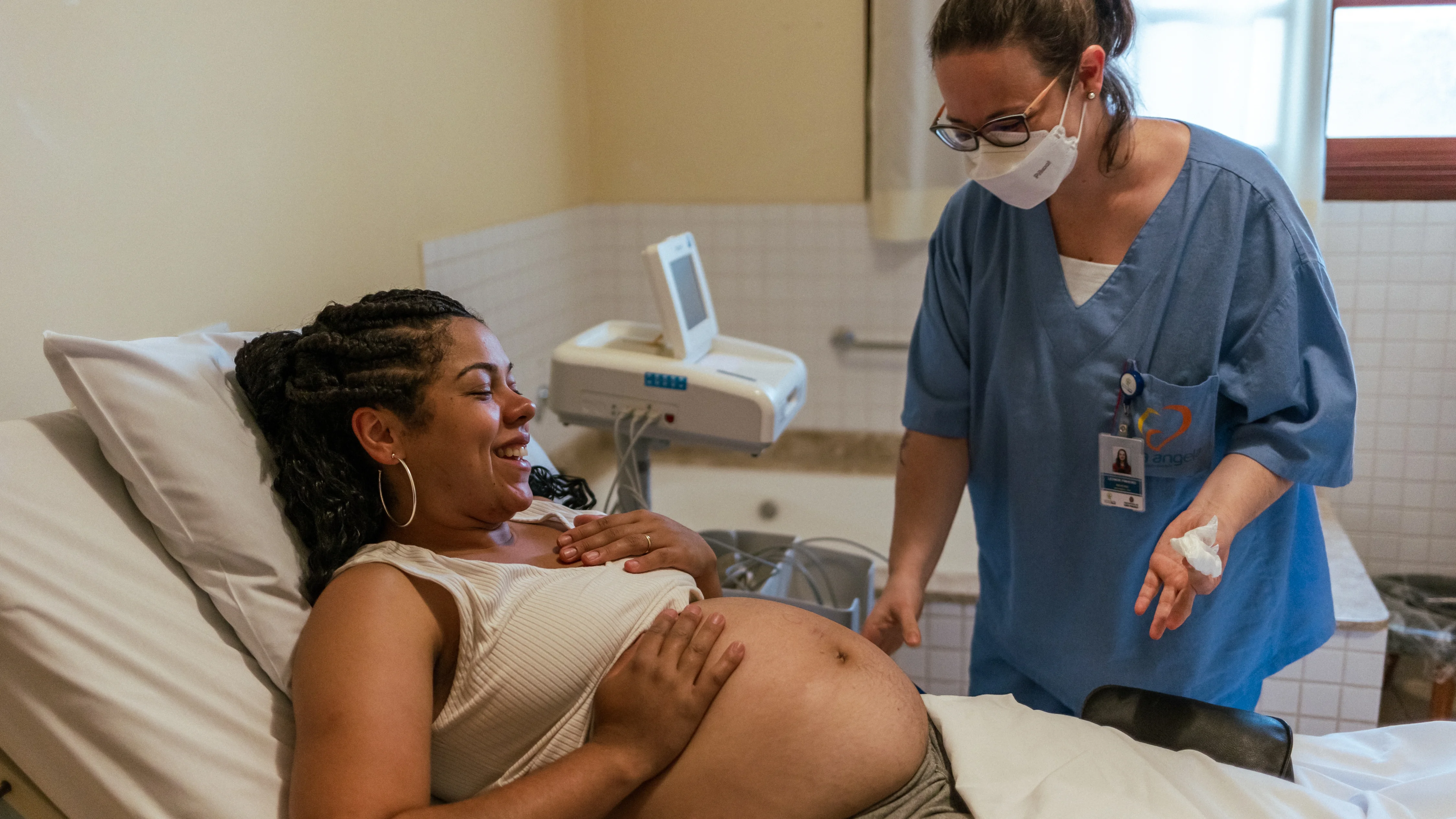
When women’s health is underfunded, the consequences extend far beyond individuals, affecting economies, health systems, and societies as a whole.
At a time of tightening global health financing and shifting geopolitical priorities, governments face difficult choices about where to invest.
Women and girls represent half of the world’s population and are at the heart of families, communities and economies. They make the majority of healthcare decisions globally and sustain the social fabric that allows societies to function. Despite this central role, their health needs remain profoundly underfunded. Excluding oncology, just 1% of healthcare R&D funding is invested in female-specific conditions [1] - a striking mismatch between need and investment.
At a time when global health financing is under strain and bilateral aid is declining, investing in women’s health is not simply a matter of equity; it is one of the smartest and most strategic investments societies can make.
The hidden burden undermining wellbeing and productivity
Women tend to live longer than men, yet they spend approximately 25% more of their lives in poor health than men[2]. This silent burden diminishes quality of life, weakens resilience and constrains participation in the workforce and public life.
For decades, medical research and clinical standards have been built around male physiology, leaving conditions that affect women uniquely, disproportionally or differently undiagnosed, under-researched and poorly understood. Each year, collectively, women lose an estimated 75 million years of healthy life - roughly a week of healthy life per woman[3].
Conditions such as endometriosis, maternal health complications, premenstrual syndrome, menopause and cervical cancer account for 14% of the female disease burden yet receive less than one per cent of research funding[4]. The resulting evidence gap limits innovation, reinforces perceived investment risk, and perpetuates a cycle of neglect.
Women's health remains one of the most undercapitalised frontiers in global healthcare - receiving only about 6% of private healthcare investment globally, with companies focused exclusively on women’s health capturing less than 1%[5]. This underinvestment is not merely a funding gap; it represents a vast and largely untapped opportunity to economic resilience, strong health systems, and inclusive growth.
Sexual and reproductive health: foundational to equality and prosperity
While progress in sexual and reproductive health and rights has been made over recent decades, underinvestment continues to carry profound human and economic consequences.
- Nearly half of all pregnancies worldwide are unintended[6].
- Every two minutes, a woman or girl dies from preventable causes related to pregnancy or childbirth[7].
- Nearly one third of women in developing countries become mothers while still children themselves[8].
- At least one in three women experiences physical or sexual violence in her lifetime[9].
Behind each statistic is a life interrupted, a future narrowed and a community weakened. When women lack access to quality sexual and reproductive health services, their ability to complete education, participate in the labour force and contribute to economic growth is severely constrained.
These disparities are neither inevitable nor affordable.The World Bank estimates that “that the world could achieve a ‘gender dividend’ of $172 trillion by closing gaps in lifetime labor earnings between women and men". [10]
In this context, health should be understood as economic infrastructure: investing in women’s health strengthens labour markets, stabilises households and drives national prosperity.
Investing in resilience in a changing global health landscape
The global health architecture is evolving. Financing is tightening, donor priorities are shifting and multilateral frameworks are under pressure. Climate change, conflict and economic shocks threaten to reverse decades of progress. This rapidly changing landscape demands a transition from fragmented, disease-specific programmes towards integrated, country-led health systems that prioritise prevention, resilience and equity. Women’s health sits at the centre of this transformation. Germany’s longstanding commitment to multilateralism and health innovation positions it uniquely to drive this agenda forward.
Investment patterns reveal persistent inequities between high-income regions and low-and middle-income countries. Addressing this imbalance is essential not only for equity but for global health security.
Encouragingly, momentum is building. Philanthropic commitments, catalytic funding models and blended finance mechanisms are helping to de-risk women's health innovation and attract private capital. These shifts signal growing recognition that women’s health is both a moral imperative and a strategic growth opportunity.
Investments that expand access, strengthen primary care and scale innovation can unlock new demand, improve outcomes and sustain long-term system resilience. Outcome-based financing and locally driven solutions can reduce waste while delivering measurable social and economic returns.
In a world where bilateral aid is declining, health must be recognised as a global public good requiring renewed cooperation and shared responsibility.
This is precisely where WomenX Collective positions itself.
WomenX Collective: catalysing innovation and sustainable financing
The WomenX Collective, a flagship programme of UNFPA, embodies this shift towards sustainable, integrated and country-led solutions. It aims to mobilise catalytic investments to scale evidence-driven innovations through crowding in the private and the public sector financing to close the gap in women’s health.
Through its growing network of hubs - including Berlin and Nairobi - WomenX brings together technical expertise, scale-ready technologies, sustainable financing, and innovative partnership approaches to accelerate impact. By supporting locally defined priorities and scalable solutions, WomenX aligns and advances the evolving global health landscape and the move away from donor-dependent models.
Its projected impact is substantial: WomenX strengthens health systems, empowers communities and aims at transforming women’ health at the forefront of its work. In its first year alone, WomenX launched three pipeline solutions: in Uganda WomenX aims to accelerate adoption of self-injectable contraception by strengthening private-sector delivery, reducing supply barriers, and empowering women to self-administer; WomenX is ensuring the availability of reproductive health commodities at the last mile through digitized supply chain systems in Côte d’Ivoire; and it is scaling telemedicine to reduce geographic barriers of quality care for women in the Philippines.
Together, these initiatives illustrate how strategic investment can translate into practical, scalable solutions that improve access, strengthen systems and advance equity.
A defining investment for our shared future
Societies thrive when individuals have the freedom to make informed choices about their bodies, health and futures.
As the global community navigates fiscal constraints and geopolitical uncertainty, the evidence is clear: prioritising women’s health yields measurable returns across health systems, economies and societies. It strengthens resilience in a warming world, supports inclusive growth and advances gender equality.
The question is no longer whether the world can afford to invest in women’s health. It is whether we can afford not to.
In a time of global fragmentation, investing in women’s health is an act of strategic foresight.
Strategic investment today can reshape health systems, unlock economic potential and secure a more equitable future for all. Germany and Europe are shaping a renewed momentum in women’s health, and UNFPA and WomenX are committed to ensuring that innovations and progress achieved here contribute to global wellbeing.
[5] https://www.weforum.org/publications/women-s-health-investment-outlook-2026/
[9] https://news.un.org/en/story/2024/11/1157046
We invited Dr Nigina Muntean, Founder of the WomenX Collective, and Deepali Sood, Global Head of the WomenX Collective, to share their insights on the importance of investing in women's health amidst a changing global health landscape. The views expressed are their own and do not necessarily reflect those of the Global Health Hub Germany.
Related Articles
![[Translate to English:]](/fileadmin/_processed_/4/d/csm_011WomanXCollective151024_7bf8dcad59.webp "[Translate to English:]")